





info@gettysburgmoldremediationpros.com (717) 256-4434 129 Chambersburg St, Gettysburg, PA 17325
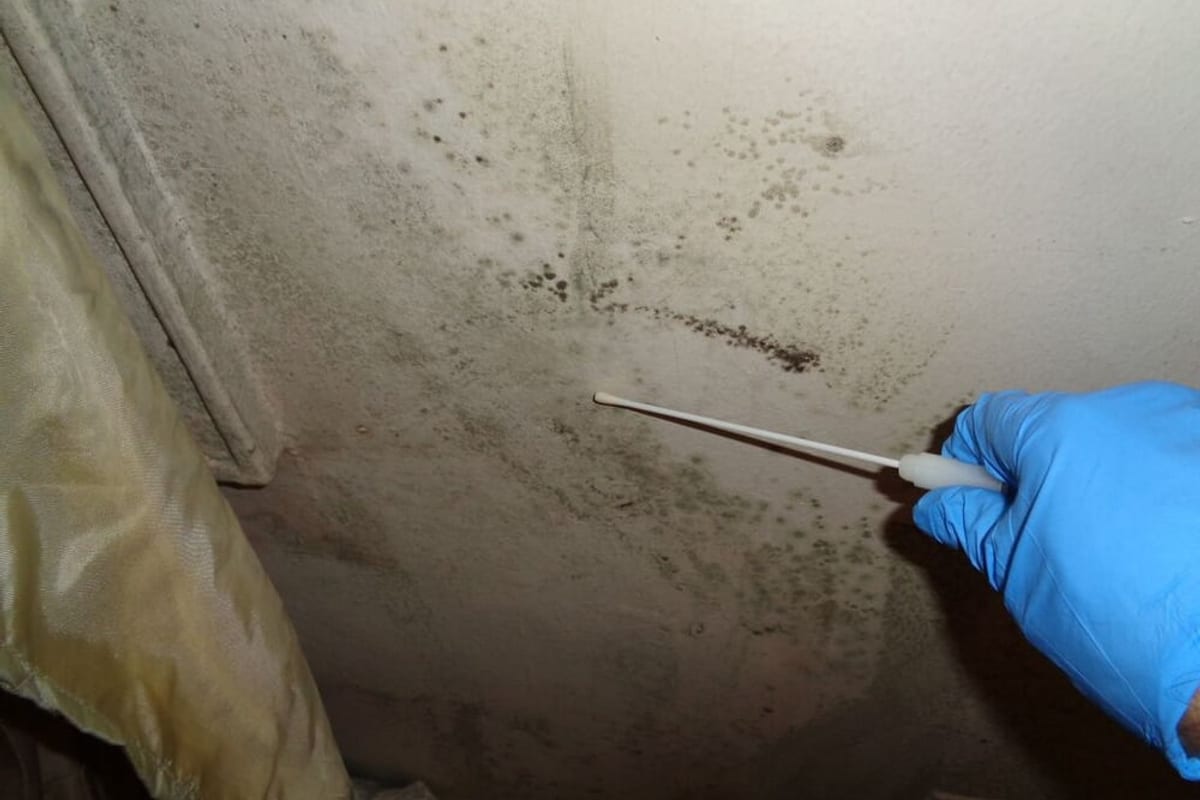
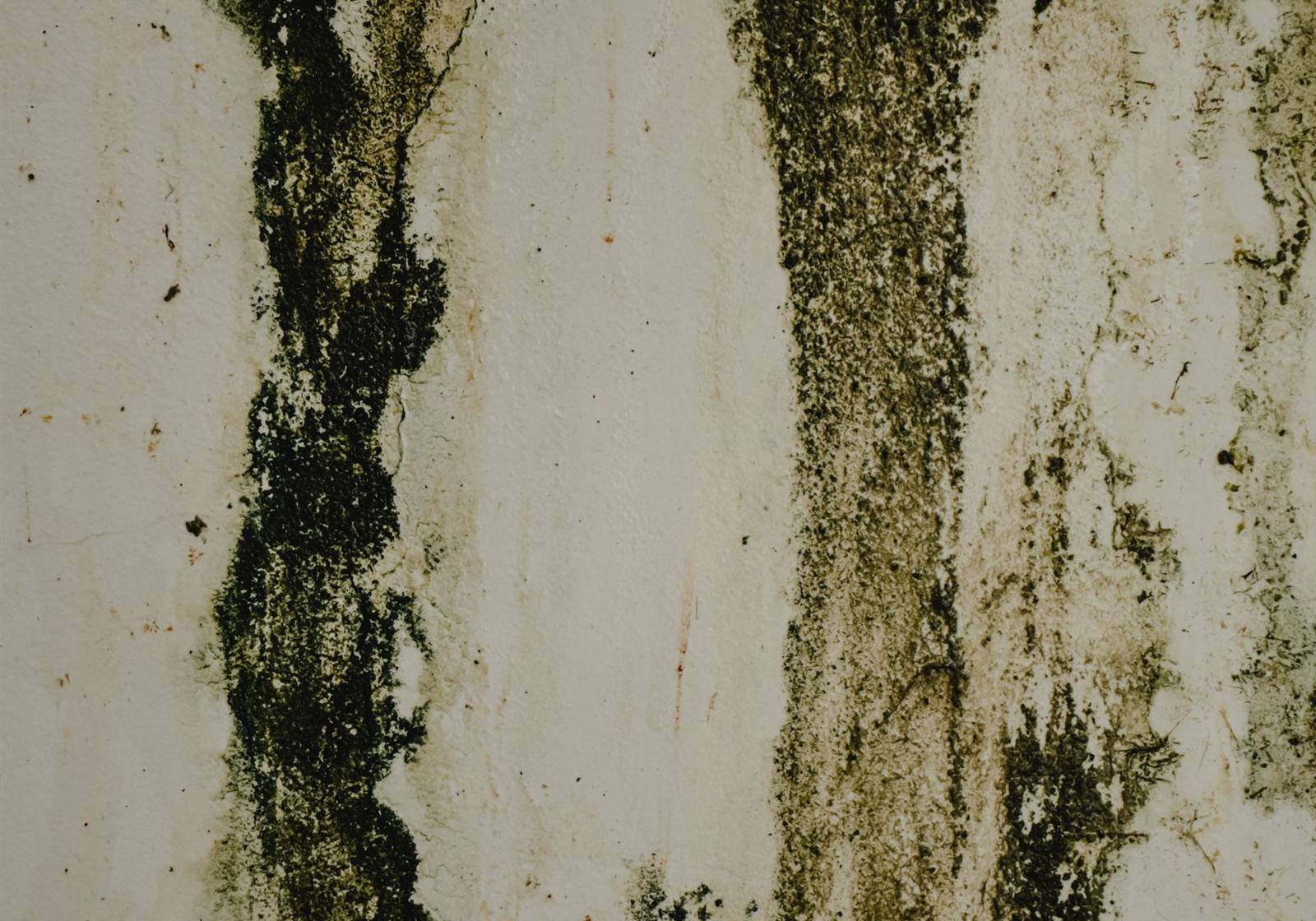
Black mold growing on a damp interior wall
Locally Based · Open 24/7 · Gettysburg, PA 17325

Mold Remediation Gettysburg, PA

Mold Removal, Testing & Moisture Repair

Mold remediation in Gettysburg, PA, from a small bathroom ceiling to a full fieldstone basement, with containment and clearance testing on every job.

  • IICRC S520 Process Standard
  • 1-Year Written Warranty
  • Written On-Site Estimates
  • Fully Insured

Request a Mold Inspection

Fill in the form below or call us now on (717) 256-4434

  • Yelp logo
  • Manta logo
  • MapQuest logo
  • Houzz logo
  • Clutch logo
  • ProvenExpert logo

What Is Mold Remediation?

Mold remediation is the process of finding the moisture behind mold growth, sealing off the affected area, physically removing contaminated materials, and confirming the space is clean and dry before the job is signed off. It goes further than cleaning a visible stain, because the aim is to deal with the conditions that let mold grow so it is less likely to return. The work follows the IICRC S520 standard and U.S. EPA mold guidance.

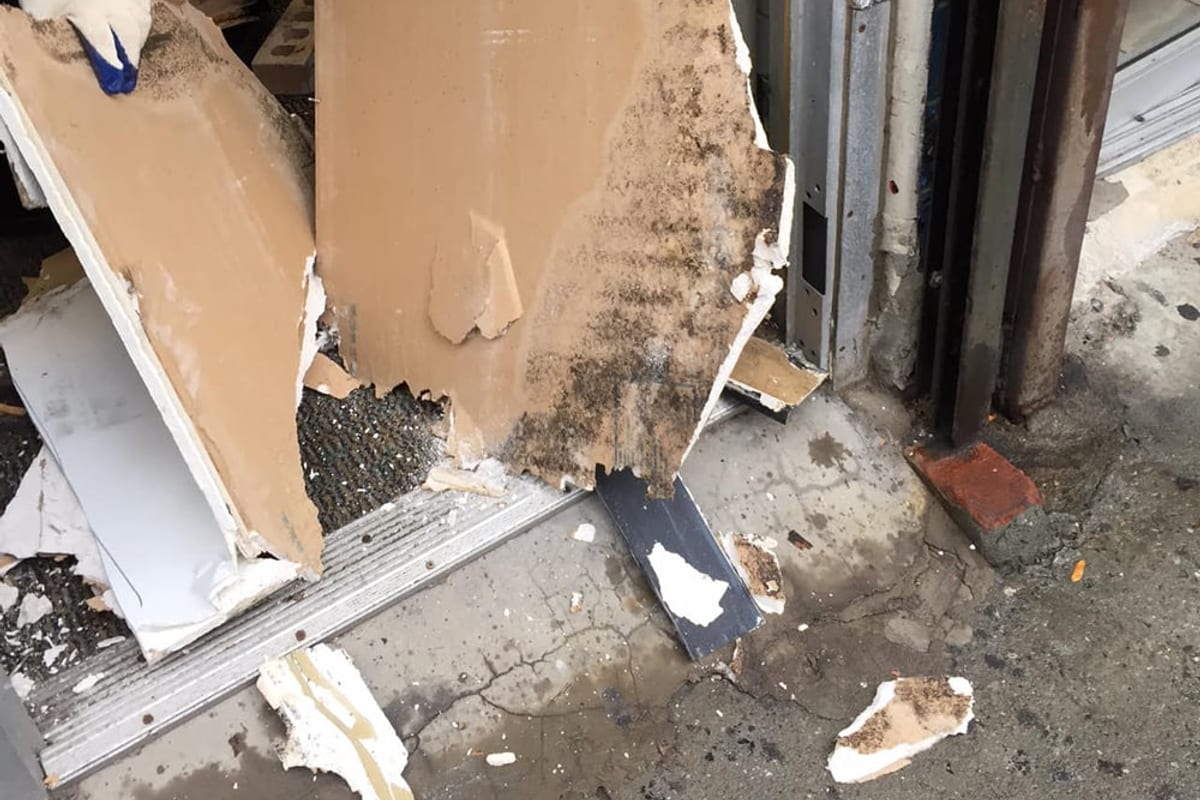
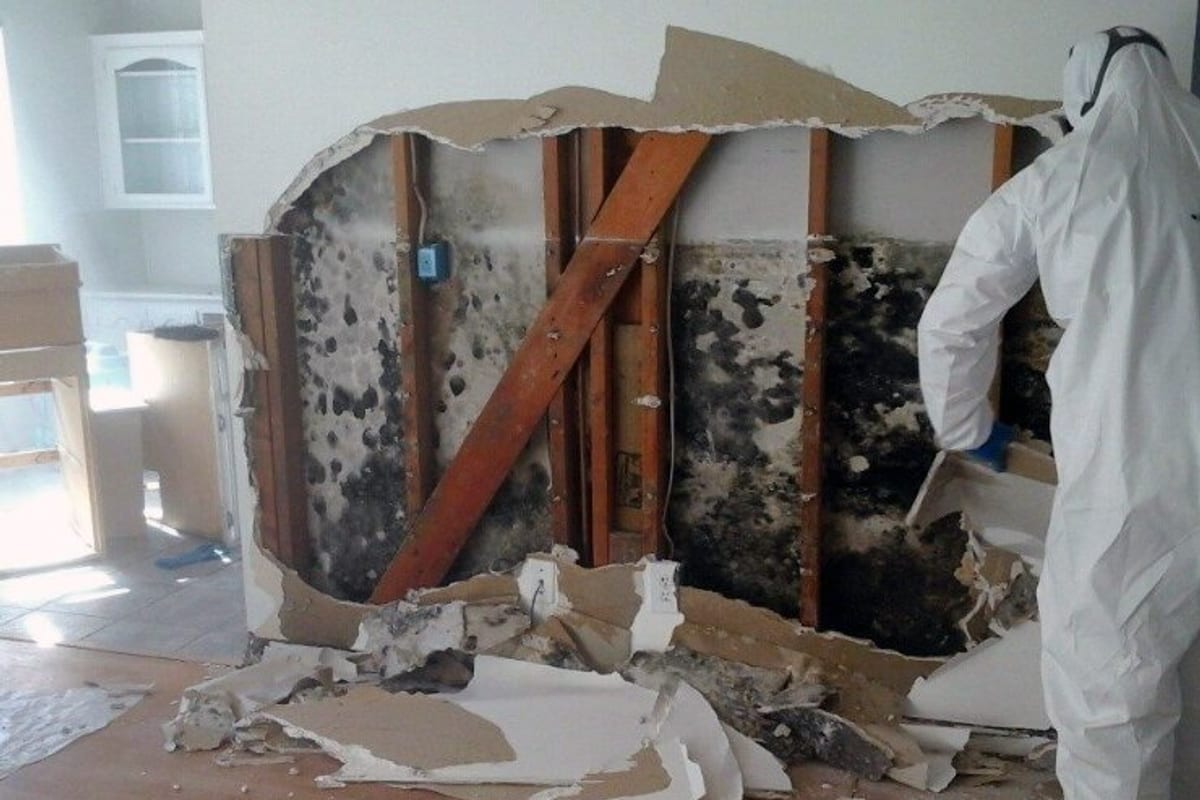
Technician in protective gear removing mold-damaged drywall during mold remediation in Gettysburg, PA
Warning Signs

Signs You Need Mold Removal
in Your Gettysburg Home

Mold often announces itself as a smell long before you can see it. A musty odor, stains, peeling paint, condensation, a recent leak, or allergy-like symptoms are the usual clues. One of them is worth a closer look. Two or more, or any growth larger than 10 sq ft (0.9 m²), is worth a professional inspection.

  • Musty Smell

    An earthy, damp smell in the basement, closets, or when the AC turns on means mold is growing somewhere, even when you can't see it.

  • Stains & Spots

    Black, green, gray, or brown spots on drywall, ceilings, grout, or wood that come back after you clean them.

  • Peeling Paint

    Bubbling paint, loose wallpaper, or soft drywall shows moisture trapped behind the surface, which feeds mold growth.

  • Condensation

    Water beading on windows or cold-water pipes most mornings means indoor humidity is above the 50% limit EPA recommends.

  • After Leaks or Flooding

    Any roof leak, burst pipe, or basement seepage that stayed wet longer than 24-48 hours can start mold inside walls and floors.

  • Allergy-Like Symptoms

    A stuffy nose, wheezing, itchy eyes, or skin irritation that eases when you leave home can point to indoor mold. Talk to a doctor about symptoms.

Noticed one of these signs? We can check it and give you an on-site estimate.

📞 Call (717) 256-4434
Gettysburg, PA 17325

Why Gettysburg Homes Are
Prone to Mold

Mold here usually traces back to the buildings themselves. Fieldstone basements under 19th-century homes, humid summers followed by wet falls, and a lot of older rentals and student housing all keep moisture around longer than it should be, and that steady damp is what mold needs.

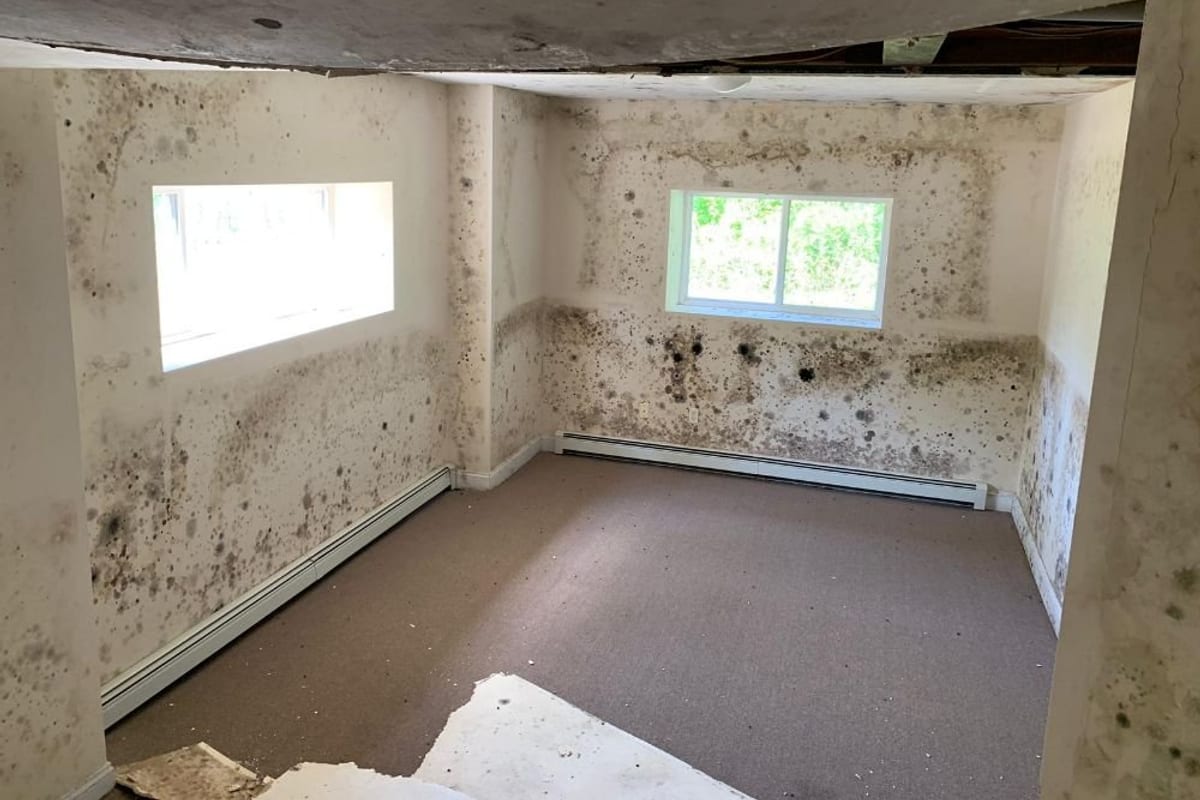
Basement walls and ceiling covered in mold growth in an older home

Historic Homes and Fieldstone Basements

Older Gettysburg homes can have fieldstone or rubble foundations without modern waterproofing. Moisture can move through masonry and mortar joints. Before changing a publicly visible exterior in the local Historic District to address a water problem, check Gettysburg HARB's review guidance.

The result is basement humidity above 60%, white mineral crust (efflorescence) on the stone, and mold on floor joists, sill plates, and boxes stored against the walls. Basement mold remediation in these homes cleans wood and stone instead of tearing out original materials, then adds dehumidification.
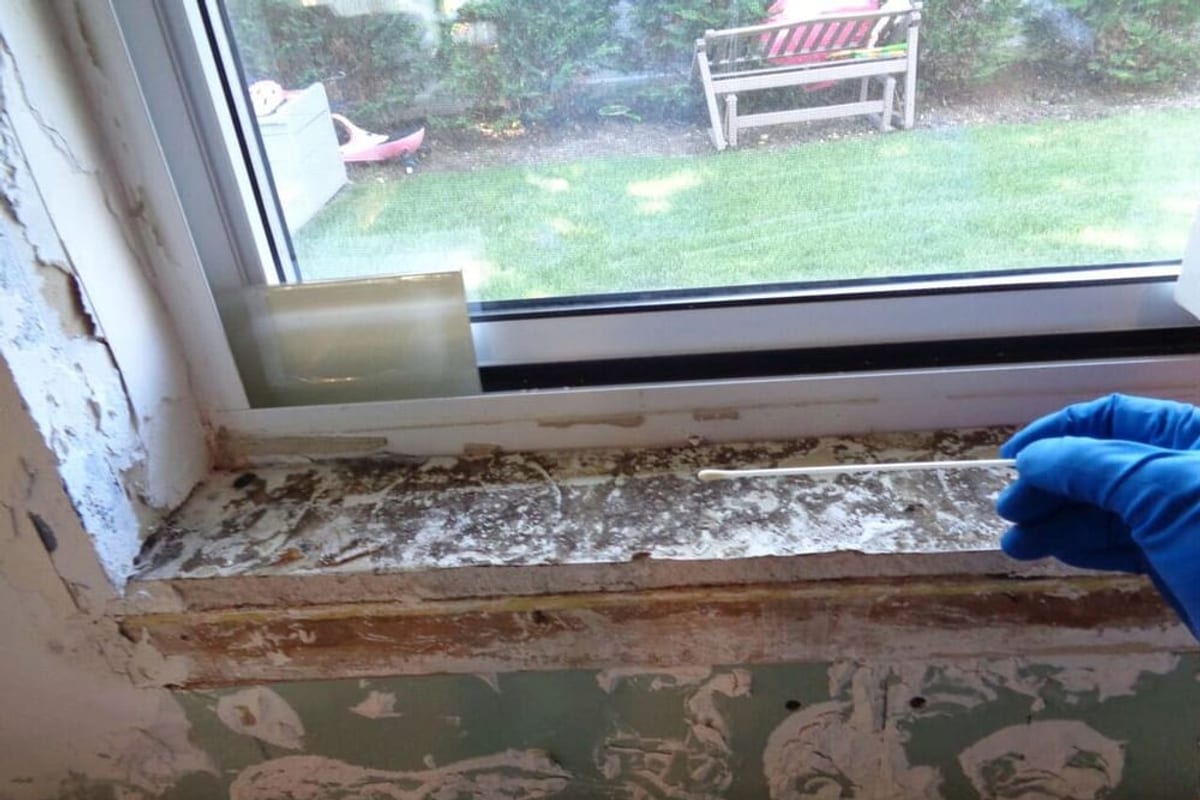
Mold and peeling paint on a window sill from condensation

Humid Summers and Wet Falls in Gettysburg

Rain, humid weather and condensation can keep below-grade rooms and building materials damp. The EPA's moisture-control guide recommends indoor humidity below 60%, ideally 30%-50%; measure the room rather than assuming its humidity from the season.

After stormwater or groundwater intrusion, check Adams County's floodplain resources and the FEMA Flood Map Service Center, and ask the property's municipality about repairs. These resources help with floodplain questions; basement dampness alone does not establish a mapped flood hazard.

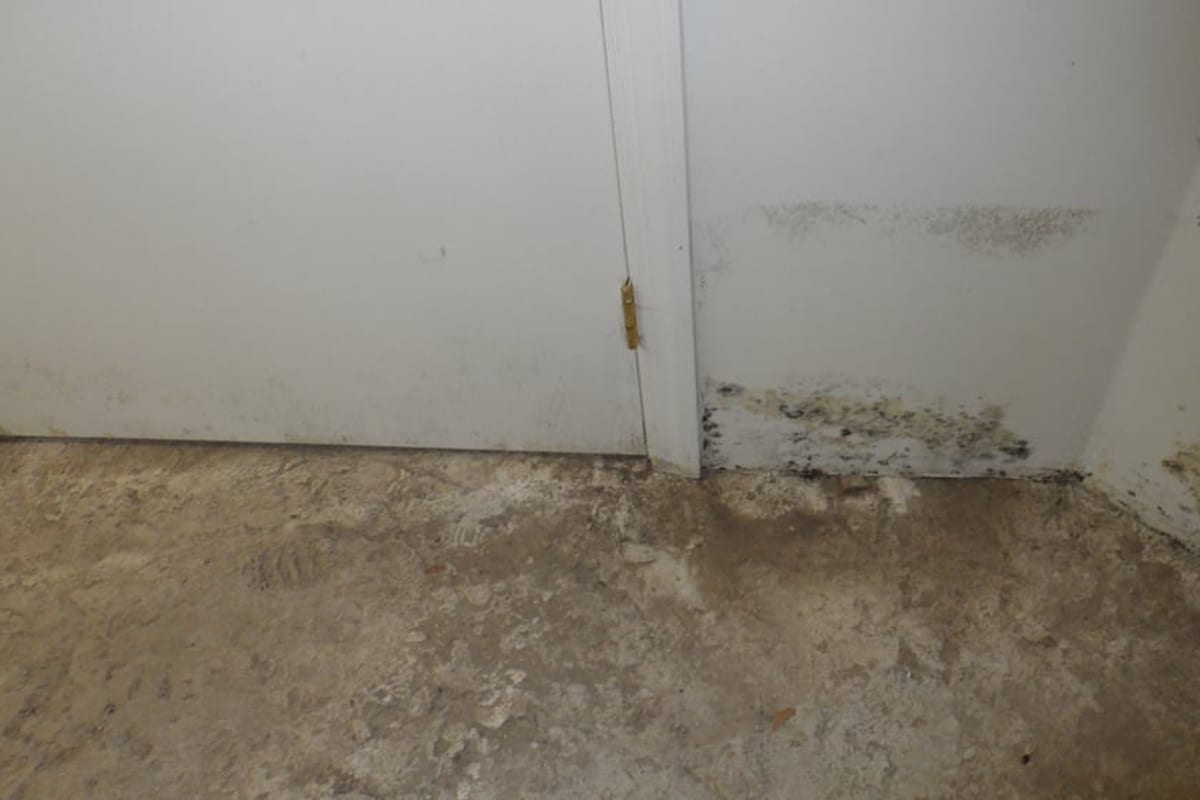
Water staining and mold along the base of a wall in an older property

Older Rentals and Student Housing

Apartments above downtown shops and student rentals can develop moisture problems from leaks, inadequate exhaust ventilation or condensation. Gettysburg Borough's rental licensing and inspection guidance explains the local program; rental requirements depend on the property's municipality.

Landlords usually find the mold at tenant turnover, during a rental inspection, or after a complaint. Bathroom and kitchen mold removal and multi-unit remediation can be scheduled between tenants.

Gettysburg Housing & Flood Data

How old the homes are, how many share walls, and how often water has come in, compared with Adams County and Pennsylvania.

When the homes were built: share of housing units by year built
Gettysburg Borough48%40%
Adams County18%32%28%22%
Pennsylvania25%42%19%14%
  • Before 1940
  • 1940 to 1979
  • 1980 to 1999
  • 2000 and later
Housing stock: Gettysburg Borough vs Adams County vs Pennsylvania (ACS 2020-2024 5-year estimates)
MeasureGettysburg BoroughAdams CountyPA
Population8,254106,11513,018,639
Housing units2,80143,6725,806,452
Median year built194219801965
Built before 194047.5%17.5%25.0%
Built before 196069.7%29.4%44.9%
Built before 198087.2%49.5%67.2%
Built 2000 or later5.3%22.3%14.3%
Single-family detached45.6%74.7%56.6%
Attached homes (rowhouse, twin, townhouse)16.7%9.3%18.8%
Mobile homes0.4%5.5%3.5%
Owner-occupied46.7%78.9%69.3%
Median home value$241,500$268,500$254,500

Flood insurance claims (FEMA NFIP, 1978 to 2026)

Gettysburg Borough (municipality)
46 claims, $806,009 paid
Peak: 2011, 14 claims
Biggest years: 2011 (14), 1996 (14)
ZIP 17325 (all of it, any municipality)
84 claims, $2,658,789 paid
Peak: 1996, 28 claims
Biggest years: 1996 (28), 2011 (25)

Named events with claims in Gettysburg Borough: Flooding 1996 (1).

What this means for mold in Gettysburg

  • 47.5% of homes here were built before 1940, about 2.7 times the county share (17.5%). Homes of that age often have stone or early block foundations, plaster walls and no vapor barrier under the slab, so basement and wall-cavity moisture is the first thing we check.
  • 16.7% of homes are attached (twins, rowhouses or townhouses). A leak or damp basement next door can feed mold through a shared wall, so we check both sides of the party wall when we can.
  • Only 46.7% of occupied homes are owner-occupied, so many jobs here involve a landlord and a tenant. Report moisture in writing and keep photos; see our Pennsylvania renter guide.
  • FEMA records 46 flood insurance claims for Gettysburg Borough, with the most in 2011. Every one of those is a building that needed drying inside 24 to 48 hours to stop mold. Uninsured water damage is not in this count, so the real number of wet basements is higher.

Sources: U.S. Census Bureau, American Community Survey 2020-2024 5-year estimates, tables B01003, B25001, B25003, B25024, B25034, B25035 and B25077 (profile); FEMA OpenFEMA NFIP redacted claims, data as of 2026-09-08. Municipal claims use FEMA's NFIP community; ZIP claims use the reported ZIP code, which can cross municipal lines. ACS figures are survey estimates with margins of error, and small places have wider margins. Paid amounts are not adjusted for inflation.

EPA Mold Guidelines

EPA Mold Guidelines:
DIY or Hire a Professional?

Hire a professional when mold covers more than about 10 sq ft, grows inside walls or ductwork, or followed contaminated water. Clean it yourself when the patch is small, sits on a hard surface, and the moisture source is already fixed. The U.S. Environmental Protection Agency (EPA) gives 3 guidelines that decide the answer.

Technician in a protective suit and respirator opening up a moldy wall
Past the 10 sq ft line: containment and professional removal of mold-damaged drywall.

Source: EPA, A Brief Guide to Mold, Moisture, and Your Home. Not sure which side of the line you're on? Call (717) 256-4434.

10 sq ft

The EPA 10-Square-Foot Rule

EPA guidance says homeowners can usually clean mold covering less than about 10 sq ft (0.9 m²), roughly a 3 ft by 3 ft (0.9 m by 0.9 m) patch. Larger areas call for a professional. Call a pro at any size when mold is inside HVAC ducts or wall cavities, when the water was sewage or flood water, or when someone in the home has asthma or a weakened immune system.

30-50%

Keep Indoor Humidity Between 30% and 50%

EPA recommends keeping indoor relative humidity below 60%, ideally between 30% and 50%. In a Gettysburg basement that means a dehumidifier set near 45% with a hose to a floor drain or sump, bathroom fans that vent outdoors, and a range hood that exhausts outside. An inexpensive hygrometer shows whether your home stays in range.

24-48 hrs

Dry Water Damage Within 24-48 Hours

EPA says to dry water-damaged areas and items within 24-48 hours to prevent mold growth. Porous materials that stay wet longer, such as drywall, carpet pad, insulation, and ceiling tiles, usually need removal. Start water extraction, fans, and dehumidifiers the same day, and track moisture readings until materials are dry. See water damage and mold restoration.

IICRC S520

The 3 Mold Conditions Every Job Is Measured Against

The IICRC S520 standard sorts any space into one of 3 conditions, and the condition decides the scope. A quote that does not say which condition each area is in, and what condition it must reach at the end, is missing its most important line.

  1. Condition 1

    Normal fungal ecology

    Mold spores are present at the levels you would expect indoors for this area and season, with no sign of active growth or unusual settled spores. Outdoor air always carries spores, so "zero mold" is never the goal. This is where a remediated area is meant to end up.

    What it needs: No remediation. Keep humidity at 30% to 50% and fix leaks promptly.

  2. Condition 2

    Settled spores or fragments

    An area was contaminated by spores, fragments or dust that drifted from a Condition 3 area, but mold is not actively growing there. A finished room next to a moldy basement, or contents stored near growth, are common examples.

    What it needs: HEPA vacuuming and damp wiping of surfaces and contents, inside the same containment plan as the source.

  3. Condition 3

    Actual growth

    Mold is actively growing, visible or hidden, on drywall, framing, insulation, sheathing or contents. This is what most people mean by "a mold problem", and it always has a moisture source behind it.

    What it needs: Containment, negative air, removal or cleaning of affected material, drying, and a check that the area is back to Condition 1.

Read the full guide: IICRC S520 mold conditions explained.

Mold Testing vs Mold Remediation

Testing tells you what is there; remediation removes it and fixes the water behind it. You do not always need both, and you rarely need lab samples when growth is already visible.

Inspection & testingRemediation
Question it answersIs there mold, where, and how much?How do we remove it and stop it coming back?
What happens on siteVisual inspection, moisture meter and thermal readings, sometimes air or surface samples sent to a labContainment, negative air with HEPA filtration, removal of affected porous material, HEPA cleaning, drying
When you need itMusty smell with no visible growth, after a leak, before buying, or to confirm a job is finishedVisible growth larger than about 10 sq ft, growth in walls or ducts, or after contaminated water
What you getA report: moisture map, findings, lab results if sampledA written scope, the completed work, photos, and moisture readings at the end
Is sampling always needed?No. EPA notes that when mold is visible, sampling is usually unnecessaryClearance sampling is optional and is most credible from an independent assessor

Go deeper: inspection vs testing · remediation vs removal · clearance testing · our inspection service

Mold Remediation Services

Our Mold Remediation
Services in Gettysburg

Our work runs from an inspection that finds the moisture source to full removal under containment. Each service targets a different part of the building: basement, attic, bathroom, crawl space, HVAC ducts, or a room soaked by a leak. Every job starts with an on-site estimate after an on-site visit.

Not sure which service you need? Call (717) 256-4434

Who We Work With

  • Homeowners Musty basements, attic sheathing stains, crawl spaces, and mold after a leak or flood.
  • Landlords & property managers Rental units and student housing that need a clear scope, tenant scheduling, and written documentation.
  • Businesses Offices, shops, restaurants, B&Bs, and churches, with work planned around business hours.
  • Historic properties Older buildings in and around the Gettysburg Historic District, where plaster, stone, and original trim call for careful removal.
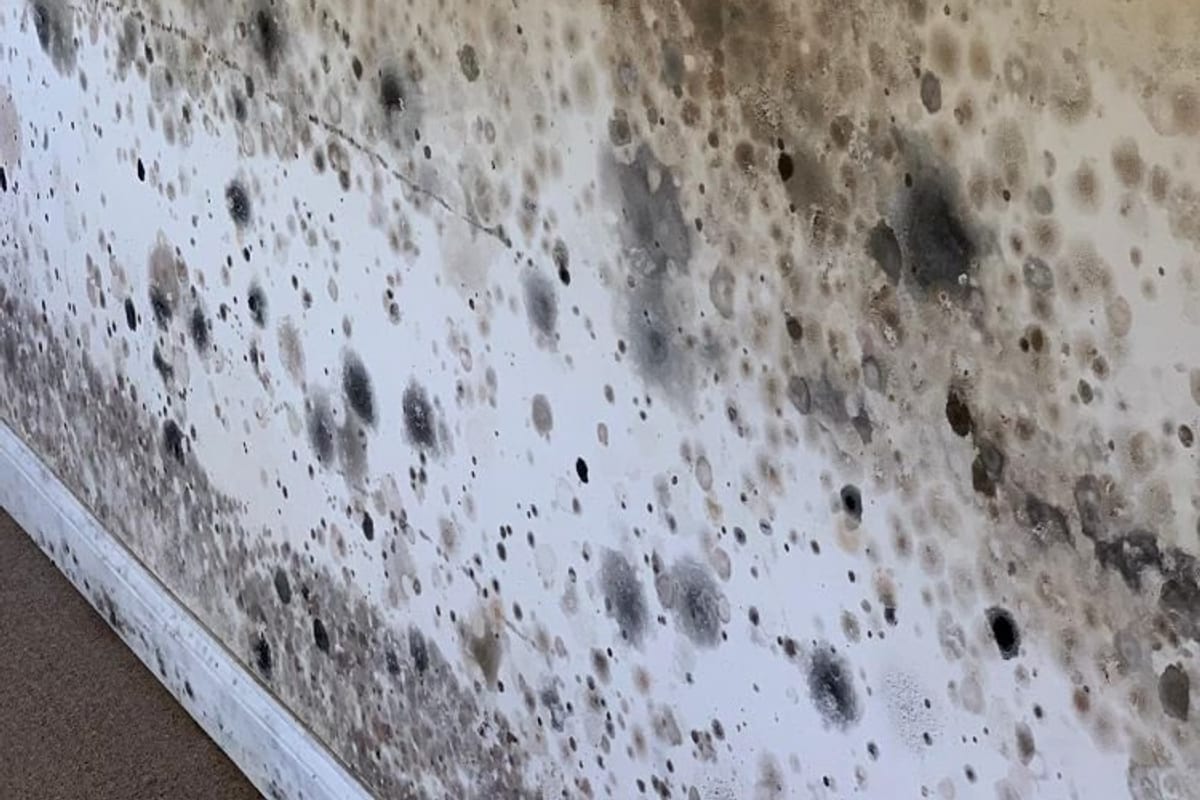
Heavy black mold spotting across an interior wall and corner

Black Mold Removal

Containment, HEPA air scrubbing, and removal of Stachybotrys-stained drywall, trim, and insulation. Work is done under negative pressure and ends with a clearance check.

Explore Service
Basement walls and ceiling covered in mold growth

Basement Mold Remediation

Stone and block foundation walls, finished basements, and sill plates. Removal is paired with dehumidification, because cleaning alone will not hold in a damp basement.

Explore Service
Technician in protective equipment removing moldy drywall from wall framing

Attic Mold Removal

Roof sheathing, rafters, and insulation cleaned by HEPA vacuuming, wire brushing, or soda blasting. Every job includes a ventilation review, since blocked soffits are usually the reason it grew.

Explore Service
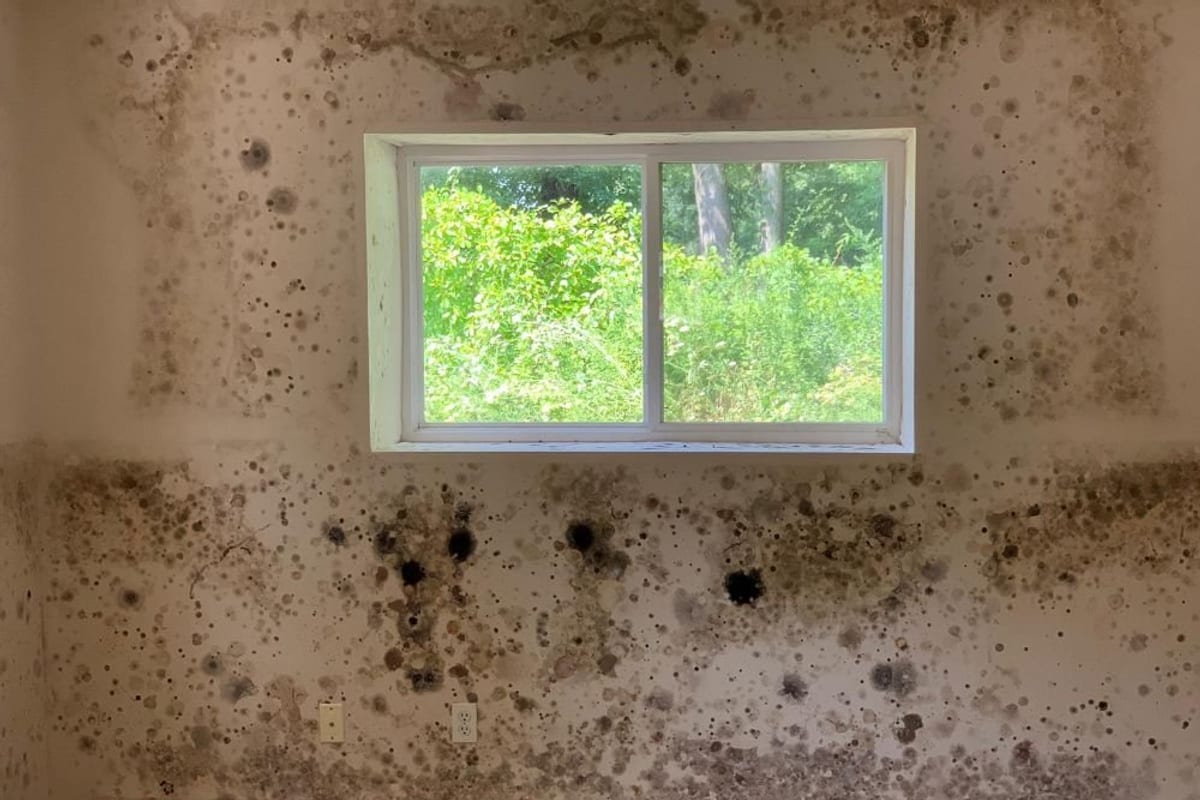
Mold spread across an interior wall below a window

HVAC & Air Duct Mold Cleaning

Supply and return ducts, air handlers, and evaporator coils cleaned under negative pressure. That musty smell when the AC kicks on usually comes from the coil, not the rooms.

Explore Service

More services: Crawl Space Mold RemediationWater Damage & Mold RestorationCommercial Mold Remediation All services →

Smell Something Musty? Call Before It Spreads.

Mold keeps growing as long as the material stays wet. Call, tell us where you see it and roughly how big the area is, and book an on-site estimate for mold remediation in Gettysburg.

On-site estimate (717) 256-4434
5-Step Process

How Our 5-Step Process Works
(EPA & IICRC S520)

Every job moves through inspection, containment, removal, cleaning and drying, and clearance testing, following U.S. EPA mold guidance and the Institute of Inspection, Cleaning and Restoration Certification (IICRC) S520 standard. Small bathroom jobs finish in 1 day; most basements and attics take 2-5 days. Read the full process.

  1. Step 1: Inspection & Moisture Mapping

    A technician inspects the visible growth, measures the affected area in square feet, and maps moisture with meters and thermal imaging to find the source. Air or surface samples are added only when the source is hidden or a baseline is needed. You get a written scope and an on-site estimate. Mold inspection & testing details.

  2. Step 2: Containment, Negative Air & HEPA Filtration

    The work area is sealed with 6-mil polyethylene sheeting and a zipper door, and HVAC vents inside it are covered. A high-efficiency particulate air (HEPA) air scrubber exhausts air out of the containment, creating negative pressure so spores don't drift into clean rooms.

  3. Step 3: Removing Mold-Damaged Materials

    Porous materials with growth, such as drywall, insulation, carpet pad, and ceiling tiles, are cut out, sealed in 6-mil bags inside containment, and carried out. The IICRC S520 standard calls for physically removing mold, not just spraying over it.

  4. Step 4: Cleaning, Treatment & Structural Drying

    Framing, stone, and other surfaces that can be saved are HEPA vacuumed, wire brushed or sanded, and damp wiped, with an antimicrobial applied to cleaned wood where appropriate. Dehumidifiers and air movers dry the structure to normal moisture readings, and the leak, seepage, or ventilation problem gets fixed.

  5. Step 5: Post-Remediation Clearance Testing

    After the area passes a visual and moisture check, clearance testing compares indoor air samples with an outdoor sample. Many property owners use an independent third-party inspector for this step. Containment comes down only after the area passes.

Guidance & Business Details

Find the Right Starting Point

Choose a service by the problem you need to solve, then check the guidance and business details behind the proposed work.

Read the Relevant Guidance

Choose Your Next Step

Business Details You Can Check

Owner
Adam Jones, Owner & Founder. Meet the team.
Office and contact
129 Chambersburg St, Gettysburg, PA17325. (717) 256-4434 · info@gettysburgmoldremediationpros.com. Office and contact details.
Written warranty
Every completed mold remediation job comes with a 1-year written warranty.Read coverage, exclusions and how to claim.
Contractor documentation
Ask for the registration number, current insurance certificate and relevant technician credentials before signing. Check Pennsylvania contractor registration.
Your job documentation
Request an itemized scope, moisture findings, photos of affected materials and agreed completion checks. Use the written-quote checklist.
Why Us

Why Property Owners
Choose Gettysburg Mold Remediation Pros

Gettysburg Mold Remediation Pros is based in Gettysburg, run by Adam Jones, and works with local homes and businesses. Our process follows EPA guidance and the IICRC S520 standard, estimates are written after an on-site visit, and completed jobs carry our 1-year written warranty. Check the company details and request the documentation for your scope.

A Local Gettysburg Team, Not a Call Center

Calls to (717) 256-4434 reach our Gettysburg office at 129 Chambersburg St, not a national referral line that passes your number to several contractors. The technician who gives your estimate knows local housing: stone basements downtown, tight crawl spaces under older borough homes, and student rentals near campus. More about our crew and credentials.

Registration, Insurance & Scope Checks

Use the Pennsylvania contractor lookup to check registration before signing. Request a current insurance certificate and relevant technician credentials, then review the written scope and completion criteria. Use our quote checklist.

Experience With Historic and Older Homes

Older Gettysburg homes need a different approach: plaster walls instead of drywall, original trim and floors worth saving, and stone foundations that must stay breathable. We clean and dry original materials when they can be saved, remove only what the IICRC S520 standard requires, and flag exterior repairs that may need Historic District review.

Talk to a local mold specialist in Gettysburg, PA 129 Chambersburg St, Gettysburg · Open 24 hours · On-site estimate
Call (717) 256-4434

No Scare Tactics or Fogging-Only Treatments

Spraying or fogging a room does not remove mold. Dead mold can still cause allergy symptoms, and growth returns when the moisture source stays. We remove the growth and fix the cause.

What we don't do
  1. Call every dark stain "toxic black mold"
  2. Sell fogging or spraying as the whole job
  3. Quote a price before seeing the area
  4. Remove mold without finding the water source
  5. Take down containment without a clearance check
What we do
  1. Explain what we found in plain language
  2. Contain, HEPA filter, and physically remove growth
  3. Give a written quote after inspection
  4. Trace and report the moisture source
  5. Check that the area is clean and dry
National Planning Benchmarks

How Much Does
Mold Removal Cost?

Use published national cost ranges to plan a budget for a Gettysburg-area property. We have not published a verified Gettysburg local average or a survey of completed local jobs. Your price comes from an on-site inspection and written scope. Our cost guide explains sources, assumptions and the 8 factors that change a quote.

Angi

$1,223-$3,757 national project range

$10-$25 per affected sq ft

Publisher date: 2026-07-09. Checked 2026-10-16.

HomeGuide

$1,500-$6,000 national project range

$15-$30 per affected sq ft

Publisher date: 2026-02-05. Checked 2026-10-16.

These publishers cover different project mixes. Their figures stay separate; we have not averaged them or applied a Gettysburg price multiplier. The size cards and area table below use HomeGuide's national scope examples, rather than company package prices.

Small Area

$500-$1,500

10-100 sq ft of affected surfaces

  • A localized section of wall, floor, or ceiling
  • Confirm containment and access requirements
  • Confirm removal, HEPA cleaning, and disposal
  • Ask whether sampling is a separate charge
See My Price

Whole Home

$15,000-$30,000

more than 1,000 sq ft; widespread growth

  • Widespread work across several rooms
  • Ask whether HVAC work is required
  • Separate remediation from moisture repairs
  • Itemize reconstruction and independent testing
See My Price

National Cost Examples by Area of the Home

AreaNational benchmarkScope to confirm
Mold inspection $300-$650 HomeGuide inspection benchmark; large homes can reach $1,000. Confirm sampling and lab fees.
Bathroom $500-$2,000 Extent of affected materials; plumbing repairs and rebuilding need separate scope.
Basement (partial) $1,500-$6,000 Affected area, finishes, access, and drying requirements.
Attic (partial) $1,500-$6,000 Affected sheathing, access, and insulation work.
Full attic or basement $6,000-$15,000 Extensive work; differs from treating a localized area.
Crawl space $1,500-$4,000 Access and affected framing; confirm vapor barrier or encapsulation separately.
HVAC system or ducts $2,000-$10,000 System type and spread; routine duct cleaning has a different scope.
Whole home $15,000-$30,000 Widespread contamination; confirm reconstruction and contents separately.

Planning assumptions: measure affected surfaces rather than the home's total floor area, and confirm access, containment, removal, disposal and drying in the quote. Leak repair, structural rebuilding, independent testing, permits and other charges need explicit line items. Floodwater contamination or lead/asbestos work changes the scope.

Worked example: for 100 sq ft of affected surfaces, Angi's rate gives $1,000-$2,500; HomeGuide's gives $1,500-$3,000. These are separate area × rate illustrations. Setup minimums and project conditions can change the result. See the calculation assumptions and exclusions.

What Affects Your Mold Remediation Price

Two jobs with the same square footage can land far apart on price. These are the things that move it, and our cost guide goes through each one in detail:

  1. Size of the affected area. Square footage is the biggest cost driver: more area means more containment, labor, and equipment time.
  2. Location and access. Tight attics, low crawl spaces, and finished ceilings take more labor than an open basement wall.
  3. Type of material. Drywall, insulation, and carpet get cut out and bagged; metal, glass, and sealed concrete get cleaned.
  4. Level of containment. Active growth needs barriers, negative air, and HEPA air scrubbers, which add setup time.
  5. The moisture source. Fixing a leak, fan, gutter, sump pump, or drainage problem adds to the scope.
  6. HVAC involvement. Mold in the air handler or ductwork means cleaning the system under negative pressure.
  7. Age and construction of the home. Plaster, lath, old framing, and stone foundations in pre-1940 homes need slower, gentler methods.
  8. Rebuild and restoration. New drywall, paint, and flooring are often a separate line item. Ask whether your quote includes them.
📞 Get an On-Site Estimate
Insurance & Mold

Does Homeowners Insurance Cover
Mold Damage in Pennsylvania?

Yes, but only when the mold resulted from a sudden, accidental water event your policy covers, such as a burst pipe or a failed water heater line. Pennsylvania homeowners policies generally exclude mold caused by long-term leaks, humidity, flooding, or maintenance problems. Many policies also cap mold claims with a sublimit, commonly somewhere between $1,000 and $10,000, so read the mold or "fungi" section of your policy.

Usually covered

  • A burst or frozen pipe inside the home
  • A sudden water heater, washing machine, or dishwasher line failure
  • Water from firefighting or a sudden roof leak during a covered storm
  • An ice dam or AC overflow, when the policy covers that water event

Usually not covered

  • Slow leaks that went unrepaired for weeks or months
  • High humidity, condensation, or poor ventilation
  • Flood or groundwater (needs separate flood insurance)
  • Sewer or sump backup without a backup endorsement
  • Deferred maintenance such as clogged gutters or failed caulk

5 steps to document a claim

  1. Stop the water and take dated photos and video before cleanup.
  2. Call your insurer or agent within 24 hours and get a claim number.
  3. Keep damaged materials or samples until the adjuster says they can go.
  4. Save moisture readings, the written remediation scope, and invoices.
  5. Ask your agent whether your policy has a mold sublimit.

Coverage depends on your exact policy language. We provide photos, moisture logs, and a line-item remediation scope you can send to your adjuster. See water damage and mold restoration for fast drying after a covered loss.

Pennsylvania Rules

Pennsylvania Mold Laws
Property Owners Should Know

Check these 7 topics when planning a mold job: contractor registration, contract rights, disclosure, rentals, historic review, permits and floodplain repairs. Official references appear beside each topic; requirements depend on the property's jurisdiction and work scope.

Your Rights Under a PA Home Improvement Contract

Covered home improvement contracts over $500 must be written and signed. HICPA generally provides 3 business days to cancel. For projects over $5,000, the law limits deposits to one third of the contract price plus qualifying special-order materials. Check the Attorney General guidance for the required contract terms and exceptions.

Mold Disclosure When Selling a Home in Pennsylvania

Pennsylvania law requires covered residential sellers to disclose known material defects before the agreement of sale, subject to statutory exceptions. Disclose known moisture and mold problems as applicable, and retain repair scopes and inspection records. The statute explains the disclosure and delivery requirements.

Mold in Rentals: Tenant and Landlord Responsibilities

The Pennsylvania Attorney General explains that leases include an implied warranty of habitability and that serious defects must be addressed. Report leaks and moisture problems in writing and keep records. Gettysburg Borough also has rental licensing and inspection requirements; use the Borough guidance for properties within its jurisdiction.

Historic District Rules for Moisture-Related Exterior Repairs

Gettysburg HARB reviews proposed publicly visible exterior work in the local Historic District, including moisture-related changes to windows or roofing. Confirm review and Certificate of Appropriateness requirements before starting. A Gettysburg mailing ZIP does not establish that a property is in the Borough or its Historic District.

Borough Land-Use and Building Permits

The Borough permit process covers land-use applications and UCC or non-UCC review. Confirm the actual cleanup and repair scope with Planning before work; an exemption from a UCC building permit does not establish that no other approval is needed. Outside Gettysburg Borough, ask the municipality responsible for the property.

References checked 2026-10-16. Use the linked agencies for current requirements and property-specific decisions. Full guide: Pennsylvania mold laws.

Prevention

Mold Prevention Checklist for Adams County Homes

Mold needs moisture, so prevention is a moisture checklist. These are the checks that catch most problems before they become remediation jobs. Print it, or keep it on the fridge.

Every month

  • Read a hygrometer in the basement and one upstairs room. Aim for 30% to 50% relative humidity and act at 60%.
  • Empty or check the dehumidifier drain line and clean its filter.
  • Look under sinks, behind the toilet and around the water heater for drips or stains.
  • Run bathroom fans during showers and for 20 minutes after.

Spring and fall

  • Clean gutters and make sure downspouts discharge at least 4 to 6 feet from the foundation.
  • Check that soil slopes away from the house and that window wells drain.
  • Pour a bucket of water into the sump pit and confirm the pump starts and the discharge runs clear.
  • Look in the attic for frost or dark staining on the north-facing roof sheathing and for fans that vent into the attic.
  • Replace HVAC filters and check the condensate pan and drain line.

Summer (June to September)

  • Keep basement windows closed on humid days. Warm outdoor air condenses on cool basement walls.
  • Set the basement dehumidifier near 45% and drain it to a floor drain, sump or condensate pump.
  • Keep stored boxes, books and fabric off the floor and away from foundation walls.

Winter

  • Wipe window condensation daily and open blinds so glass can warm. Persistent condensation means indoor humidity is too high.
  • Keep closets and furniture on exterior walls a few inches from the wall so air can move.
  • Protect pipes in crawl spaces and exterior walls from freezing, and know where the main shutoff is.

After any leak or flood

  • Stop the water, photograph everything, and call your insurer.
  • Start drying the same day. EPA says to dry materials within 24 to 48 hours to prevent mold.
  • Pull up wet carpet pad and move belongings out of standing water. Wet drywall and insulation that stay wet longer than 48 hours usually need to come out.

Related: sizing a basement dehumidifier · sump pump failure and mold · window condensation · vacant and second homes

40 Service Areas · Gettysburg, PA

Where We Work
Gettysburg and Nearby Townships

We are based in Gettysburg, PA 17325, and service extends beyond ZIP 17325. We serve the borough, its neighborhoods, and the listed surrounding communities, from Straban and Cumberland to Fairfield, New Oxford, Hanover, and Carlisle. See all 40 locations and their page links on our service areas page.

Gettysburg Mold Remediation Pros 129 Chambersburg St, Gettysburg, PA 17325 (717) 256-4434 · Open 24 hours
Get directions
Further Reading

58 Mold Guides for Gettysburg-Area Homes

Plain answers to the specific questions people ask before they call anyone. Start with the one that matches what you are seeing.

Browse all guides on the blog · Mold remediation cost guide

Common Questions

Frequently Asked Questions
About Mold Remediation

9 questions Gettysburg property owners ask before hiring a mold remediation company: timelines, black mold, testing, licensing, regrowth, and permits. Direct answers first. More questions are answered on our mold FAQ page, and longer guides live on the mold blog.

How long does mold remediation take?

Mold remediation takes 1 day for a small bathroom or closet area and 2-5 days for most basements, attics, and crawl spaces. Whole-home jobs and mold after a major water loss take 1-2 weeks because the structure must dry before rebuild. Clearance testing adds 1-3 business days for lab results, and containment stays up until the area passes.

Is black mold more dangerous than other types of mold?

No, black mold is not automatically more dangerous than other indoor molds. The Centers for Disease Control and Prevention (CDC) says all molds should be treated the same way for potential health risks and removal, and color does not show how harmful a mold is. Black mold (Stachybotrys chartarum), Aspergillus, Penicillium, and Cladosporium can all cause a stuffy nose, wheezing, itchy eyes, or skin irritation in sensitive people. See how we handle black mold.

Do I need mold testing before remediation?

No, you usually don't need mold testing when the mold is visible and the moisture source is known. EPA notes that sampling is often unnecessary in that case. Testing helps in 4 situations: a musty smell with no visible mold, health symptoms with no clear source, a real estate transaction, and clearance testing after remediation. An inspection from our team starts with moisture mapping and adds samples only when they answer a real question.

Does Pennsylvania require a license for mold remediation?

No, Pennsylvania does not issue a state license for mold remediation or mold inspection. Most residential mold contractors must still register under the Home Improvement Consumer Protection Act (HICPA) with the Pennsylvania Attorney General and show that number on contracts. Before hiring, ask for 3 things: HICPA registration, proof of insurance, and mold remediation certification.

What is the difference between mold removal and mold remediation?

Mold removal usually means cleaning off or cutting out the growth you can see. Mold remediation is the broader job: finding and addressing the moisture source, containing the work area, removing contaminated materials under HEPA filtration, and checking that the area is clean and dry afterwards. Removal deals with the symptom; remediation also deals with the cause, which is why it is less likely to come back.

Will mold come back after remediation?

Proper remediation with the moisture source corrected greatly reduces the chance of regrowth. Mold spores are always present in outdoor and indoor air, so regrowth happens only when materials get wet again. Keep indoor humidity between 30% and 50%, repair leaks within 24-48 hours, and vent bathrooms and dryers outdoors. In older Gettysburg basements, a dehumidifier with a drain line prevents most regrowth.

Do I need a permit for mold remediation in Gettysburg?

Confirm the actual cleanup and repair scope with the property's municipality before work. Gettysburg Borough's permit guidance describes land-use applications and UCC or non-UCC review; a UCC exemption does not mean every approval is waived. Publicly visible exterior work in the local Historic District also needs a check with Gettysburg HARB. Outside the Borough, its permit rules do not automatically apply just because the address uses a Gettysburg ZIP code.

Can mold come back after remediation?

Yes, if the moisture comes back. Remediation removes the growth; it cannot stop a leak, a wet foundation or 70% indoor humidity from feeding new growth. Jobs last when the water source is fixed and documented, porous material with growth was removed rather than sprayed, and humidity stays between 30% and 50%. See why mold comes back and how to stop it.

What if I cannot afford mold remediation right now?

Stop the water first, then hold the line: close off the room, keep humidity under 50% with a dehumidifier, and leave the growth undisturbed. Ask for the scope to be phased, with the moisture repair and the worst area first and rebuild later, and check whether insurance applies. Areas under about 10 sq ft can usually be cleaned by the homeowner under EPA guidance. See financing and phasing.