
What Size Dehumidifier Does a Basement Need? A Pints-Per-Day Guide
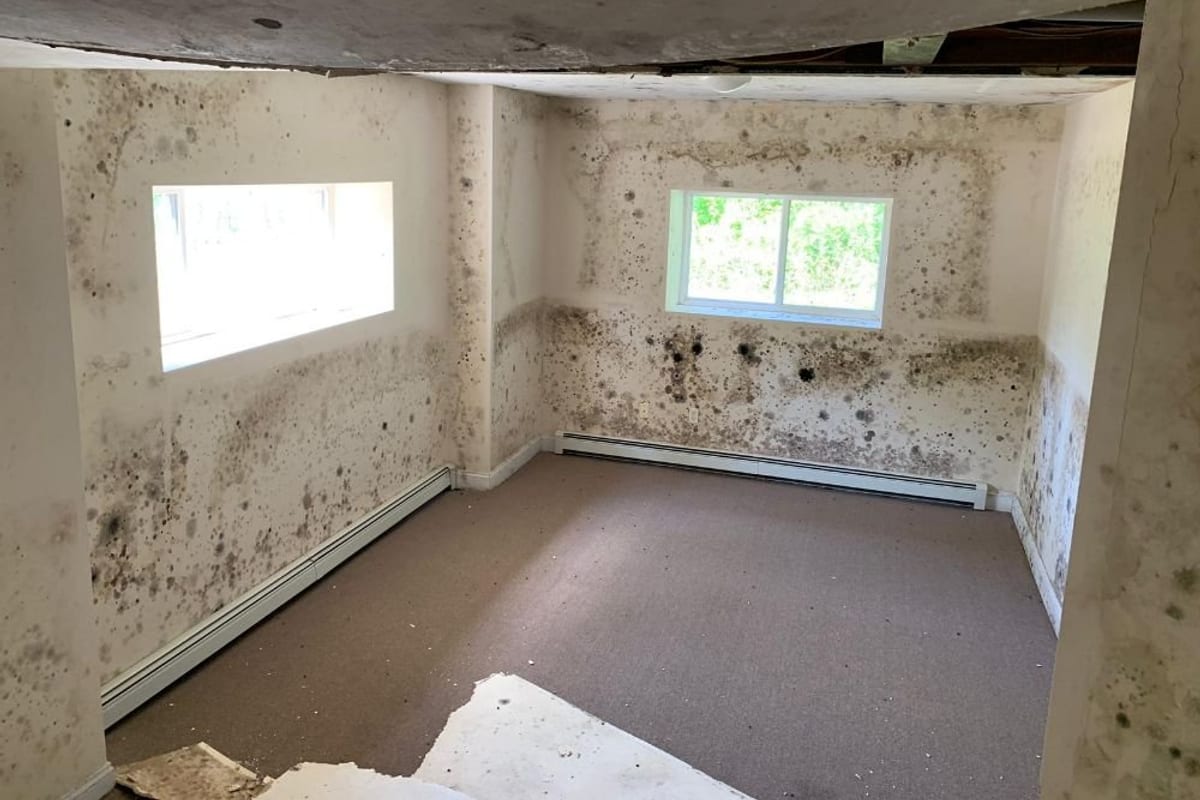
Most basements need a dehumidifier rated somewhere between about 20 and 50 pints per day under the current (2019 and later) rating system, with large or wet basements needing two units or a whole-basement model. The right size depends on the square footage, how damp the space is and how cool it runs, not just the number on the box.
This guide covers how pints-per-day ratings work, why a “70 pint” dehumidifier from 2018 and a “50 pint” one from today can be the same machine, a sizing table, drain options and how to set the humidistat to stay in the 30-50% range.
Start With the Humidity Target
The goal is to keep basement relative humidity (RH) between 30% and 50%, and never let it sit above 60%. That range comes from the EPA’s guide, A Brief Guide to Mold, Moisture and Your Home. Mold needs moisture, and humid air in a cool basement puts moisture on the walls, the joists and anything stored against the foundation.
Before you buy anything, put a digital hygrometer in the middle of the basement for a week during humid weather. Write down the morning and evening readings. That tells you two things:
- Whether you need a dehumidifier at all. If the basement already stays below 50% in August, you may not.
- How hard the dehumidifier will have to work. A basement that sits at 65% is a different job from one that sits at 85%.
If you see standing water, wet walls after rain or a musty smell, a dehumidifier is only part of the answer. Fix the water first. Our guide to old Gettysburg basements covers gutters, grading and drainage.
How Pints-Per-Day Ratings Work
A dehumidifier’s capacity is listed in pints of water removed per day under a standard test condition. The test temperature and humidity matter a great deal, because a dehumidifier pulls much more water out of warm, very humid air than out of cool air.
The 2019 rating change
In 2019, the U.S. Department of Energy test procedure changed from 80°F and 60% RH to 65°F and 60% RH. The cooler test is closer to real basement conditions, and a dehumidifier removes less water at 65°F. So the same machine now carries a smaller pint rating.
Manufacturers commonly publish rough equivalents like these:
| Older rating (80°F test) | Current rating (65°F test) |
|---|---|
| About 30 pints/day | About 20-22 pints/day |
| About 50 pints/day | About 30-35 pints/day |
| About 70 pints/day | About 50 pints/day |
Exact conversions vary by model. The practical point is simple: if you are comparing an old sizing chart, an old unit or an older online article to a new dehumidifier, check which rating system it uses. Sizing charts from the Association of Home Appliance Manufacturers (AHAM) that predate 2019 use the older, larger numbers.
Whole-house and ducted dehumidifiers are often rated under a separate AHAM condition, which can make their numbers look large next to portable units. Compare like with like.
ENERGY STAR
ENERGY STAR certified dehumidifiers remove the same amount of water using less electricity than standard models. In a basement where the unit runs many hours a day from May through October, efficiency matters. The ENERGY STAR label is a reasonable first filter when shopping.
Sizing Table for Basements
The table below is a general starting point using current (2019 and later) portable ratings. It is a rule of thumb, not a published standard. Check the manufacturer’s own sizing guidance for the model you are considering.
| Basement condition | Up to about 1,000 sq ft | About 1,000-1,500 sq ft | About 1,500-2,500 sq ft |
|---|---|---|---|
| Moderately damp (musty in humid weather, RH 60-70%) | 20-22 pint | 30-35 pint | 35-50 pint |
| Very damp (always smells musty, damp feel, RH 70-80%) | 30-35 pint | 35-50 pint | 50 pint or two units |
| Wet (sweating walls, damp floor spots, RH above 80%) | 35-50 pint | 50 pint | Whole-basement unit or two 50 pint units, after fixing water entry |
What pushes you to a bigger size
Move up a size when the basement has:
- An open stone or block foundation. Older masonry walls let more ground moisture into the space.
- A laundry area, especially a clothes dryer with a leaky vent or a line for hanging clothes.
- A sump pit without a sealed lid. An open pit adds moisture constantly.
- Frequent door traffic to the outside on humid days.
- Cool temperatures. A basement in the low 60s °F slows any dehumidifier down.
Why bigger is usually better than smaller
A slightly oversized dehumidifier reaches the set point and cycles off. An undersized one runs nonstop and may never get the basement below 60%. Running a small unit hard also shortens its life. For a large, open basement, two moderate units at opposite ends can work better than one unit in a corner.
That said, no dehumidifier can keep up with liquid water. If the readings stay above 60% with a correctly sized unit running full time, look for a leak, a drainage problem or an outside door or window being left open.
Local Housing Matters
Basements under older homes are a big part of the picture here. According to U.S. Census Bureau ACS 2020-2024 5-year estimates, 47.5% of housing units in Gettysburg borough were built before 1940, compared with 17.5% across Adams County and 25.0% statewide in Pennsylvania. Several nearby boroughs are similar: York Springs at 54.3% pre-1940, Arendtsville at 40.7% and Fairfield borough at 40.4%.
Older foundations of fieldstone or early block are more likely to fall in the “very damp” or “wet” rows of the table. Newer homes in places like Carroll Valley, where the median year built is 1993, more often have poured or block foundations with exterior damp-proofing, and land in the “moderately damp” row unless something is leaking.
Drain Options: Never Empty a Bucket Again
A basement dehumidifier should drain on its own. A bucket fills in hours on a humid day, the unit shuts off and the humidity climbs back while no one notices. There are 4 common drain setups.
1. Gravity hose to a floor drain
Most portable units have a hose connection. Run a garden hose or the supplied tube downhill to a floor drain. The hose must slope down the whole way, with no loops or uphill sections. Put the dehumidifier on a sturdy stand if you need more height.
2. Gravity hose to a sump pit
If there is no floor drain, a sump pit can work. The sump pump then carries the water out with the groundwater. Keep the hose clear of the float switch so it cannot snag it. If your house has a sewage ejector pit instead of a sump, do not open it; that is a sealed system.
3. Built-in pump
Many dehumidifiers come with an internal pump that pushes water up through a thin hose to a laundry sink, a window or a drain line at a higher level. This is handy when the only drain is above the unit. Check the pump’s maximum lift height against your setup.
4. Separate condensate pump
A small condensate pump, like the ones used for furnaces and air conditioners, collects water from the dehumidifier and pumps it to a drain. Pick one with a safety switch that turns off the dehumidifier if the pump fails, so it cannot overflow.
| Drain option | Best when | Watch for |
|---|---|---|
| Gravity to floor drain | Floor drain is lower than the unit | Hose kinks, uphill sections |
| Gravity to sump pit | No floor drain, sump nearby | Hose fouling the float; open pit adds moisture |
| Built-in pump | Drain is above the unit | Maximum lift height, clogs in thin hose |
| Separate condensate pump | Long or high run to a drain | Pump failure; use a safety cutoff |
Setting Up and Running It
A few setup details make a large difference.
- Set the humidistat to about 45-50%. Lower settings use more electricity and may not be reachable in a cool basement. The built-in humidistat is often off by several points, so trust your separate hygrometer.
- Place it centrally, at least a foot or two from walls and stored items, with clear air flow in and out.
- Close basement windows during humid weather. Opening them in summer usually adds moisture.
- Clean the filter on the schedule in the manual, usually every few weeks during heavy use.
- Keep the coil clean. Dust on the coil slows water removal.
- Watch for icing. Frost on the coil means the room is too cold for that unit. Some models have auto-defrost, and some are built for lower temperatures.
- Run it seasonally, often from late spring through early fall. Check the hygrometer in winter too; a heated basement may stay dry on its own.
When a Dehumidifier Is Not Enough
A dehumidifier controls humidity in the air. It does not dry out a wall soaked by groundwater, and it does not remove mold that is already growing. Call for help when:
- Mold covers more than about 10 sq ft, the EPA’s rough line for a do-it-yourself cleanup.
- You find growth on drywall, insulation or carpet in a finished basement.
- Joists or the subfloor show mold or soft wood.
- The basement flooded or the sump pump failed. See our guide to sump pump failure and mold.
- The house smells musty even with the dehumidifier running.
Frequently Asked Questions
Can a dehumidifier be too big for a basement?
Not usually. A larger unit reaches the target faster and cycles off, which can use about the same or less energy than a small unit that never stops. The real downsides are cost, noise and space.
How many hours a day should a basement dehumidifier run?
There is no set number. Let the humidistat decide. If the unit runs nearly all day and the hygrometer still reads above 60%, it is undersized, the basement is leaking or air is coming in from outside.
Should I run the dehumidifier in winter?
Check the hygrometer. In a heated basement, winter humidity is often below 40% and the unit will barely run. In an unheated basement that stays cool and damp, you may need a unit rated for low temperatures.
Is a whole-house dehumidifier better?
For a large basement, a finished basement or a home with ductwork that can share the system, a whole-house unit can be worth it. It costs more to install. For an average unfinished basement, a good portable unit with a proper drain usually does the job.
Mold Already Growing?
A dehumidifier is prevention. If the basement already has growth on walls, joists or stored belongings, the mold has to be removed and the moisture source corrected before a dehumidifier can keep it from coming back. See our basement mold remediation service, read whether DIY mold removal is safe for small areas, and contact us or call (717) 256-4434 to have the basement checked.