
Mold Remediation vs. Mold Removal: What the Terms Mean and What the Job Includes
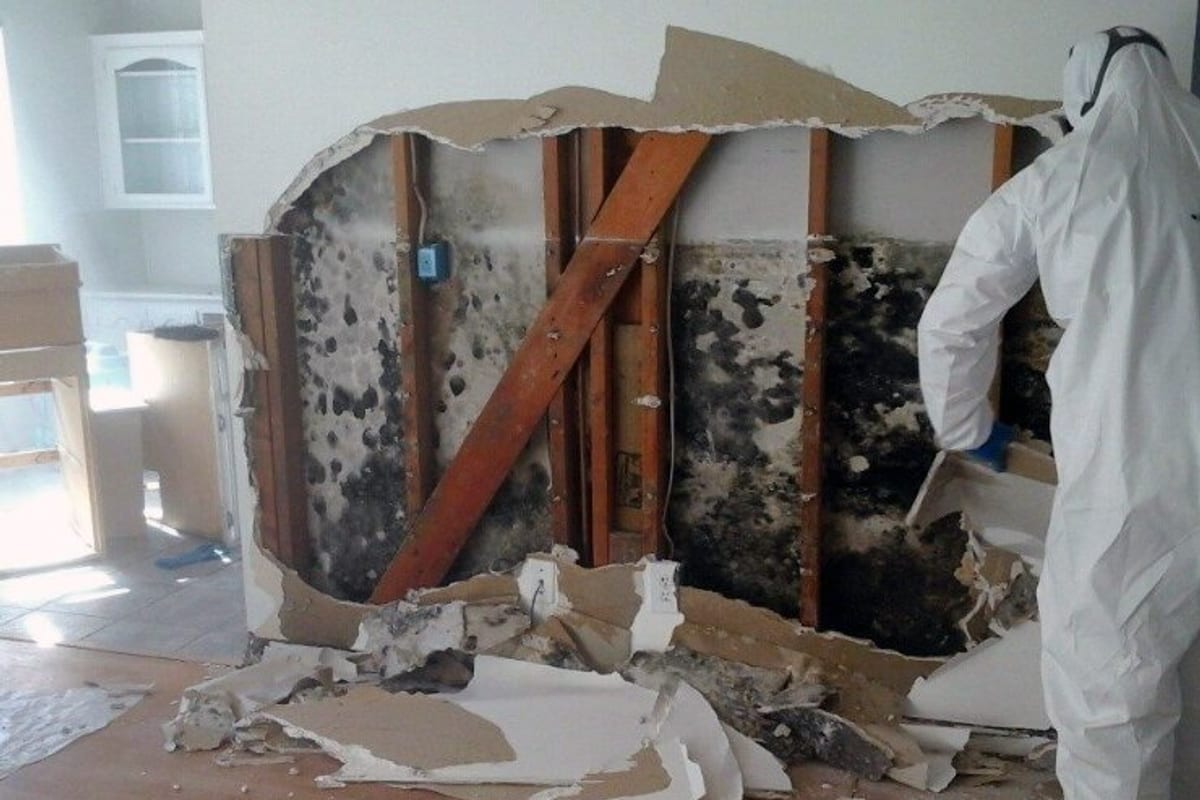
“Mold removal” usually means cleaning or cutting out visible growth, while “mold remediation” is the full process of finding the moisture source, containing the work area, removing contaminated materials, cleaning, drying, and confirming the area is back to normal. In everyday marketing the two terms are used interchangeably. What matters is not the label but what is written into the scope of work.
This guide covers where the terms come from, why no company can remove all mold from a house, the 7 steps a proper remediation includes, what is not remediation, and how to read a written scope.
Where the Two Terms Come From
“Mold removal” is the phrase most homeowners search for. It describes the part of the job people picture: getting rid of the stain on the wall.
“Mold remediation” is the term used in industry guidance. The U.S. Environmental Protection Agency (EPA) uses it throughout Mold Remediation in Schools and Commercial Buildings, and the Institute of Inspection, Cleaning and Restoration Certification (IICRC) uses it in the S520 Standard for Professional Mold Remediation. Remediation means correcting a problem, which includes the cause and not only the symptom.
| ”Mold removal” (common use) | “Mold remediation” (industry use) | |
|---|---|---|
| Focus | Visible growth | Growth, moisture source and spread |
| Moisture source | Sometimes addressed | Must be identified and corrected |
| Containment | Often none | Sized to the job |
| Porous materials | May be cleaned or sprayed | Removed when contaminated |
| Drying | Often assumed | Measured with moisture meters |
| End point | Stain is gone | Area is verified clean and dry |
Many reputable companies use “mold removal” in their advertising because that is what people search for, and many companies that call their work “remediation” do not follow the process. Ask what they actually do.
Why “Removing All Mold” Is Not the Goal
Mold spores are present in nearly all indoor and outdoor air, so no process can make a house mold-free. EPA states plainly on its mold pages that there is no practical way to eliminate all mold and mold spores in the indoor environment. The way to control indoor mold growth is to control moisture.
The IICRC S520 standard describes the goal using three conditions:
- Condition 1 (normal fungal ecology). The background level of spores and fragments you would expect in a building with no mold problem.
- Condition 2 (settled spores). An area contaminated with spores and fragments that settled from a nearby growth area, but without active growth of its own.
- Condition 3 (actual growth). Active or past mold growth on materials.
Remediation aims to return affected areas to Condition 1. That is a realistic, measurable target. “We kill 100% of mold” is not.
What a Proper Remediation Includes
A complete remediation follows roughly 7 steps, and skipping any of them is the most common reason mold comes back.
1. Assessment
Someone has to find out how large the problem is, what materials are affected, and what is causing it. That means a visual inspection, moisture readings, and often thermal imaging. Sampling is sometimes useful, but EPA says it is usually unnecessary when mold is visible. Our guide on mold inspection vs. testing covers the difference.
2. Fixing the moisture source
Leaks are repaired, drainage corrected, humidity brought under control, or ventilation improved. EPA’s guidance is clear that if the water problem is not fixed, mold will return. Sometimes this step is done by a plumber, roofer or HVAC contractor before or alongside the remediation.
3. Containment
Plastic sheeting isolates the work area so spores and dust do not spread. For larger jobs, the area is held under negative air pressure using HEPA air scrubbers, so air flows into the work area rather than out. EPA’s guide scales containment by the size of the affected area: limited containment for medium jobs (about 10 to 100 sq ft) and full containment for large ones.
4. Protective equipment
Workers wear respirators, gloves, eye protection, and often disposable coveralls, based on the size of the job and what is being disturbed.
5. Removal and cleaning
- Porous materials with growth, such as drywall, insulation, carpet and ceiling tile, are cut out, bagged inside containment, and removed.
- Semi-porous and hard materials, like framing, subfloor and concrete, are HEPA vacuumed, cleaned, and sometimes sanded or scrubbed.
- The work area is HEPA vacuumed and damp-wiped so settled spores are removed.
6. Drying
Materials are dried to normal levels and confirmed with moisture meters before anything is closed up. Rebuilding over damp framing restarts the problem.
7. Verification
Before containment comes down, the area is checked: no visible growth or dust, moisture readings normal, and, when used, air samples comparable to outdoor air and unaffected rooms. Read our guide on mold clearance testing after remediation for what that check involves.
Rebuild, such as new drywall, paint and flooring, comes after verification. Some remediation companies do it; others hand off to a general contractor.
What Is Not Remediation
Treatments that skip removal and moisture control are not a substitute for remediation. Watch for these:
- Fogging or “bombing” alone. Fogging a room with a biocide does not remove growth inside drywall or on the back of materials, and does not fix moisture.
- Spraying and painting over growth. Coatings and encapsulants may have a limited role after cleaning, such as on framing that has been cleaned. The IICRC S520 approach treats physical removal as the primary method, not coatings.
- Bleach and repaint. EPA does not recommend bleach as a routine cleanup step. See our guide on whether bleach kills mold.
- Ozone treatment. Ozone can damage materials and is a lung irritant. EPA has cautioned against using ozone generators in occupied spaces.
- Air purifiers as the fix. HEPA filtration helps during and after work but does not remove growth on surfaces.
How to Read a Written Scope
A scope of work is the document that tells you what you are actually buying. A useful one answers these questions:
- Where is the work? Rooms, walls, and approximate square footage.
- What is the moisture source, and who is fixing it? If the scope does not mention the cause, ask.
- What containment will be used? Plastic, zipper doors, negative air, and how many air scrubbers.
- What will be removed? Drywall height, insulation, carpet, specific materials.
- How will remaining surfaces be cleaned? HEPA vacuuming, damp wiping, sanding.
- How will drying be confirmed? Moisture readings at the end.
- How will the job be verified? Visual check, moisture readings, and whether air sampling is included or done by an independent party.
- What is excluded? Rebuild, contents cleaning, HVAC work, plumbing repairs.
Pennsylvania notes
Pennsylvania does not issue a state license for mold remediation. Home improvement work in Pennsylvania is covered by the Home Improvement Consumer Protection Act (HICPA), which generally requires contractors to register with the Pennsylvania Attorney General’s office and sets rules for written contracts, including a right to cancel within 3 business days. Check the Attorney General’s site for current requirements. This is general information, not legal advice. Our guide on how to choose a mold remediation company in Pennsylvania has more questions to ask.
For cost, our mold remediation cost page explains national published price benchmarks from Angi and HomeGuide. They are not local quotes; the scope drives the price.
Frequently Asked Questions
Is mold remediation the same as mold removal?
In everyday use, the terms are often swapped. In industry guidance, remediation means the full process: fixing the moisture source, containing the area, removing contaminated materials, cleaning, drying, and verifying the result. Removal can describe only the cleanup step.
Can a company guarantee it removed all the mold?
No company can remove every mold spore from a home, because spores are in normal indoor and outdoor air. A realistic goal is returning the work area to normal background conditions, which IICRC S520 calls Condition 1, and confirming it with a visual check, moisture readings, and sometimes air sampling.
Does remediation always involve tearing out walls?
No. Mold on hard surfaces can often be cleaned in place. Porous materials like drywall, insulation and carpet are removed when growth is in them. The scope depends on what materials are affected and how far the moisture spread.
Do I need testing after remediation?
Not always. A visual check and moisture readings are the core of verification. Air sampling adds documentation, which can be useful for real estate transactions, insurance, or sensitive occupants. Some homeowners hire an independent party for it.
Getting a Clear Assessment First
The best way to know whether you need cleaning, removal, or full remediation is a moisture-focused assessment. Our mold inspection and testing service documents what is affected, why, and what scope makes sense, in writing. We follow EPA guidance and the IICRC S520 standard on remediation work. Contact us to schedule an assessment.