
Mold in Closets: Why It Grows on Exterior Walls and How to Stop It
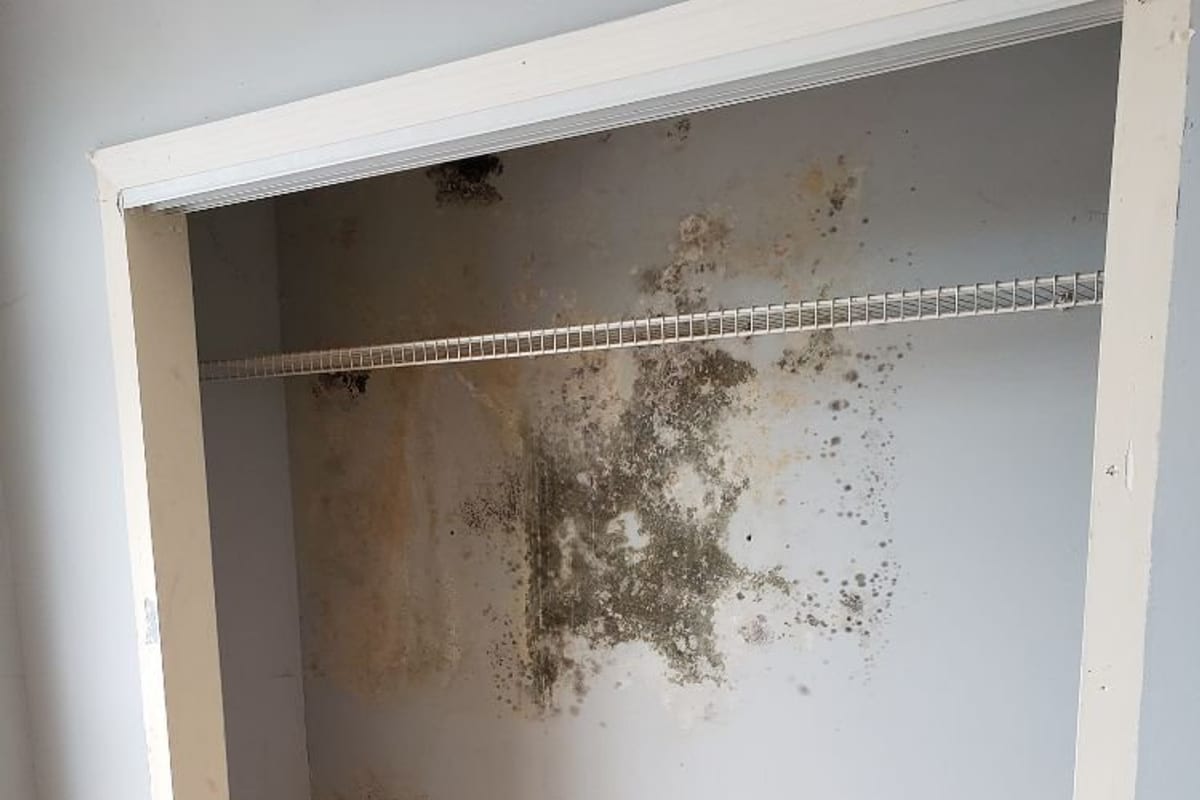
Closet mold usually grows because a closet on an exterior wall stays colder than the rest of the room, the door stays shut, and stored items block air from reaching the wall, so moisture condenses there and does not dry. In most cases there is no leak at all. Fix the temperature and airflow problem and the mold stops coming back.
This guide covers why closets are prone to mold, how to tell condensation from a leak, how to clean a small patch, what to do with the clothes and shoes, and the changes that prevent it.
Why Closets Grow Mold
A closet is a small, enclosed space with little air movement and, usually, no heating or cooling supply of its own. That alone does not cause mold. Add one more factor and it can.
The cold corner effect
Where two exterior walls meet, or where an exterior wall meets the ceiling, there is more outside surface and less inside surface. Those corners run colder than the middle of a wall. Missing or settled insulation makes it worse, and so do framing members that conduct cold through the wall.
In winter, warm indoor air carries water vapor. When that air reaches a surface colder than its dew point, water condenses on the surface. In an open room, air movement and heat from the room keep the wall warmer and dry it off. In a closed closet with coats pressed against the wall, the surface stays cold and damp. Mold can start growing on damp drywall paper, paint, dust, and fabric.
The usual risk factors
- Exterior wall location, especially on the north side of the house, which gets no winter sun.
- Door kept closed all the time.
- No heating or cooling register in the closet.
- Items packed tight against the back wall: coats, boxes, luggage, bags of clothes.
- High indoor humidity in winter, from showers, cooking, drying clothes indoors, or a humidifier set too high.
- Closets that back onto a bathroom, which can add both humidity and plumbing leaks.
- Closets under stairs or under a roof slope in upper-floor rooms, where insulation is often thin.
Older homes
Many Gettysburg-area homes have closets that were added later, built into corners against stone or brick exterior walls, or tucked under knee walls in finished attics. According to U.S. Census Bureau ACS 2020-2024 5-year estimates, 47.5% of housing units in Gettysburg borough were built before 1940. Solid masonry and lightly insulated walls are common in houses that age, and the inside surface of those walls can run cold in winter. If your closet walls are plaster, our guide to mold on plaster walls in old homes covers how plaster behaves.
Condensation or a Leak? How to Tell
The pattern of the mold tells you most of what you need to know.
| Clue | Points to condensation | Points to a leak |
|---|---|---|
| Location | Lower corners and along the floor on exterior walls; top corners at the ceiling | One spot or a streak, often below a window, roof line, or plumbing |
| Shape | Spotty, spread across a cold area | Concentrated, sometimes with a tide-line stain |
| Season | Winter, worse in cold snaps | Follows rain, snowmelt, or plumbing use |
| Wall feel | Cold to the touch, damp on the surface | Wet inside; moisture meter reads high deeper in |
| Behind items | Worst right where items touched the wall | Not related to what was stored there |
A quick test: tape a 12 inch (30 cm) square of clear plastic tightly to the clean, dry wall in the problem area and leave it for 24 to 48 hours. Moisture on the room side of the plastic means condensation from the air. Moisture under the plastic, against the wall, means water is coming through the wall itself.
If you suspect water is getting into the wall, our guide to signs of mold behind drywall explains how to check with a moisture meter before opening anything.
How to Clean a Small Patch of Closet Mold
The U.S. Environmental Protection Agency (EPA) says a homeowner can usually clean an area smaller than about 10 sq ft (0.9 m²) of mold. Its Brief Guide to Mold, Moisture and Your Home covers the basics.
- Empty the closet. Take everything out and set it aside in another room on a sheet or tarp, not on the bed.
- Protect yourself. Wear gloves, goggles, and an N95 respirator.
- HEPA vacuum the surface if you have a HEPA vacuum, to pick up loose spores and dust first.
- Scrub with detergent and water on painted drywall and trim. Use a cloth or soft brush and wring it out well, so you do not soak the drywall.
- Dry the surface completely. Run a fan into the closet with the door open.
- Check the result. If the paint is gone, the drywall paper is stained through, or the surface is soft, that section of drywall should be cut out and replaced rather than cleaned.
Skip the bleach. It does not penetrate porous materials, it adds water, and it can fade the stain while leaving growth in the paper. The EPA recommends detergent, water, and complete drying instead.
Repainting is fine after the wall is clean and dry and the cause has been fixed. Painting over mold without cleaning it does not stop it.
What to Do With Clothes, Shoes, and Stored Items
Items in a moldy closet usually have surface growth or have picked up the musty smell. Most can be saved.
- Washable clothing: wash in the warmest water the fabric allows, with regular detergent, and dry completely. Repeat if the smell remains.
- Dry-clean-only items: take them to a dry cleaner and tell them about the mold.
- Leather shoes, belts, and bags: take them outside, brush off the surface growth, wipe with a damp cloth, and let them dry fully away from direct heat.
- Cardboard boxes: throw out moldy boxes and repack the contents in plastic bins.
- Paper, photos, and books: small amounts of surface mold can sometimes be brushed off once dry. Valuable items may need a conservator.
Our guide to mold on clothes and furniture goes into each material in more detail.
How to Prevent Closet Mold
Prevention is about keeping the closet wall warmer and drier than its dew point. These steps run roughly from easiest to most involved.
1. Lower winter indoor humidity
Keep indoor relative humidity between 30% and 50%, per EPA guidance. In cold weather, the lower end of that range reduces condensation on cold surfaces. Run bathroom fans during and for about 20 minutes after showers, use the range hood when cooking, and vent the dryer outdoors. If you run a humidifier in winter, set it lower and watch for condensation on windows as an early warning.
2. Leave a gap behind stored items
Keep a gap of at least 2 to 4 inches (5 to 10 cm) between the back wall and anything stored in the closet. Wire shelving lets air pass better than solid shelves. Store items off the floor.
3. Let air in
- Leave the closet door open for part of the day, especially in cold weather.
- Replace a solid door with a louvered door, or have the bottom of the door trimmed to leave a larger gap.
- In a problem closet, a small fan run for a few hours a day helps.
4. Do not store damp items
Put away clothes only when completely dry. Let wet coats, boots, and umbrellas dry in an open area first. Avoid storing items in sealed plastic dry-cleaning bags.
5. Add heat and insulation
If the closet still grows mold after the steps above, the wall itself is too cold. Options include:
- Having the exterior wall checked for missing or settled insulation, and adding insulation where it can be done properly.
- Air-sealing gaps at the top plate, outlets, and the ceiling, which reduces cold air leaking into the closet.
- In some cases, extending a supply register to the closet.
In older masonry homes, insulating an exterior wall from the inside can move the cold surface rather than remove it, so get advice before adding insulation to a stone or brick wall. Penn State Extension publishes general home moisture and energy information that is a reasonable starting point.
When Closet Mold Needs a Professional
Call for an assessment if:
- The growth covers more than about 10 sq ft (0.9 m²), or spreads beyond the closet onto the room walls.
- Mold returns within weeks after cleaning, even with airflow and humidity improved.
- The drywall is soft, crumbling, or stained through.
- The pattern points to a leak rather than condensation.
- The closet backs onto a bathroom, kitchen, or laundry room and the smell is strong.
- Someone in the home has asthma, allergies, or a weakened immune system.
Professional removal usually means containing the closet, removing affected drywall and insulation, cleaning the framing with HEPA vacuuming, drying, and confirming the wall is clean and dry before rebuild. If you are curious about the price range, our mold remediation cost page lists national published benchmarks from Angi and HomeGuide; those are not local quotes.
Frequently Asked Questions
Why does mold keep coming back in my closet after I clean it?
Because the cause is still there. If the closet wall stays cold and the air in the closet stays still and humid, condensation returns as soon as the weather gets cold. Leave a gap behind stored items, let air in, lower winter humidity, and check the wall for missing insulation.
Is black mold in a closet dangerous?
The color of mold does not tell you the species or how hazardous it is. Any mold growing indoors can bother sensitive people, and the EPA’s advice is the same for all of it: clean or remove it and fix the moisture. Our guide to black mold myths explains why color alone is not a useful warning sign.
Should I put a dehumidifier in my closet?
A small dehumidifier or desiccant product can help in a damp closet, but it treats a symptom. If the problem is a cold exterior wall, lowering whole-house humidity and getting air to the wall usually work better. Desiccant buckets work slowly and need to be replaced or recharged.
Can I paint over closet mold with mold-resistant paint?
Not over existing growth. Clean and dry the surface first, replace any drywall that is soft or stained through, and fix the cause. After that, a mold-resistant primer and paint is a reasonable finish, but it will not stop mold on a wall that keeps getting wet.
If your closet mold keeps returning or has spread onto the surrounding walls, our black mold removal service handles containment, removal, and drying, and we will explain what is causing it. Contact us to schedule a look.