
How Long Does Mold Remediation Take? A Realistic Timeline
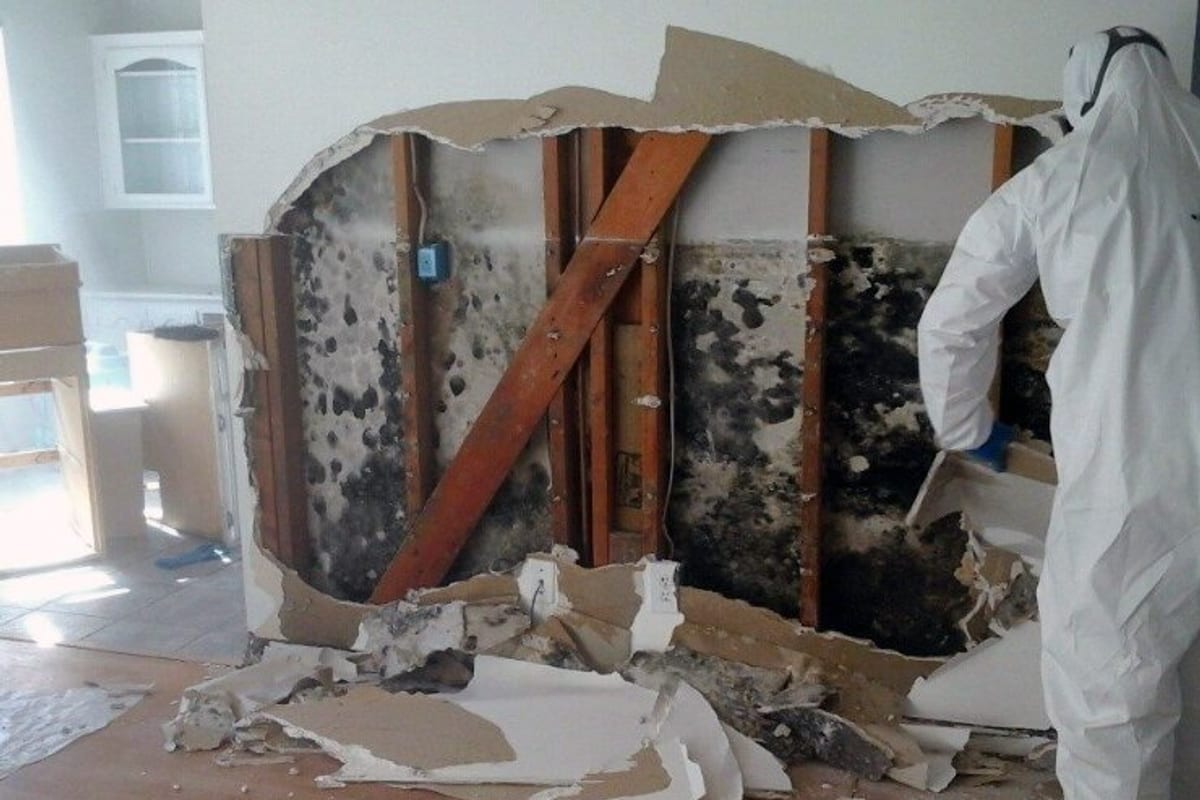
Most residential mold remediation takes 1 to 5 working days on site, but the full project, from first inspection to finished walls, often runs 1 to 3 weeks once drying, clearance and rebuild are counted. The removal itself is rarely the slow part. Drying wet materials and waiting on verification usually are.
This guide covers the phases of a remediation job, how long each one takes by job size, what slows a project down, and how to plan around the work.
Why “How Long” Has Two Answers
When people ask how long remediation takes, they usually mean one of two things:
- How long the crew is in the house, setting up containment, removing material and cleaning.
- How long until life is back to normal, with walls closed, floors down and the room in use.
The first number is often a few days. The second depends on how wet the structure is, whether anyone tests the work before it is closed up, and how much rebuilding the job needs. A contractor who quotes only the first number is not wrong, but you should ask about the second before you plan around it.
The 6 Phases of a Remediation Project
A job done to the IICRC S520 standard and EPA mold guidance moves through the same basic phases, whatever the size.
1. Assessment
Someone has to find the moisture source and map how far the growth goes. That means a visual walk-through, moisture meter readings and sometimes thermal imaging. For a typical home this visit takes 1 to 3 hours. If lab sampling is part of the plan, results usually come back in 1 to 3 business days. Our inspection vs. testing guide explains when sampling is worth adding.
2. Fixing the water problem
Remediation should not start until the moisture source is fixed or stopped. A leaking supply line can be repaired in an hour. A failed roof flashing, a grading problem or a bathroom fan that vents into the attic may need another trade and a few days of scheduling. This is the phase homeowners most often underestimate.
3. Containment and setup
The crew seals the work area with plastic sheeting, covers HVAC vents, sets up a HEPA air scrubber to hold the area under negative pressure, and lays down protection on the path in and out. For one room this usually takes a few hours. Multi-room or attic setups can take most of a day.
4. Removal and cleaning
Porous materials with growth, such as drywall, insulation, carpet pad and ceiling tile, are cut out and bagged. Framing and other hard materials are HEPA vacuumed, wiped and cleaned. Wood with surface growth may be sanded or blasted. This is the phase people picture when they think of remediation.
5. Drying and verification
Exposed framing and subfloor must be brought back to normal dry levels before anything is sealed in. Then the work area gets a final check: a visual inspection, moisture readings and, on some jobs, air sampling. Our guide to clearance testing after remediation covers this step in detail.
6. Rebuild
New insulation, drywall, tape, paint, trim and flooring go back in. Many remediation companies do not do rebuild, so this may be a separate contractor with its own schedule.
Typical Timeline by Job Size
These are general ranges for a home that has already had its leak fixed. Your contractor’s written scope should give an estimate for your specific job.
| Job size | Example | Crew on site | Drying and clearance | Typical total before rebuild |
|---|---|---|---|---|
| Small (under about 10 sq ft) | Growth on a bathroom ceiling, a closet corner | Often a few hours to 1 day | Same day to 1 day if the material is dry | 1 to 2 days |
| Medium (one room or about 10 to 100 sq ft) | Lower 2 ft of drywall in a finished basement after a leak | 1 to 3 days | 1 to 4 days | 3 to 7 days |
| Large (multiple rooms, attic deck, crawl space) | Attic sheathing, a whole basement, a crawl space with growth on joists | 3 to 7 days or more | 2 to 7 days | 1 to 2 weeks |
| After flooding or sewage | Basement that took on groundwater or a sewer backup | Varies widely | Often a week or more | 2 weeks or more |
The EPA treats about 10 sq ft (0.9 m²) as the size a homeowner can usually handle alone, and its schools and commercial buildings guide scales containment up as the area grows. Bigger containment means more setup and teardown time.
What Makes Drying Take Longer
Drying is the phase with the widest range, because water does not leave wood and masonry on a contractor’s schedule. A proper drying plan uses dehumidifiers and air movers and tracks progress with daily moisture readings. Things that stretch it out:
- Dense or thick materials. Solid lumber, sill plates and plaster dry slower than drywall paper.
- Stone and block foundations. Masonry can hold water for days after a storm and keep releasing it into the room.
- Humid weather. Gettysburg summers push outdoor humidity high, and opening windows usually adds moisture instead of removing it.
- Cold spaces. Unheated crawl spaces and attics dry slower in winter.
- Hidden water. Wet insulation behind a wall that was never opened, or water trapped under vinyl flooring.
A common target is to dry wood back to the same moisture content as unaffected wood in the same house, often in the low to mid teens on a pin meter. Your contractor should show you the readings.
Older Homes Take More Planning
Gettysburg’s housing stock is old. According to U.S. Census Bureau ACS 2020-2024 5-year estimates, 47.5% of housing units in Gettysburg borough were built before 1940, and the median year built is 1942. Across Adams County the share is 17.5%, with a median year of 1980.
That matters for timelines in a few ways:
- Plaster and lath take longer to remove and contain than drywall, and they create more debris. See our guide to mold on plaster walls in old homes.
- Lead paint is common in homes built before 1978. Disturbing painted surfaces can trigger lead-safe work practices under EPA’s Renovation, Repair and Painting rule, which adds setup time.
- Fieldstone basements stay damp longer, so drying and verification can take more days than in a newer poured-concrete basement.
5 Things That Delay a Remediation Job
- The leak is not fixed yet. No good crew will rebuild over an active water source.
- Insurance review. If you are filing a claim, the adjuster may want to see the damage before materials are removed. Ask your contractor to photograph everything. This is general information, not legal or insurance advice, and policies vary, so read your policy.
- Hidden growth found during demolition. Opening a wall sometimes shows growth extends further than the first inspection suggested. A clear scope should explain how changes are handled.
- Failed clearance. If the final check finds remaining dust, growth or wet material, the area gets cleaned or dried again and rechecked. That can add 1 to 3 days.
- Rebuild scheduling. Drywall, flooring and painting trades book up, especially after regional storms.
Can You Speed It Up?
Some things are in your control:
- Fix or schedule the leak repair before the remediation start date.
- Clear the work area of furniture, boxes and stored items before the crew arrives.
- Keep the containment closed and do not turn off dehumidifiers or air scrubbers overnight to save power or noise.
- Book the rebuild contractor early, so they can start as soon as clearance passes.
- Decide on independent clearance testing in advance, so the assessor’s visit is already on the calendar.
What you should not do is skip drying or clearance to finish faster. Closing wet framing into a wall is one of the most common reasons mold comes back.
If you are wondering whether you can live in the house during all of this, our guide on staying home during mold remediation walks through containment and who should leave.
What About Cost?
Longer jobs usually cost more, mainly because of labor, equipment days and rebuild. For national published price benchmarks from sources such as Angi and HomeGuide, see our mold remediation cost page. Those figures are national averages, not local quotes.
Frequently Asked Questions
How long does it take to remove mold from one room?
For a single room with limited growth and a fixed leak, the crew is often on site 1 to 3 days. Add 1 to 4 days for drying and clearance before walls are closed. Rebuild is extra.
How long should air scrubbers run after mold remediation?
HEPA air scrubbers typically run continuously during removal and cleaning and keep running until the final verification is done. Turning them off early can let disturbed dust settle back on cleaned surfaces.
How long after remediation can I put drywall back up?
Only after the framing is dry and the area passes its final visual check and any clearance testing. On many jobs that is 1 to 4 days after removal ends, longer for wet masonry or flooding.
Why is my remediation taking longer than quoted?
The most common reasons are hidden growth found after demolition, materials that dry slower than expected, a failed clearance check, or waiting on another trade to fix the water source. Ask your contractor for the moisture readings and a written change order.
Get a Timeline for Your Home
The fastest path to an accurate schedule is a moisture-focused assessment that maps the growth and the water source before anyone starts cutting. Learn how our inspections work, then contact us to set up a visit and get a written scope with a realistic timeline.