
Visual Inspection
A room-by-room check of the basement, attic, crawl space, bathrooms, and HVAC equipment. We look for staining, growth, and water damage, and photograph each finding for your report.
Visual inspection, moisture mapping, thermal imaging, and air or surface sampling. The point is to find the moisture source before any remediation starts. You get a written report of where the moisture is, how far the growth goes, and whether lab sampling is worth paying for.
An inspection earns its cost when you smell mold but cannot find it, when symptoms have no clear cause, or when a house is changing hands. Any one of these is a reason to measure before anyone opens a wall.
An inspection is built from a few tools, and not every house needs all of them. A visual check and moisture readings come first; sampling is added only when the result would change what you do next.
A room-by-room check of the basement, attic, crawl space, bathrooms, and HVAC equipment. We look for staining, growth, and water damage, and photograph each finding for your report.
Pin and pinless moisture meters read drywall, framing, and subfloor. The readings are mapped so we find the water source, not just the stain it left behind.
An infrared camera shows cool, damp areas behind walls and ceilings without opening them. Thermal images do not detect mold directly, so every cool spot is confirmed with a moisture meter.
Spore trap samples from inside the home are compared with an outdoor sample taken the same day. A third-party laboratory identifies spore types such as Aspergillus, Penicillium, and Cladosporium.
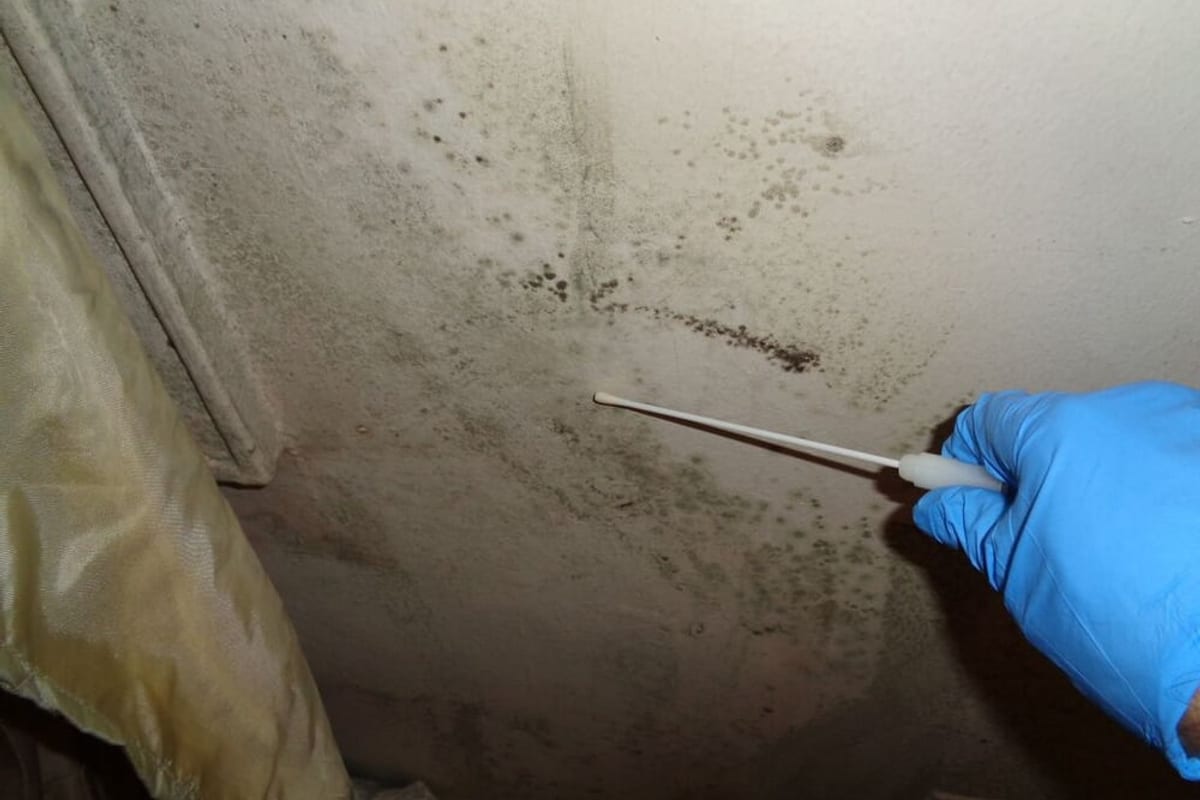
A tape lift or swab from a suspect stain confirms whether it is mold. EPA notes sampling is often unnecessary when mold is plainly visible, so we recommend it only when the result changes the plan.
You get findings, photos, moisture readings, lab results, and a remediation scope with square footage. Any quote for work is written, and you are under no obligation to hire us.
Buying a house or chasing a smell? Tell us which, and we will say which parts of the inspection are worth it.
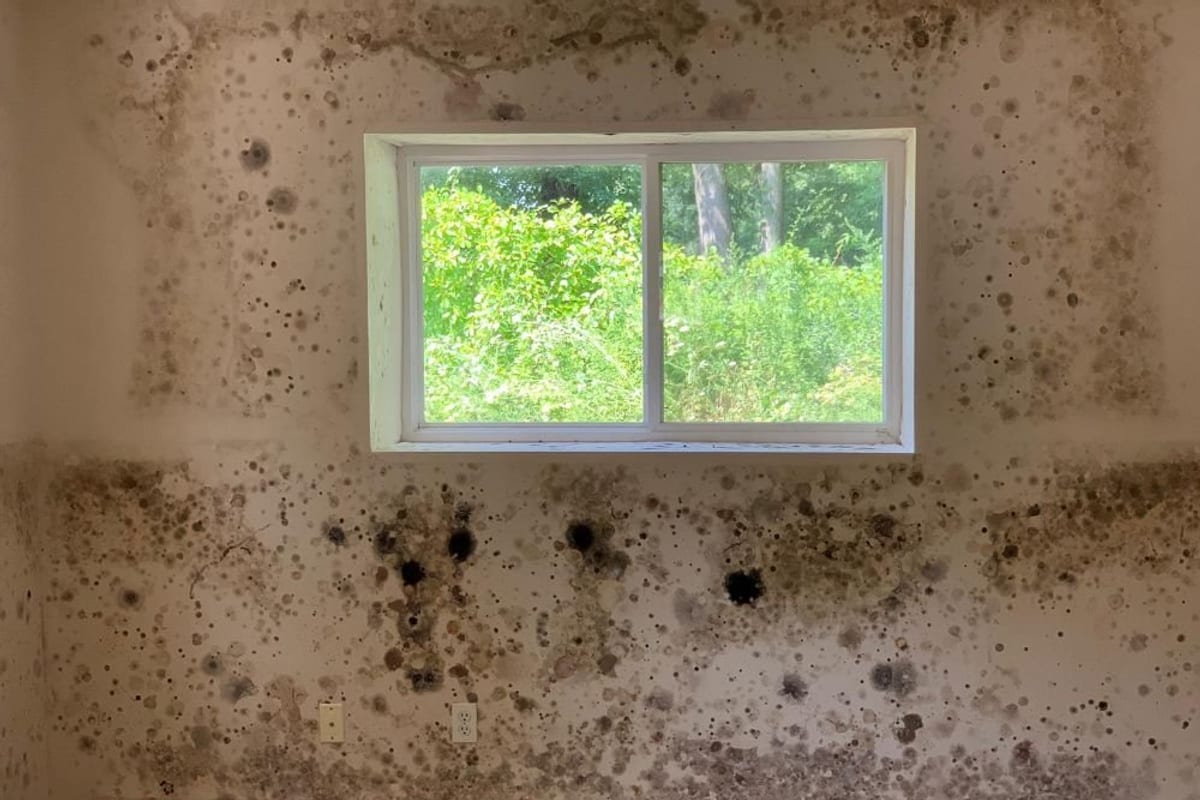
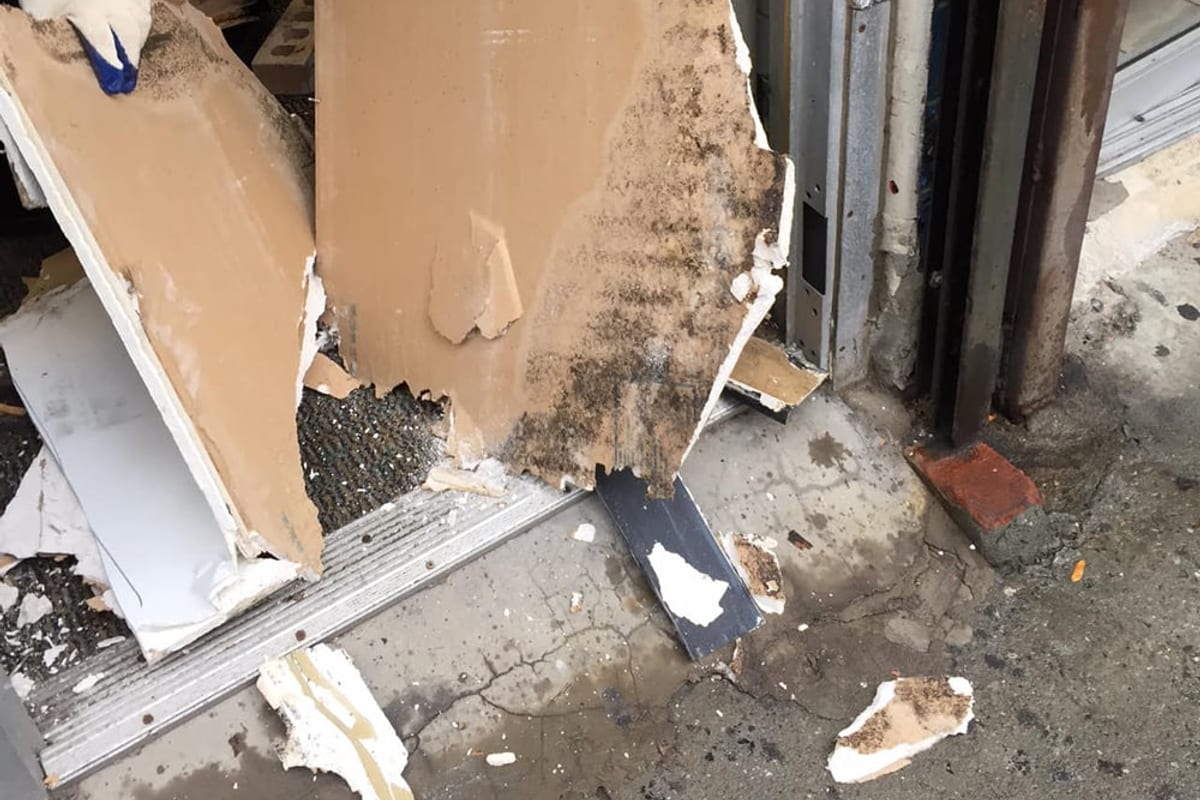
📞 Call (717) 256-4434Most of the mold we are called about was never visible. It sits behind a finished basement wall, above a bathroom ceiling, under a vinyl floor, or on the back side of insulation. The stain that finally appears is usually the last stop on the water path, not the start of it.
That matters more in this town than in a newer subdivision. A house built before 1940 has plaster over lath, balloon framing that lets water travel between floors, and a stone foundation with no capillary break. Water can enter at a gutter line and show up two rooms away.
That is why a mold inspection here starts with moisture, not just a swab. We take readings at foundation walls, sill plates, and under bathrooms, because in older Gettysburg homes the water source is often far from the stain. Sampling, when used, follows the approach in EPA mold cleanup guidance: it supports the moisture findings rather than replacing them.
The goal is an answer, not a sample count. We find the water first, then decide whether air or surface samples will tell you anything the moisture map has not.
Tell us the smell, the stain, the symptom, and any leak history. Often we can say on the phone whether you need a full inspection or whether EPA guidance says the area is small enough to handle yourself.
Basement, crawl space, attic, bathrooms, and the HVAC equipment. Every finding is photographed with its location so the report is something you can act on or hand to a buyer.
Meter readings are taken in a grid, not at one spot, and thermal imaging narrows where to look. Every cool area the camera shows is confirmed with a meter, because a camera cannot see mold.
You get the readings, the photos, the likely water source, and the square footage. If sampling was taken, lab results follow in 1 to 3 business days with what the numbers actually mean.
Ready for step one?
Call (717) 256-4434A useful inspection connects observations and moisture readings to a written scope. Sampling should answer a specific question.
Explains that visible growth usually makes sampling unnecessary and that federal airborne mold limits have not been set.
Check the contractor and the written contract requirements before agreeing to work.
Compare a moisture investigation with laboratory sampling.
Confirm whether samples, lab fees and a written report are included.
Coordinate access to shared basements and occupied units.
Trace runoff and crawl-space moisture before choosing a treatment.
A good inspector tells you what not to test as often as what to test. Gettysburg Mold Remediation Pros reports what the readings show, including when the answer is a humidity problem rather than a mold problem.
Questions about what an inspection finds, when lab testing is worth it, how results are read, and what a report is good for in a sale. Don't see yours? Call and ask.
HomeGuide publishes a national inspection benchmark of $300-$650, reaching $1,000 for larger homes or widespread problems. This is not a verified Gettysburg average or our fixed rate. Confirm the affected area, moisture mapping, samples, lab fees and written report in your estimate before the visit. Our cost guide separates national sources from property-specific quotes.
Read the national cost sources, calculation assumptions and exclusions.
Question about your property? Call (717) 256-4434No, not usually. EPA guidance says sampling is often unnecessary when mold is visible, because the fix is the same: remove the growth and correct the moisture source. Testing helps when mold is hidden, when a buyer or landlord needs documentation, or when you want a clearance check after remediation.
Question about your property? Call (717) 256-4434Most mold inspections of a Gettysburg PA home take 1 to 3 hours on site. Lab results for air and surface samples usually come back within a few business days. Larger homes and homes with finished basements and attics take longer.
Question about your property? Call (717) 256-4434No. Neither Pennsylvania nor the EPA sets a legal limit for mold spores in indoor air. Inspectors compare indoor samples with an outdoor sample from the same day. Indoor counts well above outdoor counts, or mold types found inside but not outside, point to a hidden source.
Question about your property? Call (717) 256-4434Yes, for older homes it is worth it. Many Gettysburg homes were built before 1940 on fieldstone or block foundations that let ground moisture in. A standard home inspection notes visible problems. A mold inspection adds moisture readings and sampling in basements, attics, and crawl spaces.
Question about your property? Call (717) 256-4434Mold can cause a stuffy nose, wheezing, red or itchy eyes, and skin irritation, according to the CDC. People with asthma, allergies, or a weakened immune system tend to react more strongly. If symptoms are severe, see a doctor first. An inspection then finds where the mold is growing.
Question about your property? Call (717) 256-4434Yes, we do both, and you decide who does the work. The written report lists moisture readings, lab results, and square footage, so any contractor can quote from it. If you prefer, hire an independent inspector for the clearance test after remediation.
Question about your property? Call (717) 256-4434No. Pennsylvania does not license mold inspectors or assessors, so the questions to ask are about method. Ask whether the inspector measures moisture before sampling, whether samples go to an accredited lab, and whether the same company that inspects also wants to sell you the remediation. An inspection is most useful when its only job is to tell you what is there.
Question about your property? Call (717) 256-4434Usually not on its own. Insurers generally treat an inspection as the homeowner's cost unless it is part of an already-approved claim, for example testing after a burst pipe that the policy covers. If you are opening a claim, order the inspection first: the moisture readings, photographs, and written scope are exactly what an adjuster asks for, and having them before the call usually moves things faster.
Question about your property? Call (717) 256-4434Book an inspection and get a written map of the moisture and any growth, with photos and meter readings, so you can decide on facts instead of guesses.