
Black Mold Myths: What the CDC Actually Says About Stachybotrys
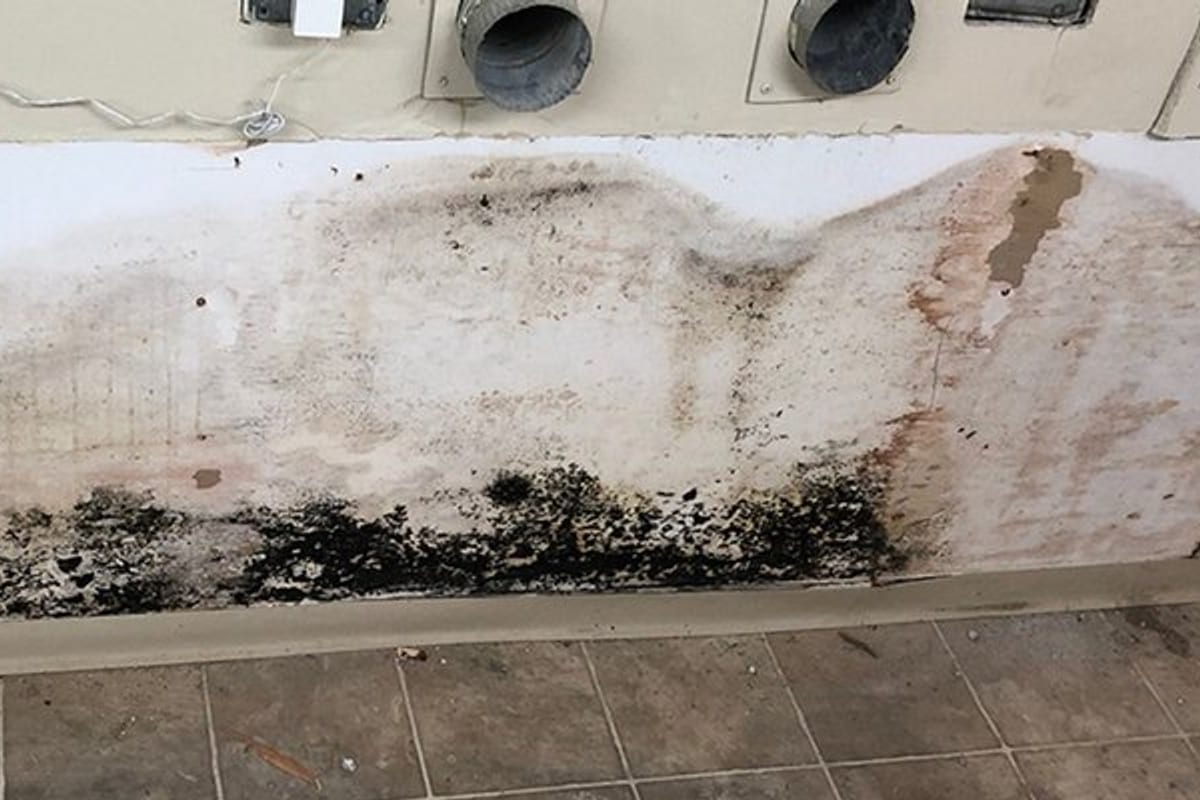
“Black mold” usually refers to Stachybotrys chartarum, but most dark mold in homes is not Stachybotrys, color does not tell you the species, and the CDC says all indoor mold growth should be removed the same way regardless of type. Mold can cause real health problems, especially for people with asthma or allergies. The idea of a uniquely deadly “toxic black mold” is not what the evidence shows.
This guide covers what Stachybotrys is, 9 common myths and what CDC and EPA guidance actually say, the health effects that are well supported, and what to do when you find dark mold at home.
What “Black Mold” Means
Stachybotrys chartarum is a greenish-black mold that grows on materials with a lot of cellulose, such as drywall paper, ceiling tiles, cardboard, and wood, when they stay wet for a long time. The Centers for Disease Control and Prevention (CDC) describes it on its mold and health pages as one of many molds that can grow indoors.
A few facts about how it behaves:
- It needs prolonged wetness. Stachybotrys usually shows up after a leak or flood that went unaddressed, not on a damp windowsill after one humid night.
- Its spores are heavy and sticky. They do not become airborne as easily as many common molds, but they do get released when growth dries out and is disturbed.
- It can produce mycotoxins. Some strains produce compounds called trichothecenes. Being able to produce a toxin is not the same as people in a home being exposed to harmful levels of it.
9 Black Mold Myths, Checked
| Myth | What the evidence says |
|---|---|
| All black mold is Stachybotrys | Many common molds are dark, including Cladosporium, Alternaria and Aspergillus niger |
| Black mold is far more dangerous than other mold | CDC says all molds should be treated the same, and links to rare illnesses are not proven |
| You must identify the species before cleanup | EPA and CDC say testing is usually unnecessary when mold is visible |
| Bleach is the cure for black mold | EPA does not recommend bleach as a routine cleanup step |
| Black mold causes memory loss and bleeding lungs | CDC says a causal link has not been proven |
| If you cannot see it, you do not have it | Mold often grows inside walls, under carpet and in ducts |
| Dead mold is harmless | EPA notes dead mold can still cause allergic reactions |
| Any black mold means you must move out | Most growth can be removed with the moisture fixed |
| Home test kits will tell you if it is black mold | Settle plates grow something in almost every home |
Myth 1: All black mold is Stachybotrys
Most dark mold in houses is something else. Cladosporium, one of the most common molds both indoors and outdoors, often looks black or dark green on window sills, bathroom caulk and painted walls. Alternaria, Aspergillus niger, and several others are also dark. You cannot identify Stachybotrys by looking at it.
Myth 2: Black mold is more dangerous than other mold
The CDC says it is not necessary to determine what type of mold you have, because all molds should be treated the same with respect to potential health risks and removal. Many common molds trigger allergy and asthma symptoms. Stachybotrys is not singled out in federal guidance as needing a different cleanup method.
Myth 3: You need to test to know what you are dealing with
EPA’s mold guidance says that if visible mold growth is present, sampling is usually unnecessary. The fix is the same no matter the species: find the moisture, remove the growth, dry the area. Testing is worth it in specific cases, like a musty smell with no visible growth. Our guide on mold inspection vs. testing covers when.
Myth 4: Bleach is the cure
Bleach can kill growth on a hard surface, but it does not reliably reach mold inside drywall or wood, and it does not remove the allergens in dead mold. EPA’s guidance favors detergent, scrubbing, removal of porous materials, and drying. See our guide on whether bleach kills mold.
Myth 5: Black mold causes memory loss and bleeding lungs
This myth traces in part to a cluster of infant lung hemorrhage cases in Cleveland, Ohio in the mid-1990s, where early reports suggested a link to Stachybotrys. The CDC later reviewed those investigations and concluded that the evidence did not establish an association. The CDC’s current guidance says there are very few case reports linking “toxic” molds in homes to unique or rare conditions such as pulmonary hemorrhage or memory loss, and that a causal link has not been proven.
That does not mean mold exposure is harmless. It means the dramatic claims are not supported, while the everyday respiratory effects are.
Myth 6: If you cannot see it, it is not there
Stachybotrys thrives in exactly the places you cannot see: the back side of drywall after a slow leak, under carpet pad, inside a wall cavity behind a shower. A persistent musty smell is often the first clue. Our guide on a musty smell with no visible mold walks through where to look.
Myth 7: Once it is dead, it is safe
EPA notes that dead mold may still cause allergic reactions in some people. That is why remediation focuses on physically removing growth, not just killing it with a spray or fogger.
Myth 8: Any black mold means the house is unsafe to live in
Most mold problems can be fixed while people stay in the home, especially when the work area is contained and the growth is limited. Larger jobs, or households with someone who is especially sensitive, may call for staying elsewhere during the work. Our guide on whether you can stay home during mold remediation covers that decision.
Myth 9: A hardware store kit will tell you if you have black mold
Most DIY kits are an open dish of growth medium. Because mold spores are in almost all indoor and outdoor air, the dish nearly always grows something. That result does not tell you the species reliably, where the mold is, or whether the level is unusual.
The Health Effects That Are Well Supported
The CDC lists these common reactions to mold exposure for sensitive people:
- Stuffy nose
- Wheezing
- Red or itchy eyes
- Skin rash or irritation
- Asthma symptoms in people with asthma
People with asthma, mold allergies, chronic lung disease, or weakened immune systems are at higher risk of more serious reactions, including infections in people with severely weakened immune systems. A 2004 Institute of Medicine (now the National Academy of Medicine) review, Damp Indoor Spaces and Health, found sufficient evidence linking damp indoor environments with upper respiratory symptoms, cough, wheeze, and asthma symptoms in people with asthma.
If you or a family member has symptoms you think are related to mold, talk with a doctor. A lab result on a wall sample cannot diagnose a health condition. Our guide on black mold signs and health effects has more on what to watch for.
What to Do When You Find Dark Mold
Treat it like any other mold growth: fix the water, remove the growth, and dry the area.
- Find the moisture source. Leaks, condensation, or humidity above 60% are the usual causes.
- Measure the area. EPA says homeowners can usually handle areas under about 10 sq ft, if the material can be cleaned and no one in the home is especially sensitive.
- Do not disturb it more than necessary. Dry scraping or brushing releases spores. Mist the area lightly before cleaning.
- Clean hard surfaces with detergent and water, and bag porous materials like drywall and carpet that need to be removed.
- Call a professional for larger areas, mold inside walls or HVAC systems, growth after a flood or sewage backup, or anyone in the home with health concerns.
Frequently Asked Questions
How can I tell if mold is Stachybotrys?
You cannot tell by color or appearance. Only lab analysis of a sample can identify the species. In most cases, EPA and CDC say identification is unnecessary because all indoor mold growth is removed the same way.
Is black mold more toxic than green or white mold?
Stachybotrys can produce mycotoxins, but so can several other molds, and producing a toxin does not mean people are exposed to harmful amounts. CDC guidance treats all indoor molds the same for removal and health precautions.
Can black mold kill you?
The CDC says a causal link between “toxic” molds in homes and rare, severe conditions such as pulmonary hemorrhage has not been proven. Mold exposure can cause respiratory problems, and can be serious for people with weakened immune systems or chronic lung disease. Anyone with concerning symptoms should see a doctor.
Should I leave my house if I find black mold?
Usually not, for a limited area. Keep people out of the affected room, especially anyone with asthma or allergies, and address the moisture and growth. For large areas or contaminated water, talk with a professional about containment and whether to stay elsewhere during the work.
Getting Dark Mold Removed Safely
Whether the dark growth in your home is Stachybotrys or a more common mold, the approach is the same. Our black mold removal service finds the moisture source, contains the area, removes affected materials under HEPA filtration, and dries the space before rebuild, following EPA guidance and the IICRC S520 standard. For general pricing, see our mold remediation cost page, which explains national published benchmarks from Angi and HomeGuide rather than local quotes. Contact us to set up a visit.