
Can You Stay Home During Mold Remediation?
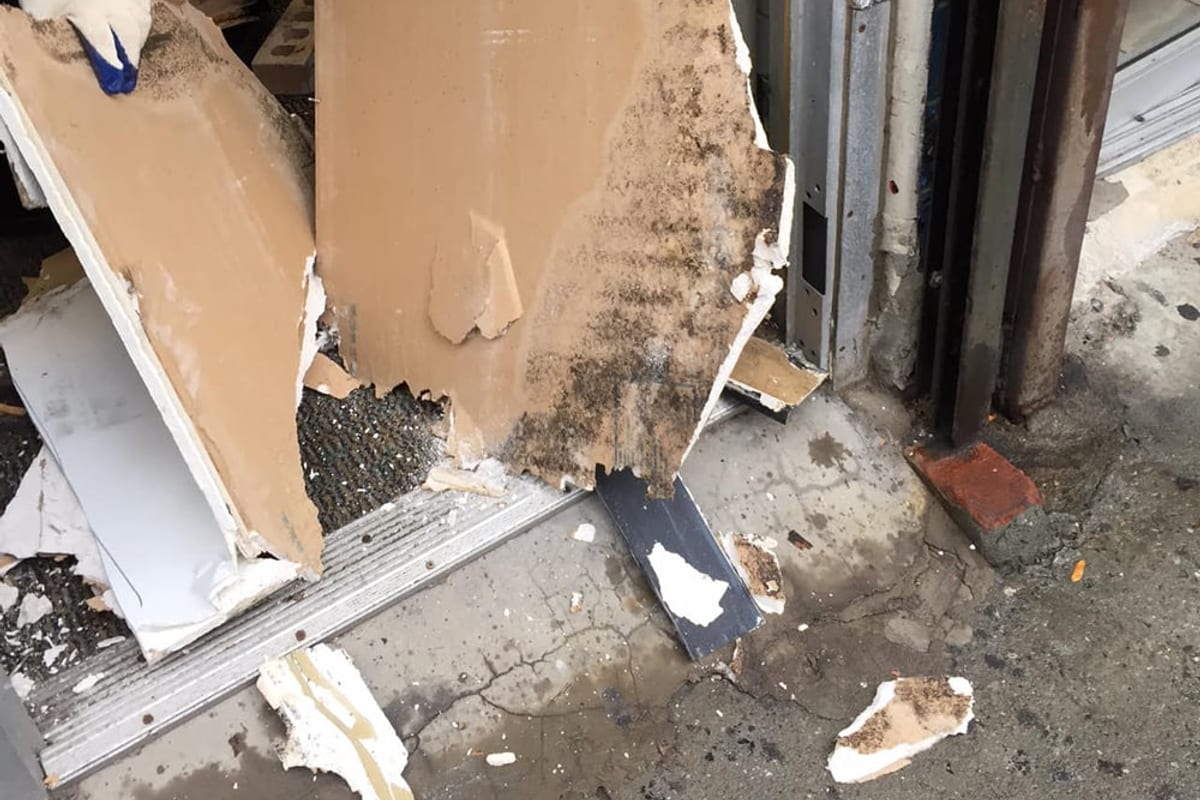
Most healthy adults can stay home during mold remediation if the work area is fully sealed off and held under negative air pressure, but infants, people with asthma or weakened immune systems, and anyone recovering from surgery should usually stay elsewhere while removal is under way. The deciding factors are where the work is, how big it is, and how well it is contained.
This guide covers what containment and negative air actually do, a simple way to decide whether to stay, who should leave, and how to set up the house if you do stay.
What Keeps Mold Inside the Work Area
When moldy drywall, insulation or wood is cut out, spores and fragments are released into the air. The whole point of containment is to keep that dust inside the work area and out of the rest of the house. A properly set up job uses 3 controls together.
1. Physical containment
The work area is sealed with polyethylene sheeting on walls, doorways and sometimes the floor and ceiling. Entry is through a zippered door or a flap system. HVAC supply and return vents inside the area are sealed so the system does not pull dust into the ductwork and spread it through the house. On larger jobs there may be a small decontamination chamber at the entrance where workers remove outer protective gear.
2. Negative air pressure
Negative air means the work area is kept at slightly lower pressure than the rest of the house, so air leaks in, not out. A HEPA-filtered air scrubber pulls air out of the containment and, ideally, exhausts it outdoors through a window or a port. If you crack the zipper door, the plastic should pull inward. Many crews check this with a manometer, a gauge that measures the pressure difference.
3. HEPA filtration and cleaning
HEPA filters capture very small particles. Crews use HEPA vacuums on surfaces and HEPA air scrubbers to keep airborne dust down during demolition. Debris is bagged inside the containment before it is carried out.
The EPA’s remediation guidance ties containment to the size of the job. Small areas need limited precautions. Larger areas call for full containment with negative pressure and, in commercial and school settings, moving people out of nearby spaces. The IICRC S520 standard follows the same logic.
A Simple Way to Decide
Use this table as a starting point, then talk it through with your contractor.
| Situation | Can most occupants stay? | Notes |
|---|---|---|
| Small area (under about 10 sq ft) on a hard surface, sealed off | Usually yes | Keep the door closed and stay out of the room during work |
| One room or basement area, full containment and negative air | Usually yes for healthy adults | Sensitive occupants may want to leave during demolition days |
| Attic or crawl space with containment and negative air | Usually yes | Work is away from living space, but check the access point |
| Multiple rooms, a main hallway, or the only bathroom | Often no | Daily life would require crossing the containment |
| HVAC system or ductwork involved | Often no while it is off | The house may be without heat or air conditioning |
| Sewage or floodwater involved | Often no | Contamination goes beyond mold |
Questions to ask your contractor
- Where exactly will the containment walls go?
- Will the work area be under negative pressure for the whole job, including overnight?
- Where will the air scrubber exhaust?
- Which entrance will the crew use, and how will debris leave the house?
- Will the HVAC system need to be off, and for how long?
- Which days will be the dustiest, and is it worth being out on those days?
A contractor who cannot answer these clearly is a reason to get a second opinion. Our guide on how to choose a mold remediation company in Pennsylvania covers what a good written scope includes.
Who Should Consider Staying Elsewhere
People who are more sensitive to mold should talk to their doctor and usually plan to be away during demolition. The CDC’s mold and health pages note that people with allergies, asthma, chronic lung disease or weakened immune systems can have stronger reactions to mold exposure.
That group includes:
- Infants and young children, who breathe faster for their size and spend time close to the floor.
- Older adults, especially those with lung or heart conditions.
- Anyone with asthma or a mold allergy.
- People with weakened immune systems, such as those on chemotherapy, organ transplant recipients, or people taking drugs that suppress the immune system.
- People recovering from surgery or with open wounds.
- Pregnant household members who want to limit any unnecessary exposure, after checking with their own doctor.
Our guide on mold exposure symptoms in kids and older adults explains what to watch for, based on CDC information.
Pets are also worth moving. Cats and dogs will sniff at plastic sheeting, and birds are especially sensitive to airborne irritants.
If You Stay: How to Set Up the House
Staying home works best when you treat the work area as off limits and protect the rest of the house.
Before work starts
- Move what you need out of the work area, including clothes, medicine and chargers. You will not be able to go in once containment is up.
- Pick a clean route for the crew that avoids bedrooms and the kitchen if possible.
- Plan for noise. Air scrubbers and dehumidifiers run around the clock and are loud, similar to a running vacuum or a box fan on high.
- Ask about power. Equipment may draw enough current to trip a breaker. Ask which circuits will be used.
During the work
- Stay out of the containment, even for a quick look. Ask the crew to show you photos.
- Do not open or tape over the zipper doors, and do not move the plastic.
- Do not turn off the air scrubber or dehumidifiers, even at night.
- Keep interior doors closed between the work area and bedrooms.
- Leave the HVAC settings alone unless the crew tells you otherwise.
- Tell the crew right away if you see plastic sagging outward, torn sheeting, or dust outside the containment.
After the work
Containment should stay up until the area passes a final visual check and any planned clearance testing. Our guide to clearance testing after remediation explains what that involves. Once it comes down, the crew should HEPA vacuum the path they used.
What If You Need to Leave?
If moving out for a few days is the safer choice, plan for:
- The dustiest days. Demolition is usually the first 1 to 3 days on a typical job. Drying and verification are quieter. See how long mold remediation takes for typical phases.
- Insurance. Some homeowners policies include additional living expense coverage when a covered loss makes a home unlivable. Whether mold or the water damage behind it is covered depends on your policy. This is general information, not legal or insurance advice. Read your policy and ask your agent.
- Access. Give the crew a way in, such as a lockbox, and a phone number for questions.
Signs Containment Is Not Working
Even with a good plan, watch for these warning signs:
- Plastic walls that bulge outward instead of pulling in.
- Fine dust on surfaces outside the work area.
- A strong musty or demolition smell in other rooms.
- An air scrubber that is off, unplugged, or exhausting into the house without a HEPA filter.
- Workers walking through the house in their protective suits.
Any of these is worth raising with the crew the same day.
Frequently Asked Questions
Is it safe to sleep in the house during mold remediation?
For healthy adults, it is usually fine if the work area is sealed, under negative pressure, and away from bedrooms. If the containment is next to a bedroom or anyone in the household is sensitive to mold, sleeping elsewhere during demolition days is the cautious choice.
Can I stay home during black mold removal?
The type of mold does not change the approach. EPA and IICRC guidance handle all indoor mold growth the same way, so the decision depends on containment, job size and who lives in the house, not on the color or species. Our black mold myths guide explains why.
Do I need to leave if the mold is only in the attic or crawl space?
Usually not. Attic and crawl space work is away from living areas, and containment goes at the access hatch or door. Make sure that access point is sealed and that the HVAC system is not pulling air from the work area.
How long after mold remediation is the house safe to use normally?
Once the work area passes its final visual check and any clearance testing, and containment is removed and the path is cleaned, the space can usually be used again. Rebuild work afterward is ordinary construction.
Talk Through Your Situation
Every house and household is different, and the right answer can change from one room to the next. Read about our black mold removal process, then contact us to discuss containment, timing and whether anyone in your home should plan to be away.