
Window Well Leaks and Basement Mold: Drains, Covers and Rotting Frames
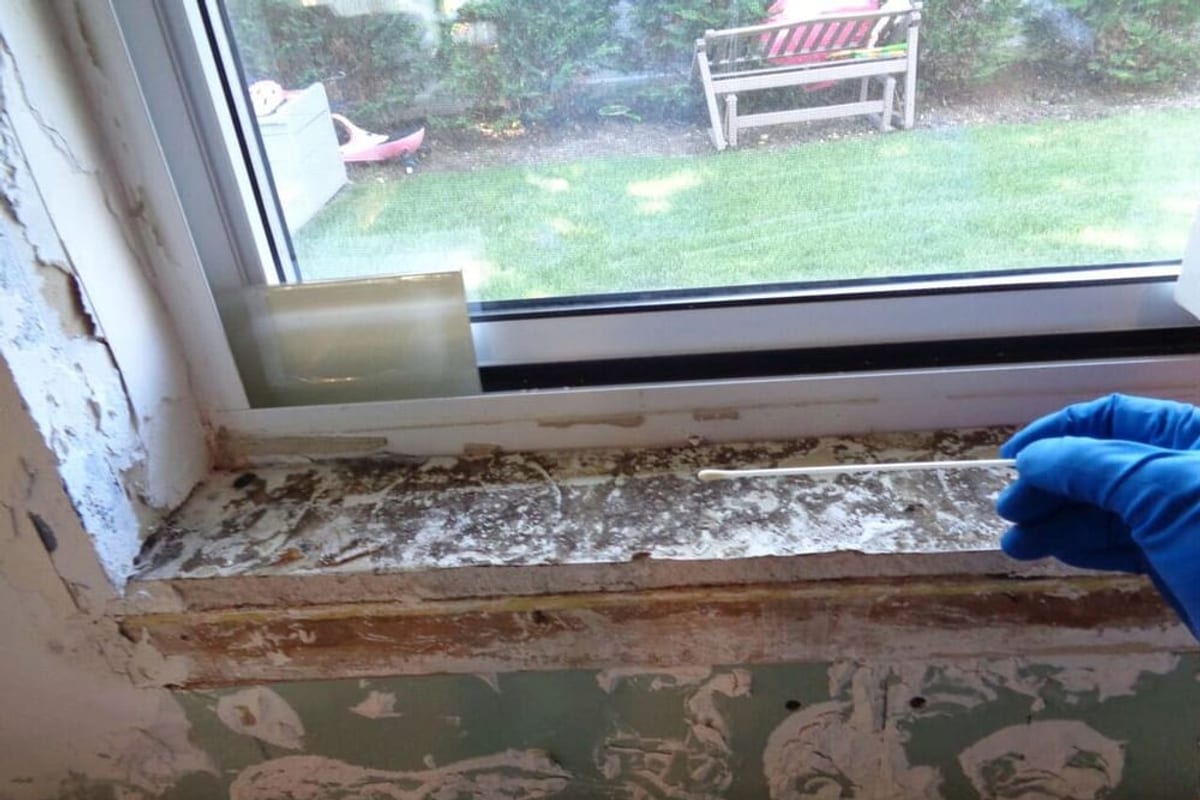
A window well leaks when water collects in the well faster than it can drain away, rises above the bottom of the basement window, and runs in through the frame or the joint between the well and the foundation. The usual causes are a clogged or missing drain, soil that slopes toward the well, and leaves and debris piled at the bottom. The mold shows up later on the window frame, the wall below it, and anything stored nearby.
This guide covers how window wells are supposed to drain, how to test yours with a garden hose, which covers actually help, how to deal with a wet or rotting basement window frame, and when the mold needs more than a wipe-down.
How a Window Well Is Supposed to Work
A window well is a metal, plastic or masonry liner that holds soil back from a basement window that sits below grade. The well itself does not keep water out. Drainage does.
A well that drains properly has 4 parts working together:
- A top edge that sits above the surrounding soil, typically a few inches, so surface water flows around it instead of into it.
- Soil and mulch that slope away from the well and the house, so rain runs off rather than toward the foundation.
- A bed of washed gravel in the bottom, several inches below the window sill, so water can soak down instead of pooling against the glass.
- A drain path under the gravel. In better installations, a vertical pipe runs from the well floor down to the footing drain or to an interior drain system that feeds a sump pit.
Many older homes around Gettysburg have wells that were added long after the house was built, or wells with gravel and no drain at all. Those can work in light rain on sandy soil. In heavy clay soil or a long soaking rain, the gravel fills up and the water level climbs.
Signs Your Window Well Is Leaking
You may never see the leak happen, because it often occurs during a storm at night. Look for the evidence afterward:
- Water stains or a tide line on the wall below the basement window.
- Peeling paint, bubbling or efflorescence (white mineral crust) on block or stone under the window.
- A soft, dark or crumbling wood frame or sill.
- Rust on a steel basement window frame.
- Mud, silt or leaves on the inside sill.
- Mold on the window frame, the drywall below a window in a finished basement, or on the carpet tack strip under it.
- Standing water or a mucky layer in the bottom of the well itself.
Condensation can mimic a leak. If water appears on the inside of the glass on humid summer days with no rain, the cause is more likely damp basement air meeting cool glass. Our guide to window sill mold and condensation covers that pattern. A real well leak lines up with rain or snowmelt.
The Garden Hose Test
You can test a window well drain in about 15 minutes with a hose. Do it on a dry day.
- Clear leaves and trash out of the well so you can see the gravel.
- Put a hose in the bottom of the well and run it at a moderate flow.
- Watch the water level. A working drain keeps up, or the water soaks into the gravel within a few minutes after you shut the hose off.
- Have someone watch the inside of the window and the wall below it.
- If water pools and rises toward the sill, turn the hose off. The drain is clogged, missing or overwhelmed.
If you have a sump pit, watch it during the test. If the well drain ties into the footing drain, you may see water arrive at the pit after a few minutes. That confirms the drain path is open.
Fixing a Window Well That Floods
These fixes run roughly from cheapest to most involved.
1. Clean out the well
Leaves, mulch, grass clippings and dead animals clog the gravel. Scoop debris out each fall after the leaves drop and again in spring. If the gravel is packed with silt, dig it out, rinse or replace it, and restore the bed so its top sits several inches below the window sill.
2. Fix the grade around the well
Soil next to the house should slope away. A common target is 6 inches of fall over the first 10 feet. Around the well, the soil should be lower than the top edge of the liner. Mulch beds that have been topped up for years often end up level with, or above, the liner.
3. Redirect the downspout
A downspout dumping near a window well is a frequent culprit. Extend it at least 4 to 6 feet away from the foundation, and make sure the discharge does not run back toward the well. Clean and repair gutters so they do not overflow directly above it.
4. Seal the liner to the foundation
Water can run between the well liner and the wall even when the well itself drains. The liner should be bolted tight to the foundation. A gap can be sealed with an exterior-grade sealant made for masonry. This does not replace drainage, but it closes a common side path.
5. Clear or add a drain
If there is a drain pipe in the well, try to clear it with a hose or a small drain snake. If it is crushed or there is no drain, a waterproofing contractor can dig down and connect the well to the footing drain, or core through to an interior drainage system. That is the long-term fix for a well that floods in every big storm.
Do Window Well Covers Help?
A cover keeps rain, snow and leaves out of the well, which removes most of the water from a well that has no drain. It does not stop groundwater or surface water that runs in under the cover’s edge.
| Cover type | Good for | Watch out for |
|---|---|---|
| Clear polycarbonate dome | Rain, snow and leaves; lets light in | Cheap ones yellow and crack in sun |
| Flat clear cover | Same as dome; easier to walk near | Can hold snow load; check rating |
| Metal grate | Safety, keeps people and animals out | Does nothing for water |
| Hinged egress cover | Bedrooms that need an emergency exit | Must open easily from inside |
If the basement window is an egress window for a bedroom, the cover must be easy to open from inside without tools or keys. Do not bolt down a cover over an egress opening. Check the manufacturer’s rating and your local code official if you are unsure.
Covers also trap humidity in the well. Leave a small vent gap or choose a vented model, and check under it after big storms.
Dealing With a Wet Basement Window Frame
Older homes in the region often have wood basement window frames set directly into stone or block, or steel frames that have rusted at the bottom. Once a frame has been wet repeatedly, it may be soft and moldy.
Probe the bottom of the frame with a screwdriver. If it sinks in or crumbles, the wood is rotted. Rotted wood cannot be cleaned and should be replaced. If the wood is firm and the growth is on the surface, it can usually be cleaned, dried and repainted.
For surface growth on a firm frame:
- Wear gloves, eye protection and an N95 respirator.
- Wipe with detergent and water, as the EPA’s mold cleanup guidance recommends for hard surfaces.
- Dry the frame fully, ideally with a fan and dehumidifier running.
- Recheck for softness and recurring dampness after the next storm before painting.
Our guide to whether bleach kills mold explains why plain detergent is the starting point, not bleach.
Many older basement windows also have lead paint. If the home was built before 1978, assume painted frames may contain lead unless tested. Scraping and sanding create lead dust. The EPA lead program covers safe work practices.
When the Mold Has Spread Beyond the Window
A window well leak rarely wets only the frame. Water runs down the inside of the wall and spreads along the floor. Look further if you see:
- Drywall or paneling below the window that is stained or soft at the bottom.
- Carpet or pad that is damp along that wall.
- A musty smell that is strongest in that corner.
- Growth on boxes, furniture or framing near the window.
Drywall that has been wet through more than once usually needs to come out, along with wet insulation behind it. Our guide to mold behind drywall covers how to check before cutting. If the floor got wet, see mold in carpet: clean or replace.
The EPA’s rule of thumb is that a homeowner can usually handle mold covering less than about 10 square feet. Beyond that, or when it involves finished walls, professional containment makes sense.
Keep the Basement Dry Between Storms
Fixing the well stops liquid water. The basement still needs humidity control, because a wall that was soaked from a window well leak releases moisture for days. Run a dehumidifier set to about 45 to 50% relative humidity, with continuous drainage. Our basement dehumidifier size guide covers how to choose one. For the broader picture of why older foundations stay damp, read why old Gettysburg basements grow mold.
Frequently Asked Questions
Should a window well have a drain?
Yes, ideally. A drain pipe from the well floor to the footing drain or interior drainage system lets water leave the well during heavy rain. Gravel alone can work in well-drained soil, but in clay soil it often fills up and overflows into the window.
How far below the window should the gravel be?
Several inches below the bottom of the window frame is a common target. That gives water room to collect and soak away before it reaches the sill. Check the window manufacturer’s installation guidance for your specific window.
Can I just caulk the basement window to stop the leak?
Caulking the frame helps keep air and light rain out, but it will not hold back water that pools above the sill. Water pressure finds the next weak point, often the mortar joint below the window. Fix drainage first, then seal.
Is mold on a basement window frame dangerous?
Small amounts on a hard surface are usually a cleaning job, not an emergency. The bigger concern is what the mold says: water is getting in repeatedly. If the frame is rotted, the wall below is stained, or the growth covers more than about 10 square feet, have it assessed.
Get the Basement Checked
If your basement window wells flood and mold has reached the wall, floor or finished materials, our basement mold remediation service handles the affected materials and helps track the moisture path. Contact us to schedule an assessment in Gettysburg or nearby Adams County communities.