
Containment Setup
Plastic sheeting and zipper doors seal the work area from the rest of the house. Negative air pressure keeps spores from drifting into clean rooms while moldy material comes out.
Containment, HEPA air scrubbing, and removal of Stachybotrys-stained drywall, trim, and insulation. Work is done under negative pressure and ends with a clearance check. Removal is done under plastic containment with negative air and HEPA filtration, so spores do not travel to the rest of the house.
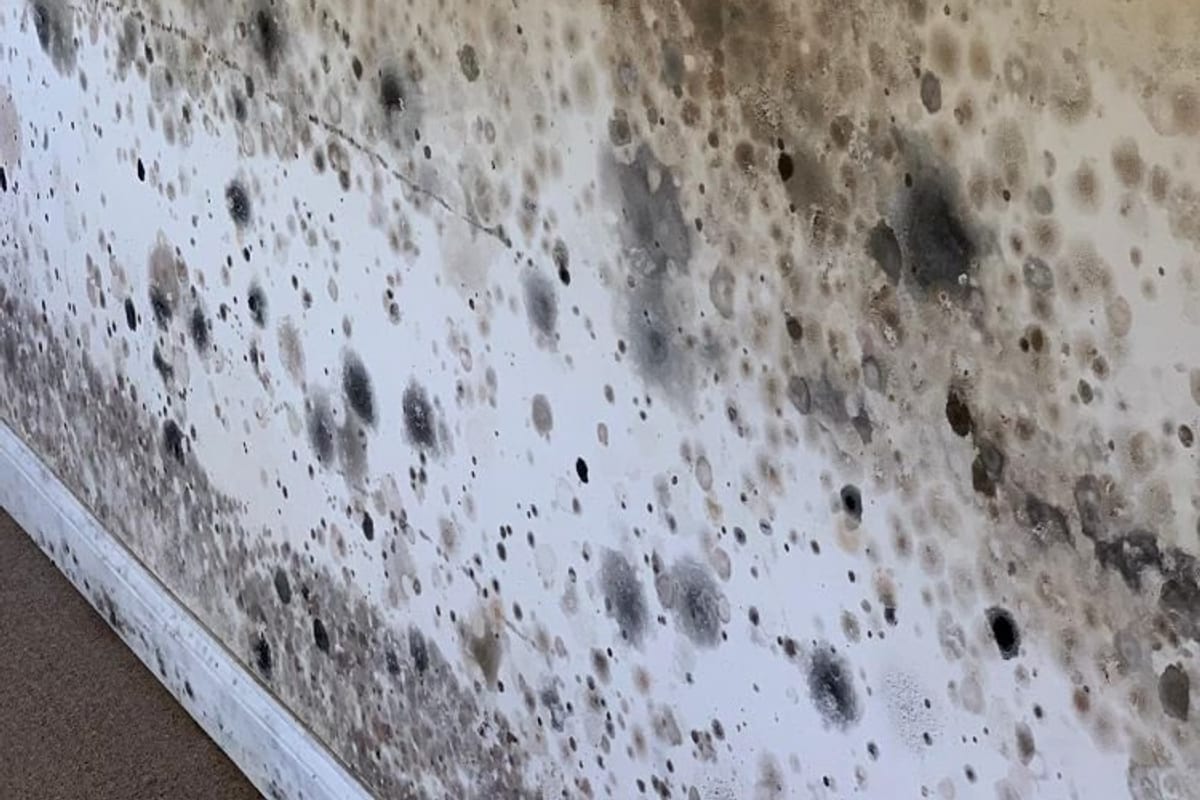
Stachybotrys and other dark molds need material that has stayed wet for weeks, so seeing them means a leak or damp wall has been going for a while. These are the places it tends to show up first.
How much comes out depends on what the mold is growing on. Drywall, insulation and carpet with growth are cut out and bagged; framing, stone and concrete are cleaned in place.
Plastic sheeting and zipper doors seal the work area from the rest of the house. Negative air pressure keeps spores from drifting into clean rooms while moldy material comes out.
HEPA air scrubbers capture 99.97% of particles 0.3 microns in size. The machines run through removal and cleaning so airborne spores are filtered, not spread.
Stachybotrys-stained drywall, insulation, carpet pad, and ceiling tiles are cut out, bagged, and removed. EPA guidance says moldy porous materials often cannot be cleaned and should be thrown away.
Studs, subfloor, and sheathing are HEPA vacuumed, wire brushed or sanded, and damp wiped. Light staining left after the growth is removed can be sealed with a mold-resistant primer.
Black mold needs material that stays wet for a long time. We find the leak, condensation, or seepage and fix it, or tell you exactly which trade should, so the growth does not return.
Before containment comes down, we do a visual check and take moisture readings. Post-remediation air sampling is available, including by an independent third party if you prefer.
Seen dark growth larger than a doormat? Leave it alone and call; disturbing it spreads spores.
📞 Call (717) 256-4434Stachybotrys chartarum is not an opportunist. Unlike the common green and white molds, it needs cellulose that has stayed genuinely wet for days or weeks, not a surface that gets damp and dries out. Paper-faced drywall, cardboard, wallpaper paste, and softwood framing are its preferred food.
That is why finding it here almost always means a sustained leak rather than humidity alone: a supply line weeping behind a wall, a roof or flashing leak that ran all winter, or a finished basement stud wall built tight against damp stone. Cleaning the surface without ending the wetting just resets the clock.
Black mold (Stachybotrys chartarum) grows on drywall and wood that stay wet for a long time. In Gettysburg homes that usually means a slow plumbing leak, a roof leak, or a finished basement wall against damp stone, so removal always comes with a moisture fix. Removal follows EPA mold cleanup guidance and the IICRC S520 standard for containment. For health questions, the CDC guidance on mold and health is the best starting point.
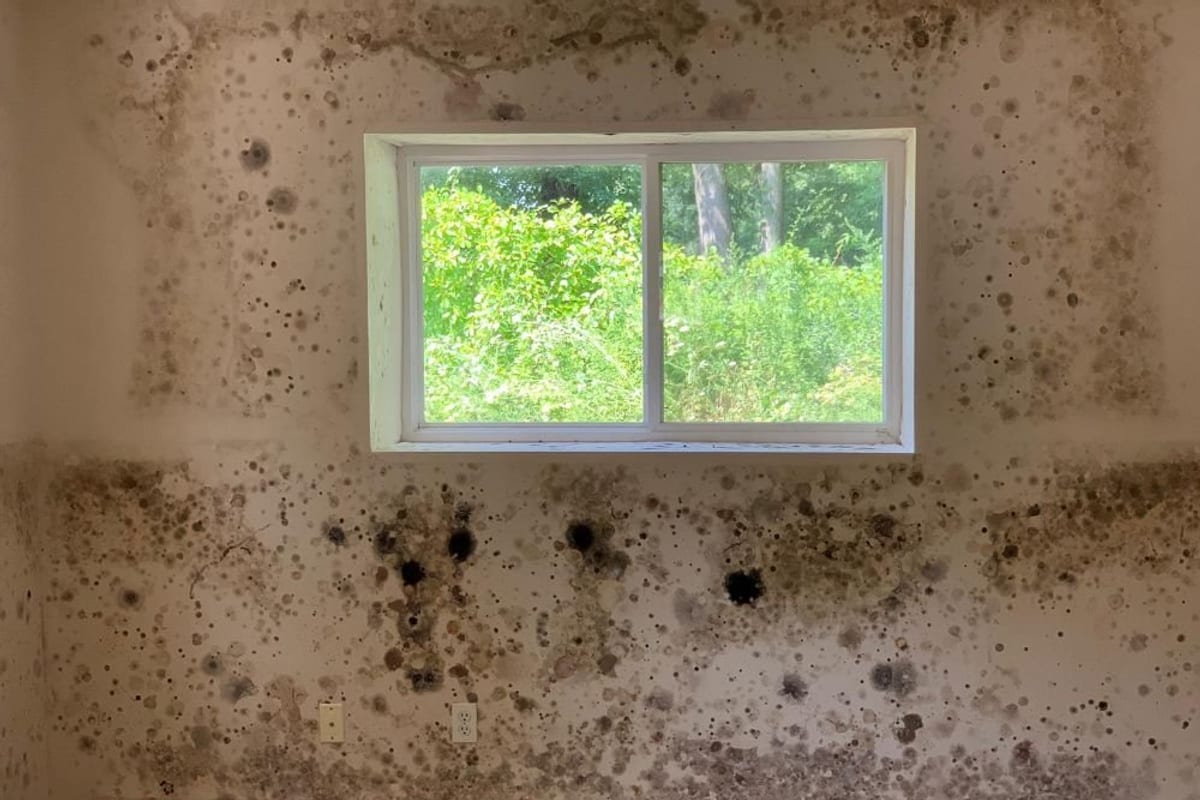
Containment goes up before anything is cut. Every step after that is about getting moldy material out without moving spores into clean rooms.
Not every dark patch is Stachybotrys, and colour alone cannot tell you. We look at the material, how long it has been wet, and the extent, because the answer decides whether this is a contained job or a wipe-down.
Six-mil sheeting, a zipper door, and covered HVAC registers. A HEPA air scrubber exhausts out of the space so air only ever moves inward, which is what keeps the rest of the house clean.
Affected drywall, trim, insulation, and carpet pad are cut out, bagged inside containment, and carried out. IICRC S520 is explicit that visible growth on porous material is removed, not encapsulated and left.
Framing is HEPA vacuumed and damp wiped, the leak is fixed or handed to the right trade in writing, and the area is dried. A clearance check compares indoor air against an outdoor baseline before we unseal.
Ready for step one?
Call (717) 256-4434Ask which materials will be cleaned or removed, how the work area will be contained, and which moisture repairs the quote covers.
Public health information about damp and moldy environments and cleanup precautions.
Explains cleanup, removal of affected materials and moisture control.
Read the guide alongside the CDC source below.
Useful when the source or extent is unclear.
Check affected finishes, framing and the moisture source.
Arrange access and communicate the proposed scope with the property owner.
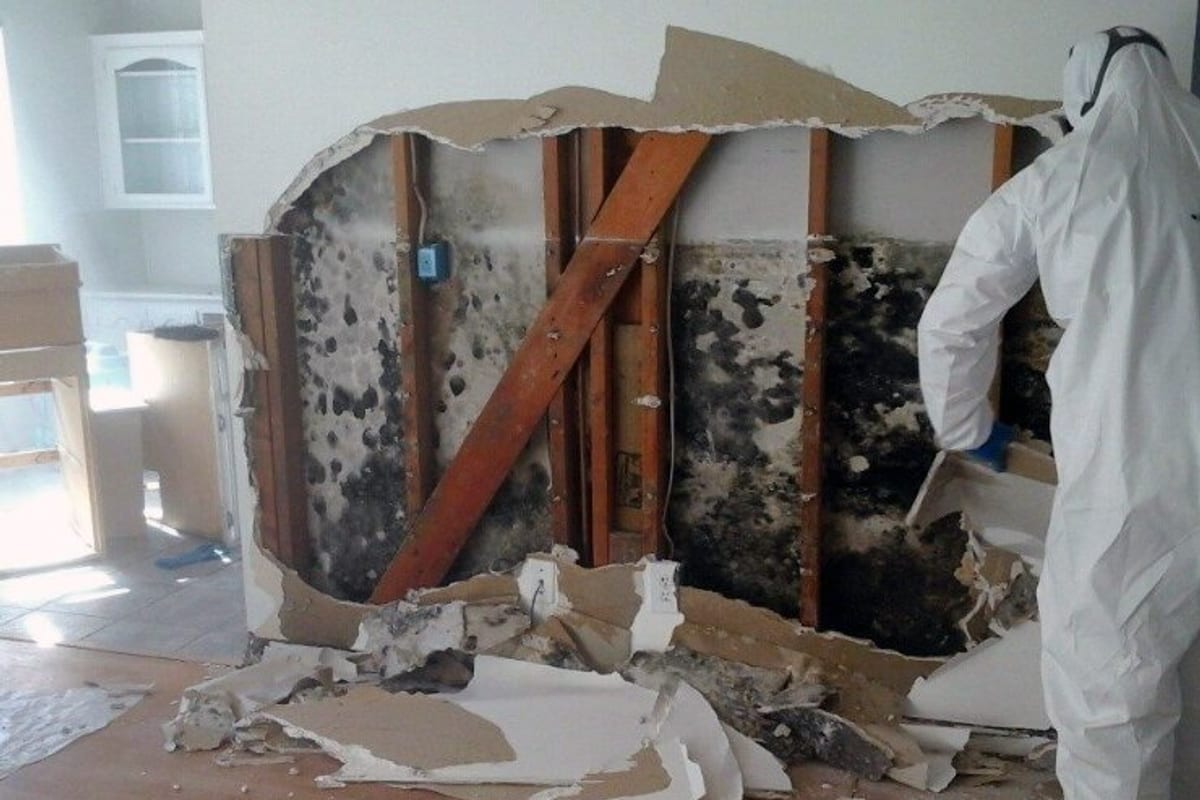
Black mold is where cutting corners costs the most, because a job without containment can spread spores through the house. our team sets up sealed work areas and HEPA air scrubbers on every removal job.
Straight answers on how dangerous black mold is, whether bleach works, how removal is contained, and what happens to the materials that come out. Don't see yours? Call and ask.
Black mold removal is quoted after inspection. A mold color does not establish the affected area, removal method or repair scope. Our cost guide lists Angi and HomeGuide national benchmarks separately, with calculation assumptions; those figures are not verified Gettysburg averages. Your quote identifies affected materials, containment, drying and exclusions.
Read the national cost sources, calculation assumptions and exclusions.
Question about your property? Call (717) 256-4434No, not in a way that changes the cleanup. Stachybotrys chartarum, known as black mold, can produce mycotoxins. The CDC says people do not need to take different precautions with Stachybotrys than with other molds. Any indoor mold can cause a stuffy nose, wheezing, or itchy eyes, and all of it should be removed.
Question about your property? Call (717) 256-4434Yes, if the area is small. EPA guidance says a homeowner can usually clean an area under about 10 sq ft (0.9 m²) while wearing an N95 respirator, gloves, and goggles. Call a professional for larger areas, mold inside walls or HVAC systems, mold after sewage or floodwater, or when anyone in the home has asthma or a weakened immune system.
Question about your property? Call (717) 256-4434No, not reliably on drywall or wood. EPA does not recommend bleach or other biocides as a routine part of mold cleanup. Bleach can lighten a stain on the surface while growth stays inside porous material. Physical removal and fixing the moisture source are what stop black mold.
Question about your property? Call (717) 256-4434Most black mold removal jobs in Gettysburg homes take 1 to 3 days. A single wall or bathroom is often finished in 1 day. Larger areas need more time for containment, drying, and the clearance check. New drywall and paint are scheduled after clearance.
Question about your property? Call (717) 256-4434No, not usually. Containment and negative air pressure keep the work area sealed from the rest of the home. People with asthma, a weakened immune system, or infants may choose to stay elsewhere during larger jobs. We tell you what we recommend after the inspection.
Question about your property? Call (717) 256-4434It depends entirely on what wet the material. Black mold from a sudden, accidental event, such as a supply line that burst last week, is often covered. Black mold from a leak that ran quietly for months is usually denied as a maintenance issue, and that is the more common case with Stachybotrys because it needs sustained moisture. Many Pennsylvania policies also cap mold remediation at a set dollar figure regardless of cause. We document the source, the extent, and the moisture readings so your adjuster has the facts either way.
Question about your property? Call (717) 256-4434Set up containment before cutting anything, run the work area under negative air pressure with HEPA air scrubbers, bag moldy material inside the containment, HEPA vacuum and clean the framing, and check the area before the plastic comes down. Without those steps, removal can spread spores into rooms that were clean.
Question about your property? Call (717) 256-4434Call before you scrub or cut. We will look at the growth, set up containment if it is needed, and quote the removal in writing first.