
Buying a House With Mold in Pennsylvania: Inspection, Questions and Negotiation
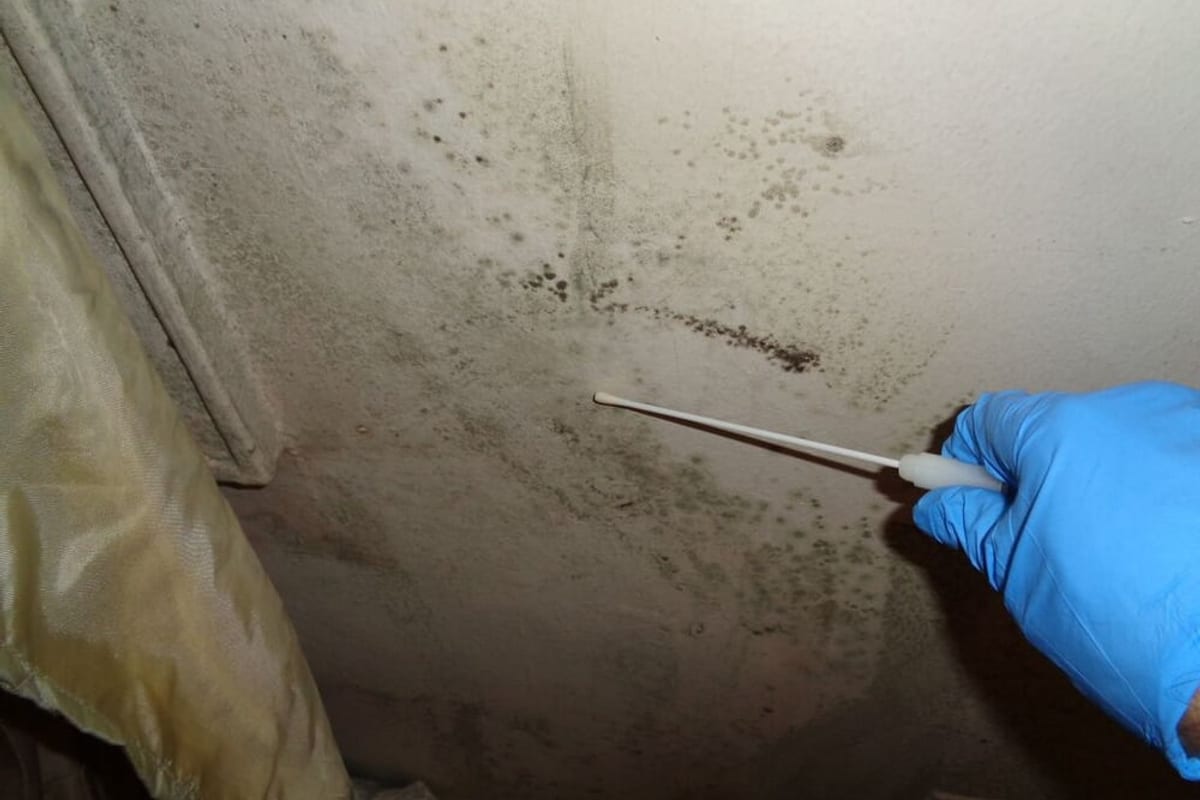
Buying a house with mold is often fine if the moisture source can be fixed and you know the true scope before your inspection contingency expires. Mold itself is usually a solvable problem. The real risk is an unknown one: a leak, drainage failure, or hidden damage you discover after closing, when the cost is all yours.
This guide covers how to use the inspection period, what to ask the seller, how to read old-home warning signs common around Gettysburg, and how to negotiate when mold turns up.
General information, not legal advice. Agreement of sale terms, deadlines, and remedies vary. Rely on your real estate agent and a Pennsylvania real estate attorney for advice on your purchase.
Start With the Seller’s Disclosure
Pennsylvania’s Real Estate Seller Disclosure Law (68 Pa.C.S. Chapter 73) generally requires sellers of 1-4 unit homes to give buyers a written disclosure statement of known material defects before the agreement of sale is signed. The statute text is available through the Pennsylvania General Assembly.
Read the disclosure carefully, especially the sections on:
- Basement and crawl space water or dampness.
- Roof leaks and repairs.
- Plumbing leaks.
- Past water damage, flooding, or insurance claims.
- Any mold, remediation, or indoor air quality items on the form.
Two limits to keep in mind. First, the seller only discloses what they actually know; the law does not require them to inspect. Second, the disclosure is not a warranty. That is why your own inspection matters.
Use the Inspection Contingency Well
Most Pennsylvania agreements of sale include an inspection contingency that lets the buyer inspect within a set number of days and then accept, negotiate, or end the deal under the agreement’s terms. The deadlines are short. Plan the inspection schedule the day you sign.
A timeline that works
- Days 1-3: Book the general home inspection. Ask the inspector to pay special attention to the basement, attic, crawl space, and bathrooms.
- Same week: Add a moisture-focused mold inspection if anything looks off. That includes a musty smell, staining, fresh paint in the basement, or a disclosure that mentions water.
- Within the period: Get a written remediation scope and estimate if mold is found, so you negotiate with real numbers.
- Before the deadline: Submit your response through your agent, in writing, under the agreement’s terms.
A general home inspection is not a mold inspection. Most home inspectors note visible moisture and staining, but they usually do not take wall cavity samples or map moisture with a thermal camera unless you hire them for it. Our guide on mold inspection vs. testing explains the difference and when lab sampling is worth paying for.
The Old-Home Angle Around Gettysburg
Many buyers here are shopping for older homes. According to U.S. Census Bureau ACS 2020-2024 5-year estimates, 47.5% of housing units in Gettysburg borough were built before 1940, with a median year built of 1942. Countywide, Adams County is newer, with 17.5% built before 1940 and a median year of 1980. Some communities are newer still: Carroll Valley borough has a median year built of 1993, and Lake Heritage 1988.
The mold risks are different depending on which kind of house you are buying.
| House type | Common moisture weak points | What to look at closely |
|---|---|---|
| Pre-1940 stone or brick home | Stone foundations, no footing drains, plaster walls, old roof flashing | Basement walls and joists, chimney flashing, plaster under windows |
| 1950s-1970s ranch or split-level | Block foundations, older windows, bathroom fans that never existed | Block wall cores, window sills, bathroom ceilings |
| 1980s-1990s subdivision home | Crawl spaces, attic ventilation, bath fans venting into the attic | Crawl space vapor barrier, attic sheathing, roof valleys |
| Flipped home of any age | New finishes over old damage | Fresh basement paint, new drywall near the floor, new flooring |
Old-home signs that are not automatically mold
- White crystals on stone or block walls are often efflorescence, mineral salts left by moving water. It is not mold, but it tells you water is coming through.
- Dark staining on old wood may be decades-old water marks that are now dry. A moisture meter tells you whether it is still wet.
- Musty smell in a closed-up house. Vacant homes with the HVAC off often smell damp. Ask whether the house has been heated, cooled, and dehumidified. Our guide on preventing mold in vacant homes explains why empty houses grow mold.
Old-home signs that need a closer look
- Soft or darkened floor joists, sill plates, or subfloor. See our guide on mold on floor joists and subfloor.
- Fresh paint or new drywall only in the lower part of basement walls.
- A sump pit with no pump, or a pump with no discharge line leading away from the house.
- Dark staining on the underside of attic roof sheathing.
- Peeling paint and bubbling plaster under windows.
- A finished basement in an old stone foundation, especially with carpet.
Questions to Ask the Seller
Send these through your agent in writing:
- Has the basement or crawl space ever had standing water? When, and what caused it?
- Has any mold inspection, test, or remediation been done? Can we see the reports, scope, photos, and clearance results?
- What was the moisture source, and how was it fixed?
- Have there been insurance claims for water damage or flooding?
- Is the property in a mapped flood zone? Is there a flood insurance policy?
- How long has the house been vacant, and was it heated and dehumidified?
- When were the roof, gutters, and sump pump last replaced or serviced?
- Who did past repairs, and do they have a Pennsylvania home improvement contractor registration number?
The last question matters because Pennsylvania’s Home Improvement Consumer Protection Act generally requires contractors to register with the Office of Attorney General. Registered contractors with written contracts are easier to follow up with.
For flood questions, use the FEMA Flood Map Service Center and FloodSmart.gov. Our guide on flood insurance and mold in Adams County explains local claim history and how flood coverage treats basements.
How to Negotiate When Mold Turns Up
Negotiate based on a written scope, not a guess. A buyer who says “there’s mold, knock $20,000 off” gets less traction than one who presents an inspection report and a remediation estimate.
Common options, depending on what your agreement allows:
- Seller remediates before closing. Ask for a written scope from a qualified company, the moisture source fixed, and clearance documentation delivered before settlement. Agree on who picks the company.
- Price reduction or credit. You take on the work yourself after closing. This gives you control of the contractor but means you carry the risk of the scope growing.
- Escrow holdback. Some lenders and title companies allow funds to be held for repairs. Ask your lender early.
- Walk away under the contingency’s terms if the problem is too large or the seller will not cooperate.
For pricing context, our mold remediation cost page lists national published benchmarks from Angi and HomeGuide. Those are not local quotes. Get an actual on-site estimate before you negotiate.
If the seller does the work
Ask for:
- The remediation company’s written scope before work starts.
- Proof the moisture source was repaired, with invoices.
- Photos before, during, and after.
- Moisture readings showing materials dried before rebuild.
- An independent clearance check, if you want one. Our guide on mold clearance testing explains what it includes.
Health Considerations Before You Move In
If anyone in your household has asthma, allergies, a weakened immune system, or is a young child or older adult, take mold findings seriously and talk with a doctor. The CDC’s mold information covers who is most sensitive. Plan remediation before move-in when possible, since work is easier and cheaper in an empty house.
What a Small Problem Looks Like vs. a Big One
| Usually manageable | Usually a bigger issue |
|---|---|
| Mildew on bathroom caulk and grout | Growth across drywall in several rooms |
| A small patch on a basement joist under a past leak, now dry | Wet basement walls with soft joists or sill plates |
| Condensation spotting on one window sill | Attic sheathing stained across most of the roof |
| Damp basement controlled by a dehumidifier | Recurring standing water after rain |
The EPA says an area under about 10 sq ft (0.9 m²) on hard surfaces can usually be cleaned by a homeowner. Its guide, A Brief Guide to Mold, Moisture and Your Home, is a good read before your inspection.
Frequently Asked Questions
Should I walk away from a house with mold?
Not automatically. If the source is identifiable and fixable and the scope is known, many buyers proceed with a credit or seller repair. Walking away makes more sense when the source is unclear, the damage is structural, or the seller will not share records.
Will my lender or appraiser flag mold?
They may, especially with some government-backed loans or when visible damage affects value or safety. Ask your lender early in the process what conditions they require.
Does homeowners insurance cover mold I knew about when I bought the house?
Generally no. Insurance covers new, sudden losses, not conditions that existed before the policy. Mold coverage is often limited even for new losses. Read your policy, and see our guide on homeowners insurance and mold.
Is a mold test enough for a home purchase?
A test alone is rarely enough. A lab result does not tell you where moisture is coming from. Pair any testing with a moisture-focused inspection.
Get a Clear Answer Before Your Deadline
Inspection periods are short, so speed matters. Our mold inspection and testing service provides a written, moisture-first report with photos and next steps, and a remediation scope if one is needed. Contact us as soon as your agreement is signed to get on the schedule.