
Mold Under Vinyl Siding and House Wrap: Trapped Water, Flashing and Sheathing Rot
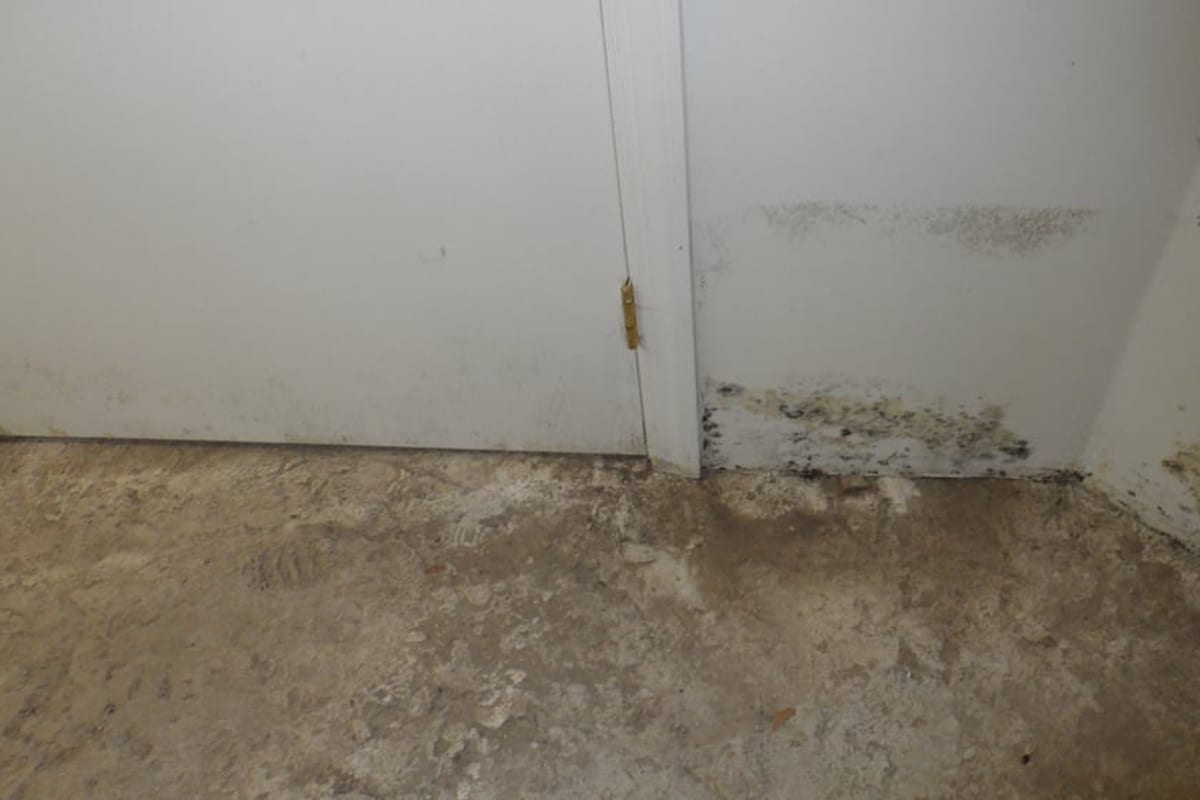
Vinyl siding is not waterproof, so rain gets behind it on every house; mold and rot start when missing or poorly lapped flashing, torn house wrap, or a blocked drainage path lets that water reach the wood sheathing and stay there. The damage is hidden, and the first signs often show up inside the house as stains, peeling paint or a musty smell on an exterior wall.
This guide covers how the wall is supposed to shed water, the places where it most often fails, the signs you can see from inside and outside, how a contractor confirms the problem, and what the repair usually involves.
How a Sided Wall Is Supposed to Work
A typical wood-framed wall with vinyl siding has several layers, from outside in:
- Vinyl siding. Sheds most rain, but laps, J-channels and nail slots let some water and wind-driven rain through. Siding is designed to let that water drain out the bottom.
- Water-resistive barrier (WRB). Usually a house wrap or building paper. This is the real rain barrier. It must be lapped shingle-style, top layer over bottom, so water runs down and out.
- Flashing. Metal or membrane pieces that direct water around windows, doors, roof-to-wall joints and decks, and back out onto the face of the WRB.
- Sheathing. Usually OSB or plywood in newer houses. Older homes may have board sheathing or none at all.
- Framing, insulation and interior drywall or plaster.
The siding is the rain screen. The WRB and flashing are the waterproofing. When water gets past those two, the sheathing is the first thing to get wet, and OSB in particular loses strength once it stays wet.
Where Water Gets Behind Siding
These are the most common failure points, roughly in order of how often they cause hidden damage.
Roof-to-wall intersections without kickout flashing
Where a lower roof meets a wall that keeps going up (a porch roof against a two-story wall, a garage roof against the house), water runs down the roof edge and right into the wall. A kickout flashing is a small angled piece at the bottom of that roof edge that throws water away from the wall and into the gutter. Without it, the wall below the end of that roof line takes a steady soaking every storm. Rot and mold there can run all the way down to the sill.
Windows and doors
Window flashing must be layered so the head flashing laps over the WRB and the sill flashing sends water out, not in. Common problems:
- House wrap tucked behind the window flange at the top instead of over it.
- No sill pan or sloped sill flashing.
- Caulk used as the only seal, which fails within a few years.
- J-channel at the window head that dumps water behind the siding below.
Deck ledgers
A deck bolted to the house needs flashing over the ledger board. Without it, water runs behind the ledger and into the rim joist and sheathing. That is both a mold and a structural concern.
Penetrations
Dryer vents, hose bibs, outdoor outlets, light fixtures, meter bases and pipes all need mounting blocks or flashing. Plain caulk around a hole in house wrap is not enough.
Missing, torn or reverse-lapped house wrap
Wrap that was torn during installation and never taped, or upper pieces tucked under lower ones, sends water inward instead of down. In older homes re-sided over the original clapboard, there may be no WRB at all.
Siding installed too tight or too close to grade
Siding nailed tight, rather than hung loosely so it can move, can buckle and open gaps. Siding run down into soil or mulch keeps the bottom of the wall wet and blocks drainage.
Signs You Can See From Outside
| What you see | What it may mean |
|---|---|
| Wavy or bulging siding in one area | Swollen sheathing behind it, or siding nailed too tight |
| Staining or growth below the end of a lower roof | Missing kickout flashing |
| Peeling paint on trim below a window | Water running behind the trim from above |
| Soft trim or sill when pushed with a screwdriver | Rot in the trim and possibly the sheathing |
| Siding that feels loose or springy when pressed | Sheathing behind it may be deteriorated |
| Mildew concentrated in one area rather than across a shaded wall | A localized leak path |
For general siding mildew, which usually is not a leak, see our guide on mold on exterior siding.
Signs You Can See From Inside
Interior signs usually show up below the leak point, because water runs down inside the wall.
- Stains or peeling paint on the wall below a window corner.
- Swollen or stained baseboard on an exterior wall, often with no plumbing nearby.
- Rusty or rotted carpet tack strip along an outside wall.
- A musty smell that is strongest on one exterior wall, especially after rain.
- Bubbling or soft drywall low on an outside wall.
- Mold on the back of furniture against an exterior wall, though that is often condensation instead. Our guide on winter condensation mold on walls explains the difference.
- Water in the basement or crawl space at the rim joist, directly below a problem wall.
The key test is timing. If the sign gets worse after wind-driven rain, think leak. If it gets worse during long cold spells, think condensation. Keep notes for a few weeks with dates and weather.
How the Problem Is Confirmed
A good investigation avoids tearing off siding at random.
- Moisture readings from inside. A pinless meter scans the drywall along the exterior wall. Elevated readings below a window or roof intersection narrow the search. Our guide on signs of mold behind drywall explains how to read those.
- Thermal imaging. Wet areas often show as cooler patches. A thermal camera does not see mold, but it shows where to take readings.
- Removing a few siding panels. Vinyl siding can be unlocked and removed with a zip tool without damage. That lets an inspector look at the WRB, flashing and sheathing directly.
- Probing the sheathing. A screwdriver or awl into OSB or plywood shows whether it is solid. A pin meter gives moisture content. Wood above roughly 19% moisture content can support mold growth.
- A water test. Running a hose on one section of wall at a time, from the bottom up, while someone watches inside can locate the leak.
A mold inspection focused on moisture can do the interior side of this work. The exterior repair usually involves a siding or general contractor.
What the Repair Usually Involves
The scope depends on how long the leak has been going on.
Early, limited leak
- Remove siding in the affected area.
- Let the sheathing dry if it is still solid.
- Add the missing flashing (kickout, window head or sill pan, ledger flashing).
- Patch and properly lap the WRB.
- Reinstall siding.
Long-running leak
- Remove siding and WRB over a wider area.
- Cut out and replace rotted or moldy sheathing.
- Inspect studs, sill plate and rim joist. Clean sound framing with surface growth; replace soft or rotted wood.
- Remove interior drywall and insulation that got wet or moldy.
- Dry framing to normal readings before closing anything up.
- Rebuild with correct flashing details and a continuous WRB.
On the interior side, cleanup of moldy framing generally follows the IICRC S520 standard and the EPA’s mold remediation guidance: contain the area, remove damaged porous materials, HEPA vacuum and clean framing, and dry before rebuild.
Older homes re-sided over original clapboard
Many older Adams County homes were covered with vinyl or aluminum over the original wood siding. According to U.S. Census Bureau ACS 2020-2024 5-year estimates, 17.5% of Adams County housing units were built before 1940, and that share is much higher in boroughs like Gettysburg (47.5%) and York Springs (54.3%). In those walls the original clapboard or board sheathing is behind the vinyl, sometimes with no WRB, and the wall cavity may have no insulation or old insulation. Water trapped between vinyl and painted clapboard can rot the clapboard and the trim. Paint on pre-1978 siding may contain lead, so removal needs lead-safe work practices described on the EPA’s lead pages. In the Gettysburg historic district, exterior changes may need review through the Historic Architectural Review Board.
Insurance and Cost Notes
Homeowners policies often treat long-term seepage and faulty workmanship differently from sudden water damage. Our guide on whether homeowners insurance covers mold in Pennsylvania explains the general patterns. This is general information, not legal advice. Policies vary, so read yours.
For remediation cost ranges, our mold remediation cost page collects national published benchmarks from Angi and HomeGuide. Those are national figures, not local quotes, and siding and sheathing repairs are usually priced separately.
Frequently Asked Questions
Is it normal for water to get behind vinyl siding?
Yes. Vinyl siding is designed as a rain screen that lets some water through and drains it out the bottom. The house wrap and flashing behind it are what keep the sheathing dry.
Can mold under siding get into the house?
Mold growing on sheathing is outside the wall cavity, but water that reaches the sheathing often reaches the framing, insulation and the back of interior drywall too. That is where it affects the living space.
How can I tell if my house has kickout flashing?
Look at the bottom end of every roof edge that runs into a wall. You should see a small angled piece of metal or plastic directing water out into the gutter. If the roof edge simply stops against the siding, there is probably no kickout.
Will new siding fix the problem?
Only if the installer also fixes the flashing and WRB and replaces damaged sheathing. New siding installed over the same flashing mistakes will hide the same leak.
Getting a Wall Checked
If you have stains, swelling or a musty smell on an exterior wall, a moisture-focused mold inspection can find where the water is going before anyone pulls siding. Contact us to schedule one.