
Mold Inspection vs. Mold Testing: What Gettysburg Homeowners Actually Need
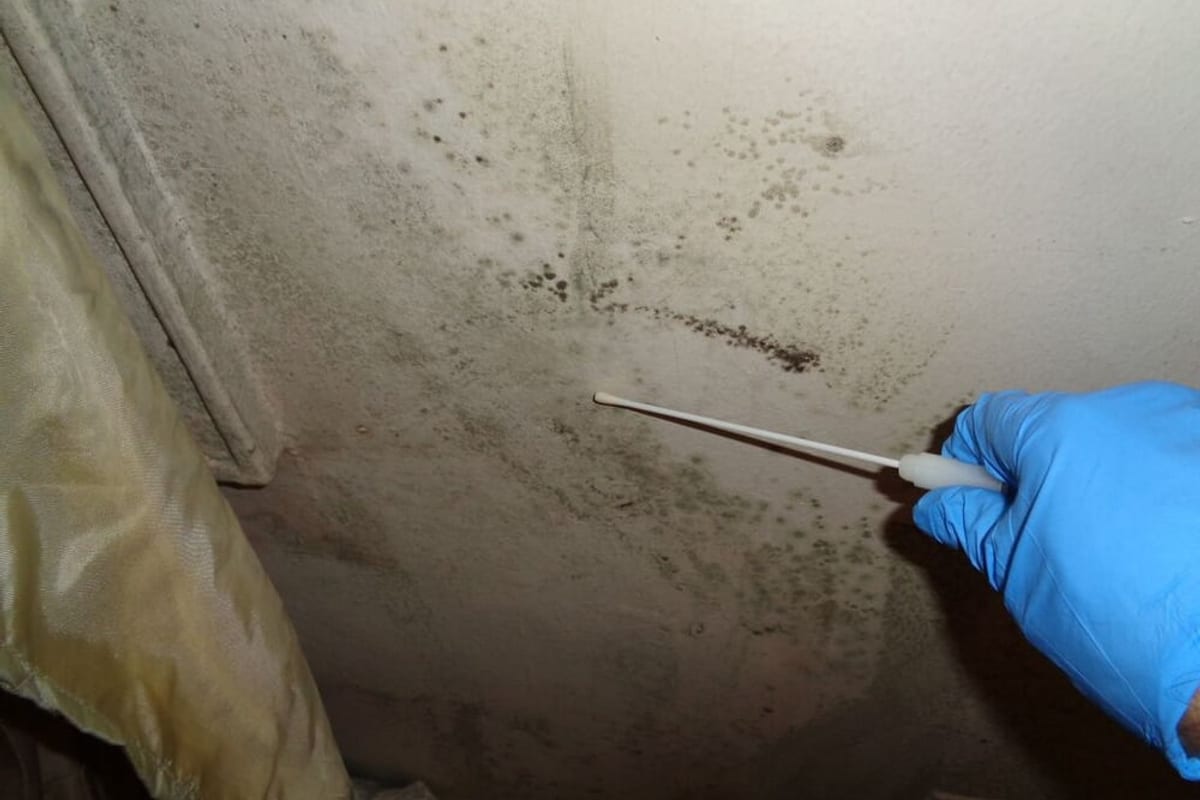
A mold inspection finds where moisture and mold are in a building and why they are there. Mold testing takes samples and sends them to a lab to measure spores or identify types. They are often sold together, but they answer different questions. Most homeowners need an inspection. Far fewer need testing, and some pay for lab work that does not change what happens next.
The U.S. Environmental Protection Agency (EPA) puts it plainly: if you can see mold, or smell it, sampling is usually unnecessary, because every kind of indoor mold growth is handled the same way. Remove it and fix the moisture. Testing earns its cost when there is a specific question the lab can answer.
This guide covers what happens during an inspection, the main types of mold tests, when testing is worth paying for, how to read an air sample report, and how to hire an inspector in Gettysburg, PA.
What a Mold Inspection Includes
A good inspection is mostly about moisture, because moisture is what makes mold grow. Finding a patch of mold is easy. Finding what keeps it wet, and whether there is more you cannot see, is the real job.
A thorough inspection usually includes 5 parts.
1. The history
The inspector should start by asking questions. When did you first notice the smell or the stain? Has there been a leak, a flood, a backed-up drain, or a roof repair? Which rooms bother you, and at what times of year? Does anyone in the home have symptoms that improve when they leave? The answers often point straight to the problem area.
2. A visual walk-through
The inspector looks for visible growth, water staining, peeling paint, warped trim, rust on metal, efflorescence on masonry, and condensation on windows and pipes. In Gettysburg homes, that walk-through almost always includes the basement or crawl space, the attic, bathrooms, under sinks, around windows, and behind appliances.
3. Moisture readings
Moisture meters show whether drywall, wood, and masonry are wet, even when they look dry. Pin meters measure wood moisture content directly. Pinless meters scan a wall for damp areas without making holes. A hygrometer measures the relative humidity of the air, which matters because humidity that stays above 60% can grow mold on cool surfaces with no leak at all.
4. Thermal imaging
A thermal camera shows surface temperature differences. Wet materials are usually cooler because water evaporating from them pulls heat away. A thermal image does not see mold, and it does not see through walls. It shows temperature patterns that point to where to take moisture readings. Used together with a meter, it finds hidden leaks quickly.
5. A written report
At the end, you should get a report that states what was found, where, the likely moisture source, the approximate size of the affected area, and what should happen next. Photos and moisture readings belong in it. If a report names mold but says nothing about why it is there, the inspection is not finished.
The Main Types of Mold Tests
Mold testing is sampling: collecting spores or material and having a lab analyze it. There are several methods, and each answers a different question.
Air samples (spore traps)
A pump pulls a set volume of air through a cassette that traps particles on a sticky slide. The lab counts the spores under a microscope and groups them by type. Results come back as spores per cubic meter of air.
An indoor air sample only means something when it is compared with an outdoor sample taken at the same time. Mold spores are always in outdoor air, and the count swings widely with weather, season, and time of day. What the inspector looks for is an indoor count that is clearly higher than outdoors, or indoor mold types that are rare outdoors.
Surface samples
Tape lifts, swabs, and bulk samples, which are small cut pieces of material, confirm whether a stain is mold and what kind it is. They are useful when it is not clear whether a mark is mold, soot, dirt, or efflorescence. They tell you nothing about how much mold is in the air or how far growth extends.
Wall cavity samples
The inspector drills a hole about the size of a pencil and draws air from inside a wall or ceiling cavity through a spore trap. This checks for hidden growth without tearing the wall open. It is useful when there is a musty smell or a past leak but no visible mold.
Dust tests (ERMI and HERTSMI-2)
The Environmental Relative Moldiness Index (ERMI) analyzes the DNA of mold species in settled dust and compares the result with a national database. EPA researchers developed it as a research tool, and EPA does not recommend it for the public or for deciding whether a home needs remediation. HERTSMI-2 is a shorter version that looks at 5 species. Both are sold directly to consumers. Neither tells you where mold is growing or what caused it.
DIY test kits
Most hardware store kits are an open dish of growth medium left out for a set time. Because spores are in almost all indoor and outdoor air, the dish almost always grows something. That result cannot tell you whether you have a problem, how large it is, or where it is. A $10 hygrometer usually tells you more.
When Mold Testing Is Worth It
EPA’s guidance is that sampling is not needed in most cases where mold is visible. Testing helps in 6 situations:
- A musty smell with no visible growth. Wall cavity or air samples can confirm whether hidden growth exists before anyone opens a wall.
- Health symptoms with no clear source. Sampling can support a conversation with a doctor, although a lab result cannot prove or rule out that mold is causing symptoms.
- Real estate transactions. Buyers sometimes want documentation during the inspection period, especially when a basement or attic shows old staining.
- Legal, landlord-tenant, or insurance disputes, where a written, lab-backed record carries weight.
- Checking whether a stain is actually mold. A surface sample settles the question cheaply.
- Clearance after remediation. Air samples compared with outdoors, alongside a visual check and moisture readings, confirm the work area is ready to be closed up.
In all 6 cases, testing still comes after, or alongside, a moisture-focused inspection. A lab number with no inspection behind it is hard to act on.
How to Read an Air Sample Report
A lab report for spore trap samples usually lists each sample location, the mold types found, and a count per cubic meter for each type. Here is what to look for.
Compare indoors with outdoors
Indoor total counts are normally lower than outdoor counts, with a similar mix of types. That pattern suggests outdoor spores are drifting in, which is normal. A room with a count several times higher than outdoors, or one type that dominates indoors but barely shows up outside, points to an indoor source.
Look at which types appear
Some molds are common outdoors and show up in almost every indoor sample, such as Cladosporium and many basidiospores. Others are more often associated with water-damaged materials indoors:
| Mold type | What it often indicates indoors |
|---|---|
| Aspergillus / Penicillium | Very common; elevated indoor levels often point to damp materials, humidity, or dust disturbance |
| Chaetomium | Growth on wet drywall paper or wood after a leak |
| Stachybotrys | Long-term wet cellulose such as drywall, ceiling tile, or cardboard |
| Cladosporium | Common outdoors; elevated indoors can mean damp surfaces such as window sills |
Even a few spores of Stachybotrys or Chaetomium are worth attention, because those molds produce heavy spores that do not stay airborne long. Finding them in the air suggests growth nearby.
Know what the numbers cannot tell you
There are no federal or Pennsylvania limits for mold in indoor air, and no count that is officially “safe.” People react differently, so the same number can bother one person and not another. A sample is also a snapshot. Counts change hour to hour with activity, airflow, and weather, so one sample on one day is a clue, not a verdict.
That is why lab results should always be read with the inspection findings. A normal air sample does not clear a wall that reads wet on a moisture meter, and a high count in one room means little until someone finds the source.
Clearance Testing After Remediation
Clearance is the check done before containment comes down at the end of a remediation job. It usually has 3 parts:
- A visual inspection confirming there is no remaining visible growth or dust in the work area.
- Moisture readings confirming materials are back to normal dry levels.
- Air samples, when used, showing the work area is similar to outdoor air and to unaffected rooms.
Some homeowners hire an independent inspector for clearance so the company that did the work is not grading its own job. That is a reasonable choice, especially for larger projects or real estate deals. Ask for the clearance results in writing and keep them with the rest of the job paperwork.
Mold Inspections When Buying a Home in Gettysburg
Many Gettysburg homes were built before 1940 on fieldstone or rubble stone foundations. Some staining in an old basement is normal, and it does not always mean active mold. What a buyer needs to know is whether there is a current moisture problem, and whether any growth is limited or widespread.
A few practical tips:
- Schedule the inspection early in your inspection period, so there is time to get a remediation estimate before your deadline.
- Look hard at flipped houses. New paint, drywall, and flooring can cover old water damage. Ask for records of what was repaired.
- Ask the seller for past remediation paperwork, including the scope, photos, moisture readings, and clearance results.
- Talk with your agent about the repair, credit, or renegotiation options your agreement of sale allows.
Our basement mold guide explains how to tell efflorescence from mold on stone walls, and what normal looks like in an old Gettysburg basement.
How to Hire a Mold Inspector
Pennsylvania does not issue a state license for mold inspection or mold remediation. That means anyone can offer the service, so it is worth asking questions before you book.
Ask about:
- Training and certification. Look for recognized mold training through organizations such as the IICRC or the American Council for Accredited Certification (ACAC).
- Equipment. A moisture meter and hygrometer are the minimum. A thermal camera is a strong plus.
- The lab. Samples should go to a lab accredited under the AIHA Laboratory Accreditation Programs’ environmental microbiology program (EMLAP).
- The report. Ask for a sample report. It should include photos, moisture readings, the likely source, and clear next steps.
- Insurance. Ask for proof of insurance.
- Independence. Ask whether the inspector also sells remediation, and if so, how they handle the conflict of interest. An honest company will explain its recommendations and put the scope in writing, whether or not you hire them for the work.
What Happens After the Inspection
If the inspection finds a small area with a clear cause, such as a patch of growth on a bathroom ceiling under a failed exhaust fan, the fix may be simple: repair the fan and clean the surface. EPA says a homeowner can usually handle an area smaller than about 10 sq ft (0.9 m²).
Larger areas, growth inside walls, attics, or crawl spaces, and mold after sewage or floodwater need professional remediation. That includes containment, removal of affected materials under HEPA filtration, drying, and clearance. Our guides on attic mold and mold after water damage cover two of the most common scenarios, and our mold removal cost guide explains what drives the price.
For a written, moisture-first assessment of your home, book a how our inspections work. We cover Gettysburg and the nearby service areas, and we follow the same IICRC S520 and EPA-based process on every job our Gettysburg Mold Remediation Pros team handles. Contact us to schedule a visit.
Frequently Asked Questions
Do I need a mold test if I can already see mold?
Usually not. EPA says that when mold growth is visible, sampling is generally unnecessary, because all indoor mold growth is handled the same way: remove it safely and fix the moisture. Spend the money on finding the moisture source and on the removal instead.
How long do mold test results take?
Most accredited labs return spore trap and surface sample results in 1 to 3 business days, and some offer faster turnaround for an added fee. The inspection itself usually takes 1 to 3 hours for a typical home, depending on its size and how many areas are sampled.
Can a mold inspection find mold inside walls?
Often, yes, without opening the wall. Moisture meters and thermal imaging show where a wall is wet, and a wall cavity air sample taken through a small hole can confirm hidden growth. A borescope camera can also look inside the cavity. Those results show whether opening the wall is worth it and where to cut.
Is there a safe level of mold in indoor air?
There is no federal or Pennsylvania standard for a safe level of mold spores indoors. Inspectors compare indoor samples with an outdoor sample taken at the same time, and look for indoor counts that are clearly higher or dominated by types linked to water damage.
Should the same company inspect and remediate?
It can work, as long as the company explains its findings, shows its moisture readings and photos, and puts the scope in writing. For larger jobs or real estate transactions, some homeowners prefer an independent inspector for the initial assessment or the final clearance so the results are fully separate from the company doing the work.