
Bathroom Fan Venting Into the Attic? Why It Causes Mold and How to Fix It
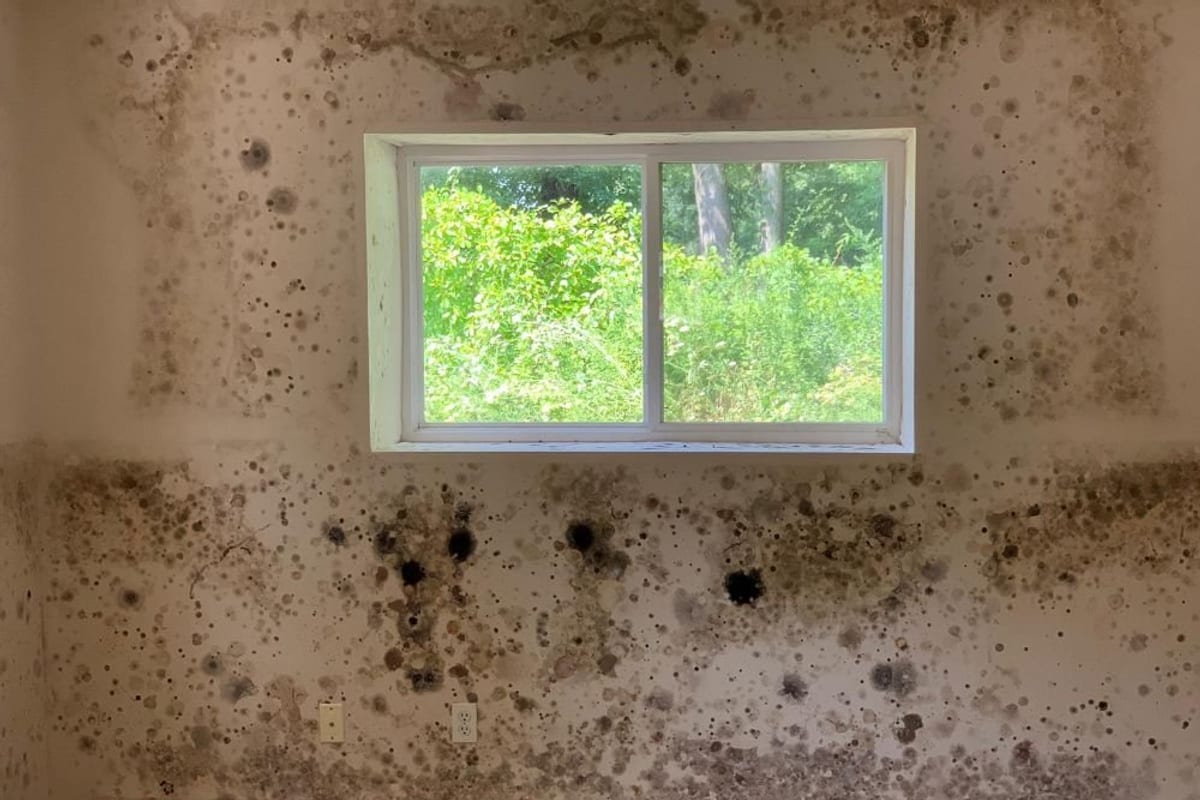
A bathroom fan that blows into the attic, instead of through a duct to the outside, dumps warm, wet shower air onto cold roof sheathing, where it condenses or freezes and feeds mold. It is one of the most common causes of attic mold, and it is usually fixable in a day.
This guide covers how to tell if your fan vents into the attic, why it causes mold and winter frost, how to size a fan in CFM, how to run the duct correctly and what to do about mold that has already started.
How to Tell Where Your Fan Goes
Many homeowners assume the fan vents outside because they hear it running. Check it directly.
- Go into the attic above the bathroom with a flashlight. Find the fan housing between the ceiling joists.
- Look for a duct. If there is no duct at all, or a duct that just ends in the insulation, the fan is venting into the attic.
- Follow the duct if there is one. It should connect to a roof cap or a wall cap with a damper. A duct that stops short, is disconnected, or is aimed at a soffit or ridge vent may still be putting moisture into the attic.
- Check the outside. Look for a vent cap on the roof or a gable wall near the bathroom. Turn the fan on and see if the flap opens.
- Look at the sheathing. Dark staining on the underside of the roof deck right above the fan, rusty nail tips, or water-stained insulation are strong signs.
If you are not comfortable moving around an attic, stay on the framing and off the drywall ceiling, or have someone inspect it for you.
Why Venting Into the Attic Causes Mold
A single shower can put a lot of water vapor into the air, and the fan’s job is to carry that vapor out of the house. When the fan blows it into the attic, the vapor rises to the coldest surfaces, which are the roof sheathing and the nails that poke through it.
What happens next depends on the season.
In winter: frost on the sheathing
When outdoor temperatures are well below freezing, the roof deck is cold. Moist air from the fan hits it and turns to frost. Each shower adds more. Over a cold stretch, a layer of frost can build up on the sheathing and nail tips.
When it warms up: “attic rain”
On the first mild day, the frost melts. Water drips onto the insulation and the ceiling below. Homeowners often see this as water spots on the bathroom or hallway ceiling and assume the roof is leaking. The roof is fine. The water came from inside.
Over time: mold on the roof deck
Plywood and oriented strand board (OSB) stay damp after each thaw. Repeated wetting gives mold the moisture it needs. The usual pattern is dark growth concentrated on the sheathing near the fan, often worse on the north-facing side of the roof, which stays colder and dries more slowly.
Our main attic mold guide covers the other causes of attic moisture, including blocked soffit vents and air leaks from the house.
What the Code Requires
The International Residential Code (IRC), the basis for Pennsylvania’s Uniform Construction Code, requires bathroom exhaust to discharge to the outdoors. It specifically does not allow exhaust to end in an attic, a crawl space or another space inside the building. The IRC’s minimum bathroom exhaust rate is 50 CFM for a fan that runs when the room is in use, or 20 CFM for a fan that runs continuously.
Your local code official has the final word on what applies to a specific job. If you are hiring someone to do this work, a home improvement contractor in Pennsylvania should be registered under the Home Improvement Consumer Protection Act. The Pennsylvania Attorney General has a contractor lookup and consumer guidance.
How to Size a Bathroom Fan (CFM)
CFM means cubic feet per minute, the volume of air the fan moves. The Home Ventilating Institute (HVI) publishes widely used sizing guidance for bathrooms.
Bathrooms 100 sq ft or smaller
HVI’s guideline is 1 CFM per square foot of floor area, with a minimum of 50 CFM. Measure length times width.
| Bathroom size | Floor area | Suggested fan |
|---|---|---|
| 5 x 8 ft | 40 sq ft | 50 CFM (minimum) |
| 8 x 8 ft | 64 sq ft | 70 CFM |
| 8 x 10 ft | 80 sq ft | 80 CFM |
| 10 x 10 ft | 100 sq ft | 100 CFM |
Bathrooms over 100 sq ft
For larger bathrooms, HVI recommends adding up the fixtures instead:
- 50 CFM for each toilet
- 50 CFM for each shower
- 50 CFM for each bathtub
- 100 CFM for a jetted tub
A large primary bath with a toilet, a separate shower and a tub would need about 150 CFM. Some larger bathrooms use two fans, one over the shower and one near the toilet.
Ceilings over 8 ft
The square-foot rule assumes an 8 ft ceiling. For higher ceilings, size by volume instead. A common approach is to aim for about 8 air changes per hour: multiply length x width x height, multiply by 8 and divide by 60.
Rated CFM vs. real CFM
A fan’s listed CFM is measured at a standard static pressure, and long, kinked or crushed ductwork can cut actual airflow well below that number. Look for fans with HVI-certified ratings at 0.25 in. of static pressure, keep the duct run short and use the duct size the fan is designed for. A fan with a 4 in. outlet should not be reduced to a 3 in. duct.
Also check the sone rating. Quieter fans (around 1 sone or lower) are more likely to be used, which matters as much as the CFM.
How to Duct the Fan to the Outside
A correct installation has 6 parts.
- Use the right duct. Smooth-wall metal duct moves air best and is easiest to keep clean. If flexible duct is used, keep it as short and straight as possible and pulled tight, with no sags.
- Insulate the duct in the attic. An uninsulated duct running through a cold attic will collect condensation inside it, which can run back down into the fan and drip from the grille. Insulated duct or duct wrapped in insulation prevents this.
- Keep the run short with as few bends as possible. Each elbow reduces airflow.
- Slope it slightly toward the exterior where possible, so any condensation drains out instead of back into the fan housing.
- Terminate at a proper roof cap or wall cap with a backdraft damper. Many building scientists advise against simply pointing the duct at a soffit vent, because the moist air can be drawn right back into the attic through the soffit. A dedicated cap is the safer choice.
- Seal every joint with foil tape or mastic, and seal the fan housing to the ceiling drywall so house air does not leak into the attic around it.
Run the fan long enough
Run the fan during the shower and for about 20 minutes after. A timer switch or a humidity-sensing switch makes this automatic. A fan that shuts off when the light does leaves most of the moisture behind on the walls and mirror, which is how ceiling mold starts in the bathroom itself.
What to Do About Mold That Is Already There
Fixing the fan stops new moisture. It does not remove the mold that has already grown on the sheathing.
Gauge the size
The EPA’s general guidance in A Brief Guide to Mold, Moisture and Your Home is that areas smaller than about 10 sq ft can usually be handled by a homeowner. Mold on attic sheathing is often larger than it first looks, because it spreads across several rafter bays.
Check the wood
Push an awl or screwdriver into the stained sheathing. Firm wood with surface staining can usually be cleaned. Soft, delaminating or crumbling sheathing needs to be replaced, which is a roofing job.
Deal with the insulation
Insulation that got wet from attic rain and stayed damp, or that has visible mold, should be removed and replaced once the sheathing is cleaned and dry.
Typical professional process
Professional attic remediation, following the IICRC S520 standard, usually involves:
- Correcting the moisture source, in this case the fan duct.
- Containing the work area and protecting the living space below.
- Removing contaminated insulation.
- Cleaning the sheathing and framing by HEPA vacuuming, wire brushing, sanding or media blasting.
- Applying a sealant or encapsulant in some cases, only after the mold is physically removed.
- Reinstalling insulation and checking that soffit and roof vents are clear.
For price ranges, our cost page shows national published benchmarks from Angi and HomeGuide. Those are not local quotes.
Gettysburg-Area Homes
Older homes are especially likely to have been retrofitted with a bathroom long after they were built, sometimes with the fan added later still. According to U.S. Census Bureau ACS 2020-2024 5-year estimates, 47.5% of housing units in Gettysburg borough were built before 1940. In those houses, a bathroom fan tucked into a low attic or knee wall space with no duct to the outside is a frequent finding. Newer homes are not immune either. Disconnected ducts and fans aimed at soffits turn up in houses of any age.
Frequently Asked Questions
Is it ever OK to vent a bathroom fan into the attic?
No. The IRC requires the exhaust to go outdoors. Attic ventilation is not designed to carry away the water vapor from a shower.
Can I vent the fan out through the soffit?
Some installations do, and local inspectors vary on it. The concern is that moist air exiting the soffit can be pulled back into the attic through the soffit intake vents. A roof or gable wall cap with a damper is more reliable.
Why is water dripping from my bathroom fan?
Usually condensation inside an uninsulated duct running through a cold attic. The water runs back down the duct and out the grille. Insulating the duct, shortening the run and sloping it toward the outside usually fixes it.
Will a stronger fan fix attic mold?
No. A bigger fan venting into the attic puts more moisture there. The duct has to go outside, and existing mold has to be cleaned.
Get the Attic Checked
If you have found staining on the roof deck above a bathroom, frost on the nails in winter or water spots on the ceiling with no roof leak, the fan is a likely cause. Our attic mold remediation service covers cleaning the sheathing and checking the ventilation so the problem does not return. Contact us or call (717) 256-4434 to schedule an attic inspection.