
Foundation Wall Cleaning
Fieldstone, rubble stone, and concrete block walls are HEPA vacuumed and scrubbed. Mortar joints in older stone walls are cleaned by hand so soft lime mortar is not damaged.
Stone and block foundation walls, finished basements, and sill plates. Removal is paired with dehumidification, because cleaning alone will not hold in a damp basement. We clean or remove what has grown, then set the basement up to stay under 60% relative humidity so it does not come back.
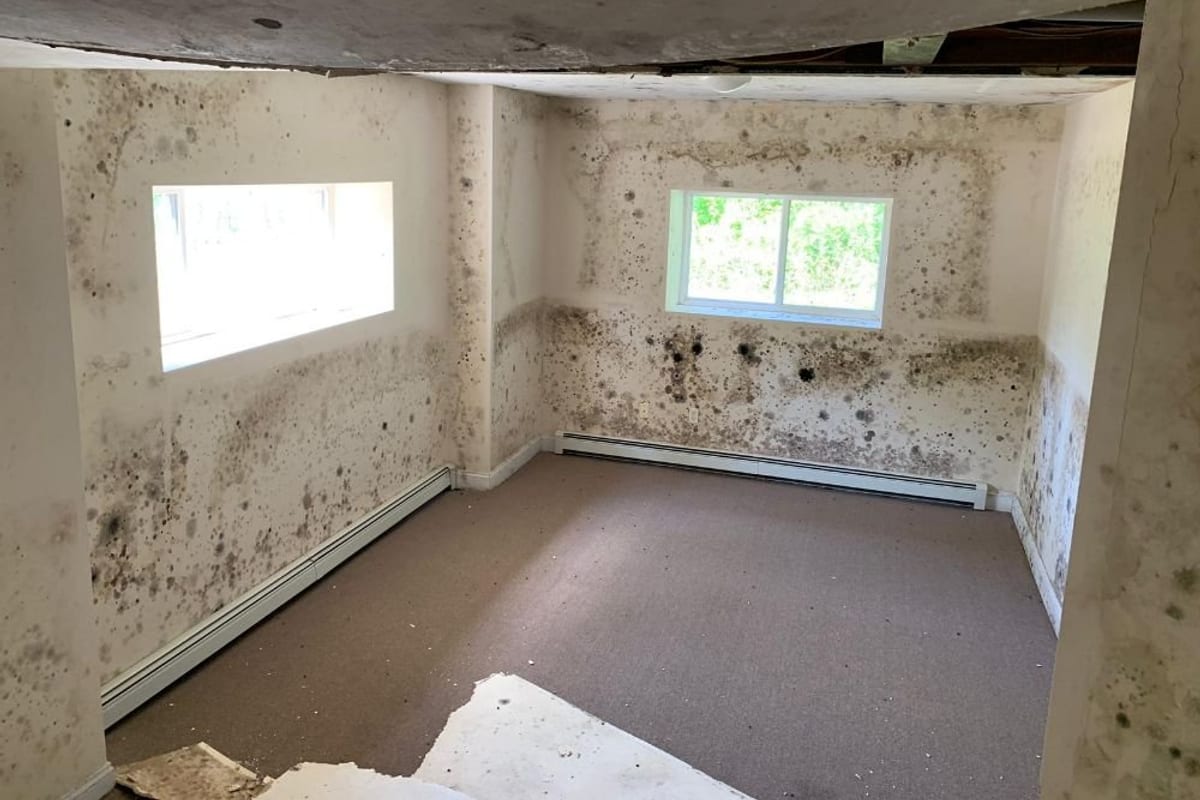
Basement mold is almost always a moisture balance problem: water coming through the walls, humid air condensing on cool surfaces, or both. These are the signs that the balance has tipped.
Basement work ranges from cleaning joists in an unfinished cellar to tearing out a finished room. The inspection sorts out which parts of your basement need which treatment.
Fieldstone, rubble stone, and concrete block walls are HEPA vacuumed and scrubbed. Mortar joints in older stone walls are cleaned by hand so soft lime mortar is not damaged.
Floor joists, sill plates, and subfloor are HEPA vacuumed, wire brushed or sanded, and damp wiped. Framing is dried to normal moisture readings before any sealer or primer goes on.
Moldy drywall, fiberglass insulation, carpet, and pad are removed under containment. Cuts continue until moisture readings are normal and the back side of the drywall is clean.
Commercial dehumidifiers dry the basement during the job. We then help you size a permanent dehumidifier to hold relative humidity between 30% and 50%, the range EPA recommends.
We check gutters, downspouts, grading, window wells, and the sump pump. You get a plain list of which fixes stop the water, and a referral if exterior drainage or waterproofing work is needed.
Plastic bins, metal shelving, and other hard items are cleaned. Moldy cardboard, paper, and upholstered items are bagged and removed only with your approval.
Finished or unfinished basement? It changes the job a lot, so tell us when you call.
📞 Call (717) 256-4434Two different water problems meet in an old basement here, and they need different fixes. The first is liquid water pushed through the wall by saturated soil after heavy rain. The second is water vapour wicking up through stone and lime mortar, which never shows as a puddle but keeps everything slightly damp.
On top of both, summer air is the real surprise. Warm, humid outdoor air brought into a basement that sits near 60°F hits its dew point on the cool walls and floor and condenses. Opening the windows to air it out makes it measurably worse, which is why so many homeowners here feel like they are fighting it.
Basements take the worst of it. Fieldstone and block foundations let ground water and vapor through, and humid summer air condenses on the cool walls. Basement mold remediation here pairs cleaning with drainage checks and a dehumidifier plan. Work follows EPA mold cleanup guidance and the IICRC S520 standard, and the EPA humidity target of 30% to 50% is what we set dehumidifiers to hold.
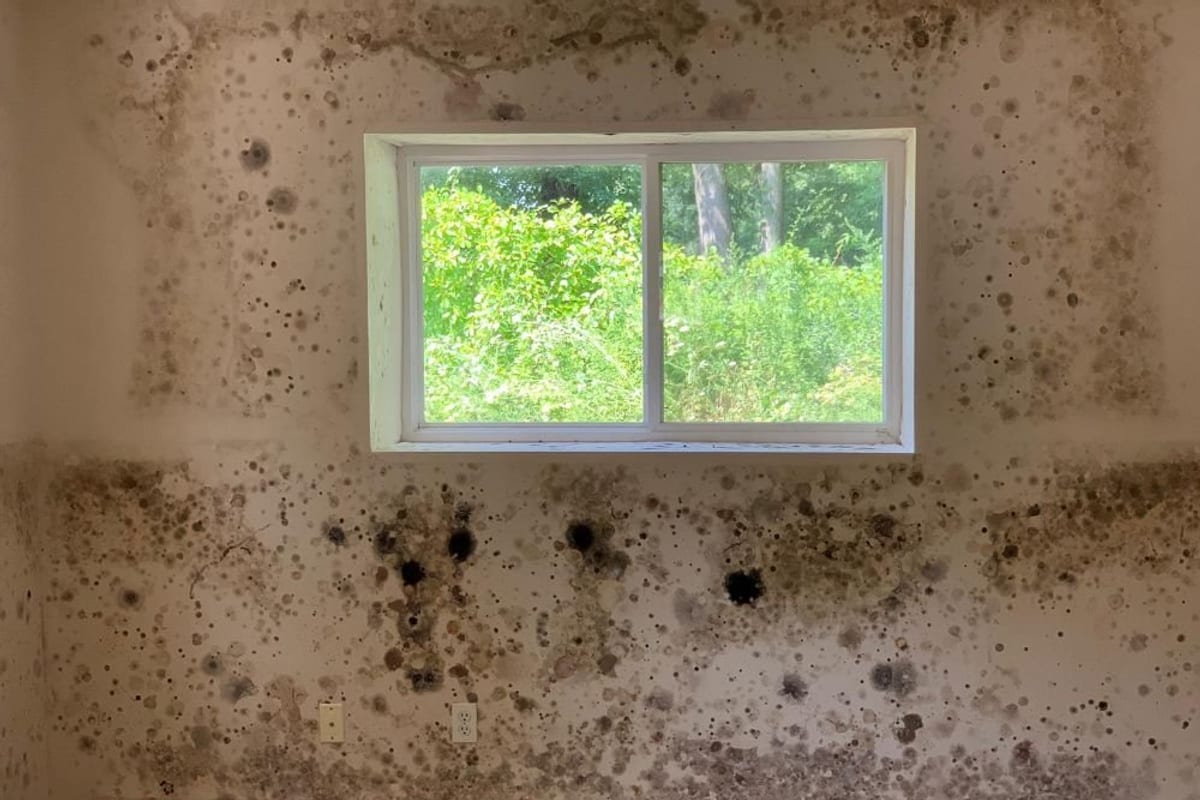
Stone, block and poured walls each let moisture in differently. The process starts by working out which one you have and where the water is coming from.
Liquid intrusion and vapour drive look similar on a wall but need opposite fixes. Meter readings at the base of the wall, the sill plate, and the slab tell us which one, or both, you are dealing with.
Basement air moves upward through the house by stack effect, so the work area is sealed and put under negative pressure. That stops the cleanup itself from spreading spores into living space above.
Framed walls, insulation, panelling, and carpet pad against damp masonry come out. Stone, block, and joists are HEPA vacuumed, brushed, and damp wiped, with care taken not to blast out soft historic mortar.
Dehumidifiers and air movers bring readings back to normal, then we review gutters, grading, downspout extensions, and sump operation, and set a humidity target you can hold with a drained dehumidifier.
Ready for step one?
Call (717) 256-4434Finished walls, exposed framing and masonry need different assessments. Measure moisture and affected surfaces before selecting a cleanup or rebuild scope.
Moisture-control guidance for drainage, leaks, condensation and indoor humidity.
Find floodplain resources and the municipality responsible for permit determinations.
Review masonry moisture, stored materials and humidity control.
Check the uphill wall, roof runoff and additions over bare soil.
Compare older farmhouses with newer finished lower levels.
Drying, documentation and the repair questions to resolve before rebuilding.
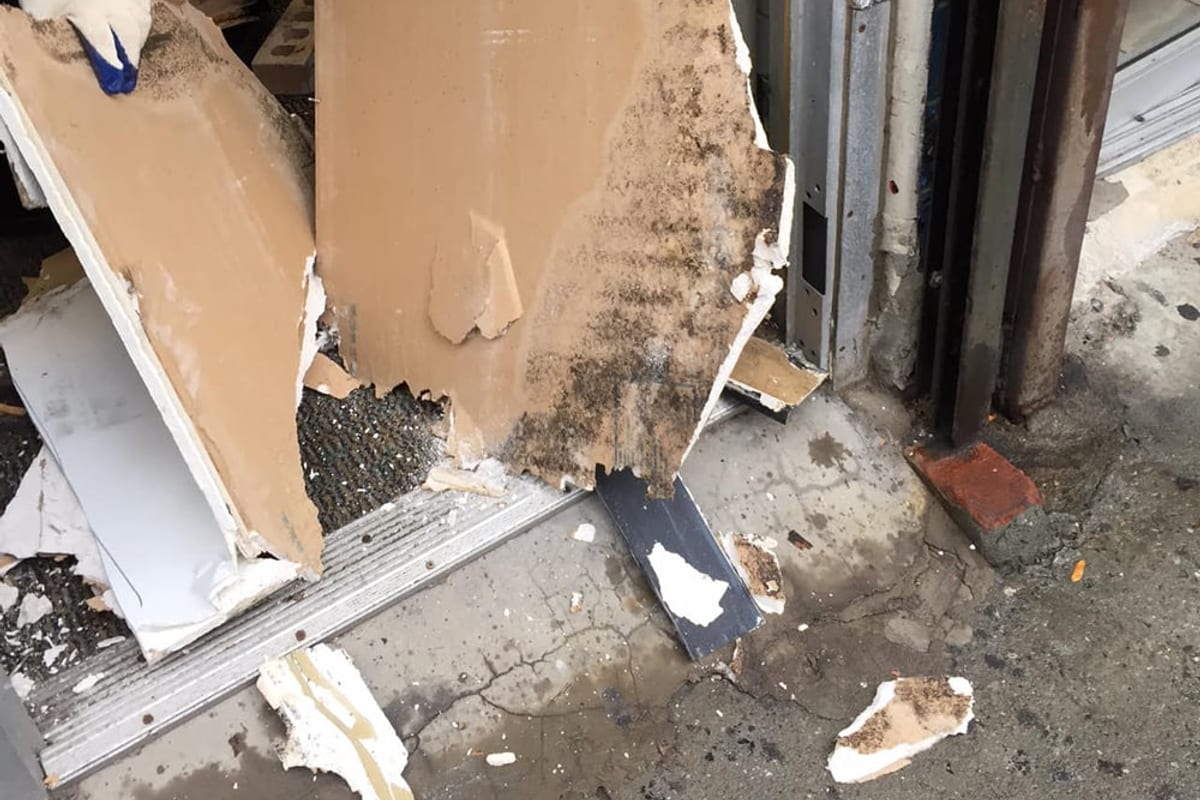
Removal alone buys a basement one season. Gettysburg Mold Pros pairs cleaning with a moisture plan: a sized dehumidifier, drainage fixes outside, and storage off the walls.
Answers about damp walls, dehumidifiers, sealing stone foundations, finished basements, and whether insurance covers seepage. Don't see yours? Call and ask.
Basement work is quoted after we measure affected surfaces and inspect the materials and moisture source. A partial basement and a full tear-out are different scopes. Our cost guide separates published national examples from property-specific pricing; we have not published a verified Gettysburg average. Ask whether drainage repairs, reconstruction and independent testing are included.
Read the national cost sources, calculation assumptions and exclusions.
Question about your property? Call (717) 256-4434Older masonry foundations can admit ground moisture, and humid air can condense on cool basement walls. Missing waterproofing, poor grading, roof runoff and indoor humidity are possible contributors, but a moisture inspection is needed to identify the source at a particular home.
Question about your property? Call (717) 256-4434Most basement mold remediation jobs take 2 to 5 days. An unfinished basement with growth on joists often takes 2 days. A finished basement with drywall and carpet removal takes longer because materials must dry before the clearance check.
Question about your property? Call (717) 256-4434Yes, it helps prevent new growth, but it does not remove existing mold. EPA recommends keeping indoor humidity between 30% and 50%. A dehumidifier with a hose to a floor drain or sump runs without emptying a bucket. Existing growth still has to be cleaned and water leaks still have to be fixed.
Question about your property? Call (717) 256-4434No, the smell itself is not the main risk, but it means mold or mildew is growing somewhere. The odor comes from gases that growing mold releases. The growth behind it can cause a stuffy nose, wheezing, or itchy eyes, according to the CDC. Find the source before it spreads into finished spaces.
Question about your property? Call (717) 256-4434No, not always. If mold came from humidity or condensation, a dehumidifier and better air flow may be enough. If water comes through the walls or floor after rain, the water must be stopped first, often with gutter, grading, or drainage work. The inspection tells you which case applies.
Question about your property? Call (717) 256-4434Yes, but it usually grows on the dust and organic film on the stone, not the stone itself. Wood, paper-faced drywall, and cardboard near the wall grow mold far faster. Stone walls in Gettysburg basements are cleaned, and nearby wood is treated or replaced.
Question about your property? Call (717) 256-4434Most basement mold claims in Pennsylvania are declined, and it is worth knowing why before you file. Standard policies exclude seepage through foundation walls, long-term dampness, and surface or ground water, which describes the majority of what we find in old Gettysburg basements. A sudden failure is different: a burst pipe or a water heater that let go is often covered, and flooding needs separate flood insurance. We provide photographs, moisture readings, and a written scope so you can let the adjuster decide on facts.
Question about your property? Call (717) 256-4434Get the basement measured before you pick a dehumidifier or a waterproofing contract. You will know where the water comes from and what actually needs to be removed.