
Mold in Carpet After a Leak: Clean It or Replace It?
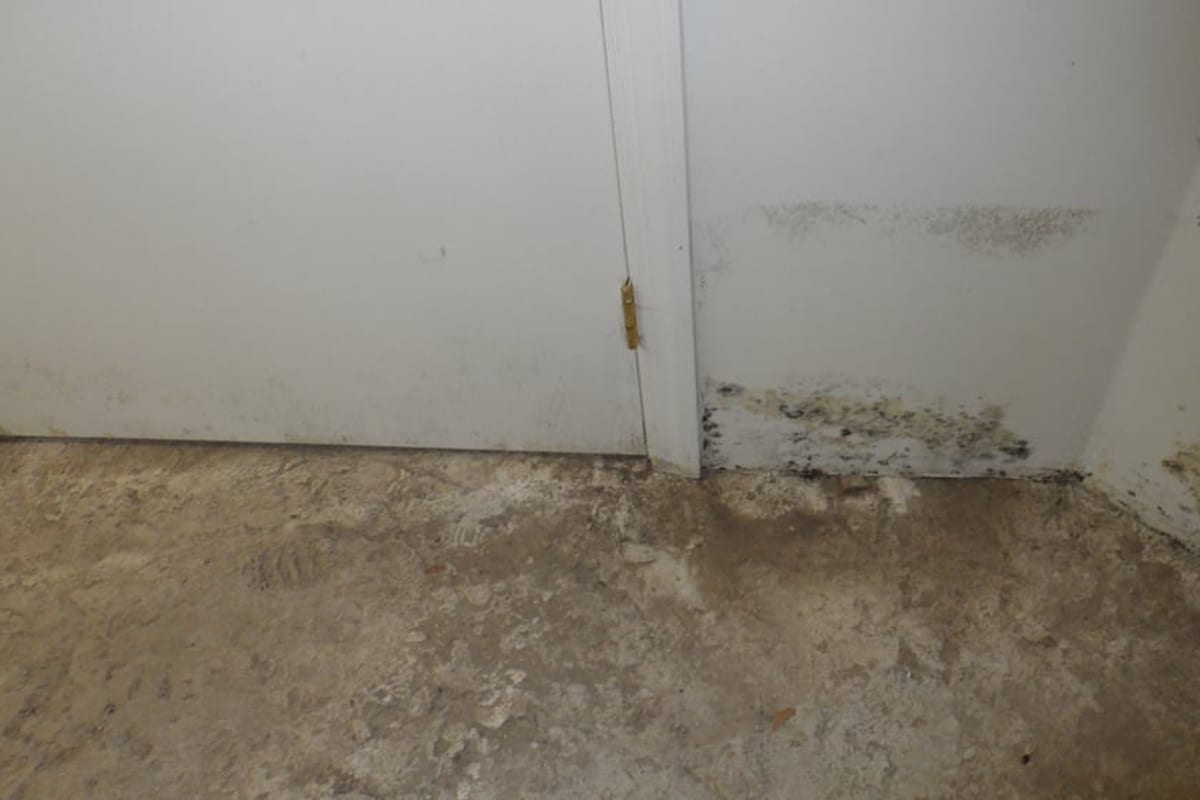
Carpet that got wet with clean water and was dried within 24-48 hours can often be saved, but carpet that already has mold growing in it, or that was soaked by sewage or floodwater, should be replaced along with the pad. The pad is the weak point. It holds water like a sponge and is almost always replaced once it has been soaked for long or grown mold.
This guide covers why the first 48 hours decide the outcome, how the category of water changes your options, how to check what is happening under the carpet, and a decision table you can use right now.
Why the 24-48 Hour Window Matters
The U.S. Environmental Protection Agency (EPA) says in A Brief Guide to Mold, Moisture and Your Home that wet or damp materials should be dried within 24-48 hours to prevent mold growth. Carpet is one of the hardest materials to dry in that time, because water does not stay in the fibers. It runs through to the pad, the tack strip, and the subfloor or slab underneath.
What that looks like in practice:
- Hours 0 to 24. Water moves down and out. A wet spot on top may be a wet circle twice as wide in the pad.
- Hours 24 to 48. Without extraction and drying, the pad stays saturated. A musty smell may start in warm weather.
- After 48 hours. Mold growth becomes likely in the pad and on the carpet backing, especially in a warm room or a basement where humidity is already high.
Surface drying is not the same as drying the system. A carpet can feel dry on top while the pad and subfloor stay wet for days. Pressing a paper towel on top tells you very little. A moisture meter on the pad and subfloor tells you what you need to know.
How the Category of Water Changes the Answer
Restoration contractors classify water by how contaminated it is, using the IICRC S500 water damage standard. The Institute of Inspection, Cleaning and Restoration Certification (IICRC) publishes both S500 for water damage and S520 for mold. The category matters more than the size of the spill.
| Water category | Common sources | Carpet | Pad |
|---|---|---|---|
| Category 1 (clean) | Supply line, broken pipe, overflowing sink with clean water | Often salvageable if extracted and dried fast | Often replaced; can sometimes be dried in place if caught early |
| Category 2 (gray) | Washing machine or dishwasher discharge, toilet overflow with urine only, aquarium | Sometimes cleaned and dried by a professional | Replaced |
| Category 3 (black) | Sewage, floor drain backup, river or surface floodwater, toilet overflow with feces | Replace | Replace |
Two points about categories that catch homeowners off guard:
- Water gets worse with time. Clean water that sits for a few days in a warm room picks up contamination from the carpet, pad and dust, and is treated more like Category 2 or 3.
- Floodwater from outside is Category 3. Water that came in through a basement window well or under a door during a storm carries soil, bacteria and whatever it crossed. Carpet and pad soaked by it should go.
A note on local floods
Flood-soaked carpet is a familiar problem in Adams County. FEMA National Flood Insurance Program (NFIP) claims data, as of Sept 8, 2026, shows 400 claims in the county from 1978 to 2026, with the peak year in 2011, when Tropical Storm Lee produced 133 claims. If your carpet was soaked in a storm like that, treat it as Category 3. Our guide on flood insurance and mold in Adams County covers what flood policies generally address. NFIP coverage in basements is limited, so read your policy and the plain-language guides at FloodSmart.gov. This is general information, not insurance advice.
How to Check Under the Carpet
You cannot judge carpet from the top. Here is how to look underneath without wrecking it:
- Pick a corner in a closet or along a wall where the carpet meets the tack strip.
- Grip the carpet with pliers and pull it up off the tack strip. Wear gloves; tack strip is sharp.
- Look at the pad. Check color, smell and dampness. Dark spotting, gray or green fuzz, or a sour, musty odor all mean the pad is done.
- Look at the carpet backing. Staining or growth on the back of the carpet means the carpet itself is affected.
- Check the tack strip and subfloor. Dark, swollen or soft tack strip and stained plywood or OSB are signs that water sat for a while.
- Use a moisture meter on the subfloor if you have one. Wood that reads well above the surrounding dry areas still needs drying.
If you have an N95 respirator, wear it while you pull back carpet that smells musty. Disturbing moldy pad releases spores.
Clean or Replace: A Decision Guide
Use this checklist in order. The first “replace” answer usually settles it.
- Was the water sewage, a floor drain backup, or outside floodwater? Replace carpet and pad.
- Is there visible mold on the pad or carpet backing? Replace. EPA lists carpet among the porous materials that may have to be thrown away once moldy, because mold grows into the spaces in the material.
- Has it been wet more than 48 hours? Replace the pad at minimum. A professional can tell you whether the carpet itself can be cleaned and dried.
- Is the smell still there after drying? Replace. Lingering odor means growth or contamination remains.
- Was it clean water, caught within a day, with no smell or growth? The carpet can often be extracted, dried and kept. Plan on new pad unless a professional confirms it dried fully.
Area rugs are different
A small area rug can sometimes be saved if it was wet with clean water and dried fast, because it can be lifted and dried from both sides. Valuable rugs, such as hand-knotted wool, should go to a rug cleaner who handles water damage. A moldy synthetic rug with a latex backing is usually not worth the effort.
What Not to Do
- Do not just shampoo it. Carpet cleaners add water, and most home units cannot pull it back out of the pad.
- Do not lay new carpet over a wet subfloor or slab. Mold grows under the new pad.
- Do not rely on a fan blowing across the top. It dries the fibers, not the pad.
- Do not spray bleach on carpet. It discolors the fibers, wets the pad, and does not reach growth in the backing. See our guide on whether bleach kills mold.
Basement Carpet Is a Special Case
Carpet on a basement slab is the most likely carpet in the house to grow mold. The slab is cool, so humid summer air can condense on it under the pad, and older slabs often have no vapor barrier below them. Even without a leak, the pad can stay damp all summer.
If you want soft flooring in a basement, wait until the basement stays below 60% relative humidity through a full summer, and consider area rugs over a hard floor so you can lift them. Our guide to basement mold in old Gettysburg homes covers the moisture sources and the humidity target.
What Professionals Do Differently
A water damage and mold crew approaches wet carpet as part of a drying job:
- Identify the category of water and the source.
- Extract water with truck-mounted or portable extractors, which remove far more than a shop vac.
- Map the moisture under the carpet, along the walls, and into the drywall.
- Remove what cannot be saved, usually the pad, and sometimes the carpet and the bottom of the drywall.
- Dry the structure with air movers and dehumidifiers, and confirm with meter readings before replacing anything.
- Clean and contain if mold has already started, following EPA guidance and IICRC S520.
Frequently Asked Questions
Can you save carpet pad after a leak?
Sometimes, if it was clean water and the pad was dried within about 24 hours. In most cases, pad is replaced, because it holds water and dries slowly. Pad is usually inexpensive compared with the carpet, so replacing it is a reasonable safeguard.
How long does it take for mold to grow in wet carpet?
EPA advises drying wet materials within 24-48 hours to prevent mold growth. After that, growth becomes likely, especially in warm, humid rooms or on a basement slab. A musty smell is often the first sign.
Can steam cleaning kill mold in carpet?
Steam cleaning may clean the surface fibers, but it does not dry the pad and can add moisture. It does not remove mold growing in the backing or pad. Once growth is established, replacement is usually the answer.
Does homeowners insurance pay for wet carpet?
It depends on the cause and your policy. Sudden pipe bursts are often treated differently from slow leaks, and flooding from outside is usually excluded from standard homeowners policies. Read your policy, and see our guide on whether homeowners insurance covers mold in Pennsylvania. This is general information, not insurance advice.
Getting Wet Carpet Dried or Removed
If carpet in your home got wet from a burst pipe, a backup, or a storm, the first two days matter most. Our water damage and mold restoration service extracts, dries and removes affected materials so mold does not get a start. For general price ranges, see our mold remediation cost page, which explains national published benchmarks from Angi and HomeGuide rather than local quotes. Contact us as soon as you find the water.