
Mold Clearance Testing After Remediation: How Post-Remediation Verification Works
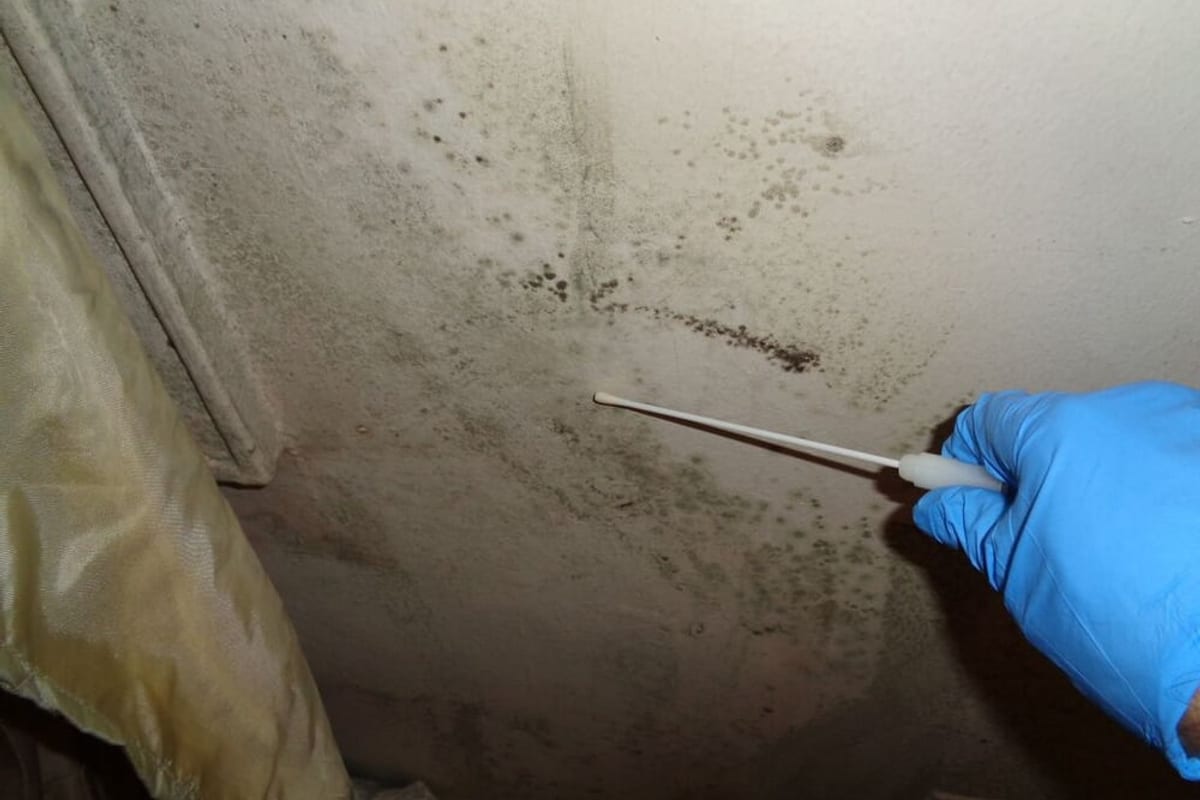
Mold clearance testing, also called post-remediation verification, is the final check that confirms a remediated area is clean, dry and ready to be closed up, and it should happen before containment comes down and before any new drywall goes in. A proper check is mostly visual and moisture-based. Air sampling can add evidence, but it is not the whole test.
This guide covers what a clearance check includes, who should perform it, what “passing” means, how to read the results, and what happens when a job fails.
Why Verification Matters
Remediation is supposed to return the work area to normal. The IICRC S520 standard describes that goal as returning materials to “Condition 1,” meaning normal fungal ecology with no growth beyond what you would find in a typical clean building. Our guide to IICRC S520 mold conditions explains those categories.
Without a final check, you are taking the contractor’s word that the job is done. Once drywall, insulation and paint go back up, nobody can see the framing again without tearing it out. Verification is the last chance to catch:
- Growth that was missed or not fully cleaned.
- Fine dust left on framing, ledges and floors.
- Materials that are still wet.
- A moisture source that was never actually fixed.
The 3 Parts of a Clearance Check
1. Visual inspection
The visual inspection is the core of clearance, and an area that fails it should not be air sampled until it is cleaned again. The assessor walks the containment with a bright light and looks at:
- Framing, sheathing, joists and subfloor for any remaining growth or staining that looks like active mold.
- Horizontal surfaces such as top plates, sills, ledges and the floor for dust and debris.
- Corners, fastener heads and the backs of studs, which are easy to miss.
- The containment itself, to confirm it held and is not torn.
Some staining on wood is permanent and is not growth. A good assessor explains which marks are cosmetic staining and which are not acceptable. Many crews apply a clear sealer or encapsulant only after clearance passes, so the assessor sees the bare wood.
A white glove or dark cloth wipe on surfaces is a common field check for leftover dust.
2. Moisture readings
Mold grows on wet materials. A clean area that is still wet can grow mold again within days. The assessor uses a pin or pinless moisture meter on framing, sheathing, subfloor and any remaining drywall or masonry, and compares readings with similar dry materials elsewhere in the house.
A typical target for wood is the same moisture content as unaffected wood in the same building, which in many homes falls somewhere in the low to mid teens on a pin meter. Relative humidity in the work area should also be in a normal range. The EPA recommends keeping indoor humidity between 30% and 50%, and below 60%, in its Brief Guide to Mold, Moisture and Your Home.
3. Air sampling (optional)
Spore trap air samples are often added to clearance, especially on larger jobs, real estate transactions, and homes with sensitive occupants. The assessor typically takes:
- One or more samples inside the containment, usually after surfaces are agitated with air to stir up any settled dust.
- One sample outdoors at the same time as a baseline.
- Sometimes a sample in an unaffected room inside the house.
The lab counts spores and groups them by type. Results often return in 1 to 3 business days.
There is no federal or Pennsylvania numeric standard for passing mold clearance. Assessors use a comparison: the work area should look similar to outdoor air and to unaffected rooms in both total count and the mix of mold types.
What Passing Usually Looks Like
| Check | Typical passing result | Typical failing result |
|---|---|---|
| Visual | No visible growth, no debris or dust on surfaces | Remaining growth, dust on ledges or floor, torn containment |
| Moisture | Materials at normal dry levels for that building | Framing or subfloor reading wet compared with dry reference areas |
| Air sample, total count | Similar to or lower than outdoors | Clearly higher than outdoors or unaffected rooms |
| Air sample, mold types | Similar mix to outdoors | Water-damage types such as Stachybotrys or Chaetomium present, or one type dominating indoors |
| Moisture source | Repaired and documented | Leak, condensation or drainage problem still active |
Each assessor sets their own criteria, which should be written into the report. Ask what criteria they will use before the visit, not after.
Who Should Do the Clearance Check?
The cleanest option is an independent assessor who has no financial stake in the remediation. When the company that did the work also checks the work, it is grading its own test. That does not mean every self-check is wrong, but it removes the independence that makes the result worth trusting.
Some states, such as New York and Texas, prohibit the same company from both assessing and remediating the same project. Pennsylvania has no mold licensing law, so the choice is up to you. Our guide on how to choose a mold remediation company in Pennsylvania covers that conflict in more detail.
When independent clearance is worth it
- Larger jobs, where growth covered more than a single small area.
- Real estate transactions, where a buyer, seller or lender will rely on the result. See our guide on selling a house with mold in Pennsylvania.
- Households with sensitive occupants, such as infants, people with asthma or anyone with a weakened immune system.
- Insurance claims or disputes, where a third-party record carries more weight.
- Jobs where something went wrong before, such as mold that came back after a prior cleanup.
What to look for in an assessor
- Mold-specific training from a recognized body, such as IICRC or the American Council for Accredited Certification (ACAC).
- A moisture meter, hygrometer and, ideally, a thermal camera.
- Samples sent to a lab accredited under AIHA’s environmental microbiology program (EMLAP).
- A written report with photos, readings and stated pass criteria.
- No business relationship with the remediation company on your job.
Timing: When the Check Happens
Clearance should be scheduled for a specific point in the job:
- Removal and cleaning are finished.
- Drying equipment has brought materials back to dry levels.
- The air scrubber has run long enough to clear airborne dust, often at least several hours after the last cleaning.
- Containment is still up and sealed.
- No new drywall, insulation, sealer or paint has been installed.
If the crew takes down containment or starts rebuilding before the assessor arrives, the check loses most of its value. Put the clearance visit on the calendar when you sign the remediation contract. Our remediation timeline guide shows where it fits.
What Happens If Clearance Fails
A failed clearance is not unusual, and it is the reason the check exists. Typical next steps:
- Visual fail: the crew re-cleans the missed areas, HEPA vacuums again, and the assessor rechecks.
- Moisture fail: drying continues, and moisture readings are taken again before rebuild.
- Air sample fail: the crew re-cleans the containment and the assessor resamples. If counts stay high, the assessor should look for missed growth or a remaining source.
Your contract should state who pays for re-cleaning and retesting after a failed clearance. Many reputable contractors include re-cleaning at no extra charge when their work did not pass. Get it in writing before work starts.
What the Clearance Report Should Include
Keep a copy of the final report with your home records. It should list:
- The date, address and specific work areas checked.
- The assessor’s name, company and training.
- Photos of the cleaned area before it was closed up.
- Moisture readings by location, with reference readings from dry areas.
- Air sample locations, lab name, chain of custody and lab results, if sampling was done.
- The pass or fail criteria used and the conclusion.
- Any recommendations, such as monitoring humidity or fixing a drainage issue.
This paperwork is useful later. Pennsylvania’s Real Estate Seller Disclosure Law (68 Pa.C.S. Chapter 73) requires sellers to disclose known material defects, and a documented remediation with clearance gives buyers a clear record. This is general information, not legal advice.
For lab clearance pricing, see the national published benchmarks from sources such as Angi and HomeGuide on our mold remediation cost page. Those are national figures, not local quotes.
Frequently Asked Questions
Is air sampling required for mold clearance?
No. The visual inspection and moisture readings are the core of post-remediation verification. Air sampling adds lab evidence and is common on larger jobs, real estate deals and homes with sensitive occupants, but a job can be verified without it.
Can I do my own mold clearance test with a home kit?
Home settle-plate kits are not a reliable clearance tool. Spores are always in indoor air, so the dish almost always grows something, and there is no outdoor comparison. Clearance needs a visual check, moisture readings and, if sampling is used, a proper spore trap compared with outdoor air.
How soon after remediation should clearance testing be done?
After cleaning and drying are complete and the air scrubber has run for several hours, while containment is still up. It should always happen before any rebuild materials go in.
What if clearance passes but I still smell mold?
A remaining odor can come from areas outside the work zone, wet materials that were not part of the scope, or the HVAC system. Ask the assessor to check adjacent spaces. Our guide to a musty smell with no visible mold lists common hidden sources.
Book a Verification Visit
Clearance is easiest when it is planned from the start. Learn how our inspections work, and contact us to talk through verification for a current or upcoming job, including how to bring in an independent assessor.