
Mold on Window Sills: Winter Condensation, Dew Point and Old Windows
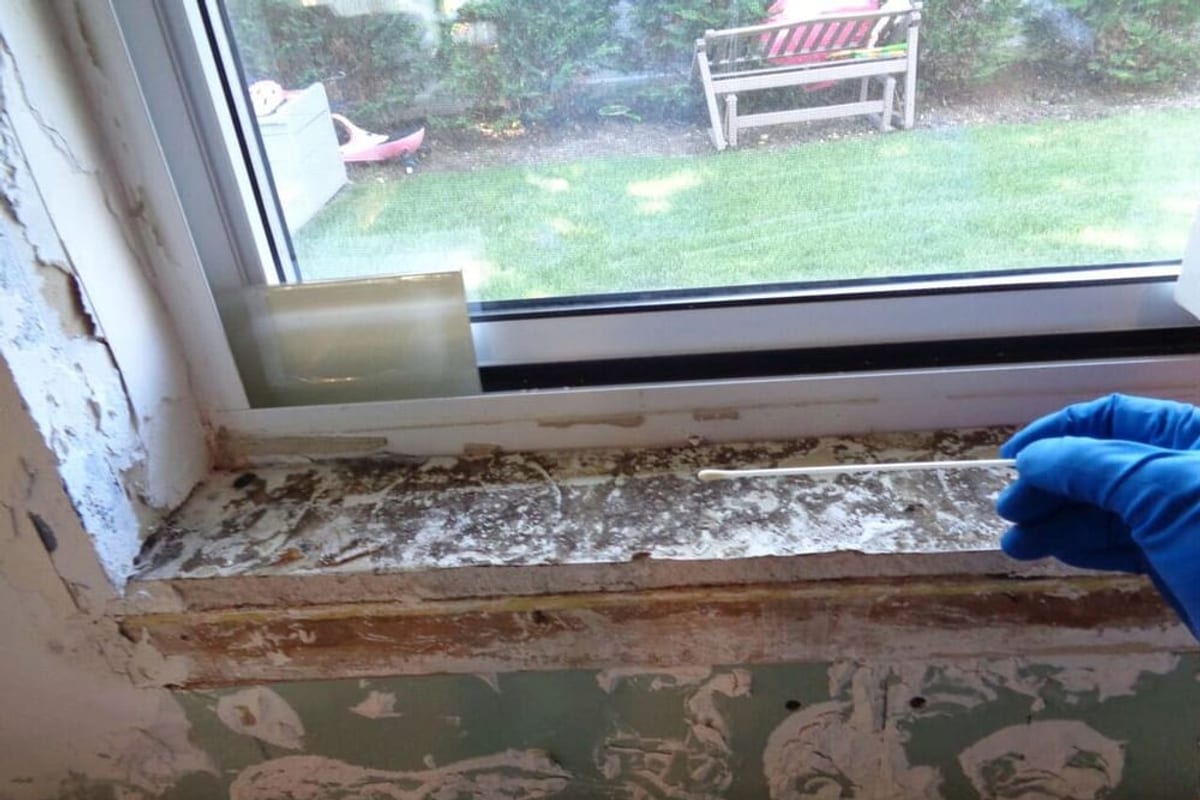
Mold on window sills is almost always caused by winter condensation: indoor air with too much moisture meets cold glass, water runs down onto the sill, and the sill stays wet long enough for mold to grow. The fix is to lower indoor humidity, warm the glass, and get air moving across the window, then clean the sill and repair any wood that has softened.
This guide covers how dew point works at a window, the indoor humidity numbers that matter in cold weather, what is different about single-pane and storm windows in older homes, how to clean a sill, and when the wood or the wall below needs more attention.
Why Windows Sweat in Winter
Air holds water vapor. The warmer it is, the more it can hold. The dew point is the temperature at which air of a given moisture content becomes saturated and water starts to condense on any surface that cold or colder.
Glass is usually the coldest surface in a heated room. On a cold night, the inside surface of the glass can drop below the dew point of the room air. Water condenses on the glass, collects at the bottom, and runs onto the sash and sill. Repeat that night after night through January and the sill, the paint, and the bottom rail of the sash stay damp for weeks. Dust, paint, wood, and the caulk joint give mold what it needs.
Dew point at a typical room temperature
At a room temperature of 70°F (21°C), this is roughly where condensation starts:
| Indoor relative humidity | Approximate dew point | What it means at the window |
|---|---|---|
| 30% | 37°F (3°C) | Condensation only on very cold glass |
| 35% | 41°F (5°C) | Single-pane glass may sweat in cold weather |
| 40% | 45°F (7°C) | Single-pane glass sweats on most winter nights |
| 45% | 48°F (9°C) | Edges of older double-pane units may sweat |
| 50% | 50°F (10°C) | Widespread condensation in cold weather |
| 60% | 55°F (13°C) | Condensation even on better windows |
These are standard psychrometric values, rounded. The takeaway is simple: every few points of indoor humidity you remove lowers the dew point by a few degrees, and in cold weather that can be the difference between a dry window and a wet one.
How Cold Does the Glass Get?
The inside surface temperature of a window depends on the glass and frame, the outdoor temperature, wind, and whether curtains or blinds trap cold air against it.
- Single-pane glass gives very little insulation. On a cold winter night, its inside surface can fall into the 30s°F, below the dew point of almost any comfortable room.
- Single-pane with a storm window behaves roughly like a double-pane window, because the air space between the two sheets of glass adds insulation. The inside surface stays considerably warmer.
- Double-pane insulated glass stays warmer still, but the edges, where a metal spacer joins the panes, are colder than the center. That is why condensation often forms in a band along the bottom of the glass.
- Metal frames without a thermal break conduct cold and often sweat even when the glass does not.
Curtains, heavy drapes, and closed blinds make all of these worse. They keep room heat off the glass and trap a pocket of cold, humid air against it.
Single-Pane and Storm Windows in Older Homes
According to U.S. Census Bureau ACS 2020-2024 5-year estimates, 47.5% of housing units in Gettysburg borough were built before 1940, and the median year built is 1942. The same estimates put the pre-1940 share at 54.3% in York Springs borough, 40.7% in Arendtsville, and 40.4% in Fairfield borough. Many older homes in those towns still have original wood sash windows, often with storm windows added later.
Those windows can work well, but they have a few habits:
Interior condensation on the primary sash
If the inner sash is single-pane and the storm window is missing, poorly fitted, or left open, the inside glass gets very cold. Expect condensation on the inside glass and on the sill below.
Condensation between the sash and the storm
If the storm window is tight and the inner sash is loose, warm indoor air leaks out into the space between them, hits the cold storm glass, and condenses there. Water collects on the storm window’s bottom rail and on the exterior sill. Storm windows usually have small weep holes at the bottom to let that water drain. If those are painted over or clogged, the water sits.
The general rule for traditional sash and storm windows is that the inner (interior) layer should be the tighter one, so indoor moisture stays indoors, and the outer storm should be allowed to breathe and drain.
Old glazing putty and paint
Failed glazing putty and cracked paint let water into the bottom rail of the sash and the sill. Once wood gets wet repeatedly, it softens, and mold and rot follow. Pressing a screwdriver into the bottom rail or sill is a quick check. If it sinks in easily, the wood needs repair.
Before replacing or altering windows on a house in Gettysburg’s historic district, check whether review applies. The Gettysburg Historic Architectural Review Board (HARB) page explains the process.
Fixes That Reduce Window Condensation
Work on humidity, glass temperature, and air movement together. These run roughly from easiest to most involved.
- Measure indoor humidity. Put a digital hygrometer in the rooms with the worst windows. In cold weather, aim for the lower end of the EPA’s 30% to 50% range. If you see 45% or higher on a cold day, that is the first thing to fix.
- Run exhaust fans. Use bathroom fans during showers and for about 20 minutes after. Use the range hood while cooking. Make sure both vent outdoors, not into the attic. Our guide on bathroom fans venting into the attic covers that common problem.
- Cut moisture sources. Do not dry laundry on racks indoors in winter. Vent the clothes dryer outdoors. Turn down or turn off room humidifiers. Cover pots when cooking.
- Open window coverings during the day. Let room air reach the glass. At night, leave a gap at the bottom and top of curtains if you can.
- Keep heat moving. Do not block heating registers or radiators under windows with furniture. Running the furnace fan more can help even out temperatures.
- Install or fix storm windows. Fit storms snugly, keep them closed in winter, and clear the weep holes.
- Weatherstrip the interior sash. This keeps humid indoor air from leaking into the space between sash and storm.
- Repair or replace failed units. Fogging between the panes of a double-pane window means the seal has failed. The unit has lost much of its insulating value and should be replaced.
If a basement or crawl space is feeding humid air into the house, the whole-house humidity may stay high no matter what you do upstairs. Our basement dehumidifier size guide covers that side of the problem.
How to Clean Mold Off a Window Sill
Small areas of sill mold are a normal homeowner job. The EPA says a homeowner can usually handle mold covering less than about 10 sq ft (0.9 m²). See A Brief Guide to Mold, Moisture and Your Home.
- Wear gloves, eye protection, and an N95 respirator.
- Wipe up any standing water on the glass and sill with a towel.
- Scrub painted wood, vinyl, and glass with detergent and water. Use a soft brush in corners and along the glazing.
- Dry the surface fully. A small fan pointed at the window helps.
- Check the caulk and glazing. Moldy caulk usually cannot be cleaned. Cut it out and replace it once the area is dry.
- Check the wood. If the paint is peeling and the wood is gray, black, or soft, it needs to be dried, consolidated or replaced, primed, and repainted.
Lead paint warning: paint in homes built before 1978 may contain lead. Do not sand, scrape, or heat-strip old window paint without following lead-safe work practices. The EPA’s lead program explains the precautions, and contractors working on pre-1978 homes must follow the federal Renovation, Repair and Painting rule.
Bleach is not needed and does not help much on painted wood. Our guide on whether bleach kills mold explains why detergent and drying work better.
When It Is More Than the Sill
Look past the sill if you see any of these:
- Stains or bubbling paint on the wall below the window. Water may be running down inside the wall, from condensation or from a flashing or siding leak.
- Mold on the wall around the window frame, especially in the upper corners. That can be cold-bridging or an air leak around the frame.
- Soft drywall or plaster below the sill.
- A musty smell in the room even after the sill is clean.
- Water at the window during rain, not just on cold nights. That is a leak, not condensation.
In those cases, the wall below the window should be checked with a moisture meter. Our guide on signs of mold behind drywall explains how.
Frequently Asked Questions
Is a little condensation on windows in winter normal?
A little fog at the bottom edge of the glass on the coldest mornings is common, especially on older windows. Water that runs down onto the sill, collects in puddles, or shows up every day is a sign indoor humidity is too high for those windows.
What humidity should I keep my house at in winter to stop window condensation?
The EPA recommends 30% to 50% indoors. In cold weather, many homes with older windows need to stay near the lower end of that range, around 30% to 35%, to keep single-pane glass dry. Use a hygrometer and adjust based on what your windows do.
Will new windows fix mold on my window sills?
They often reduce it, because better glass stays warmer. But if indoor humidity stays high, even new windows can sweat, and moisture will show up on other cold surfaces like closet walls and exterior corners. Lower the humidity first. In older homes, good storm windows and weatherstripping can do much of what replacement does.
Why does mold grow on the rubber gasket of my vinyl windows?
Condensation runs down the glass and collects in the frame’s channel and around the gasket. Dust settles there too. Clean the channel and gasket with detergent and water, make sure the frame’s drain holes are clear, and lower indoor humidity.
Window sill mold that keeps coming back usually points to a moisture problem in the room, and bathrooms and kitchens are often where that moisture starts. Our bathroom and kitchen mold removal service handles cleanup and helps track down the source. Contact us to schedule an assessment.