
Mold on the Ceiling: Roof Leak, Bathroom Condensation, or Attic?
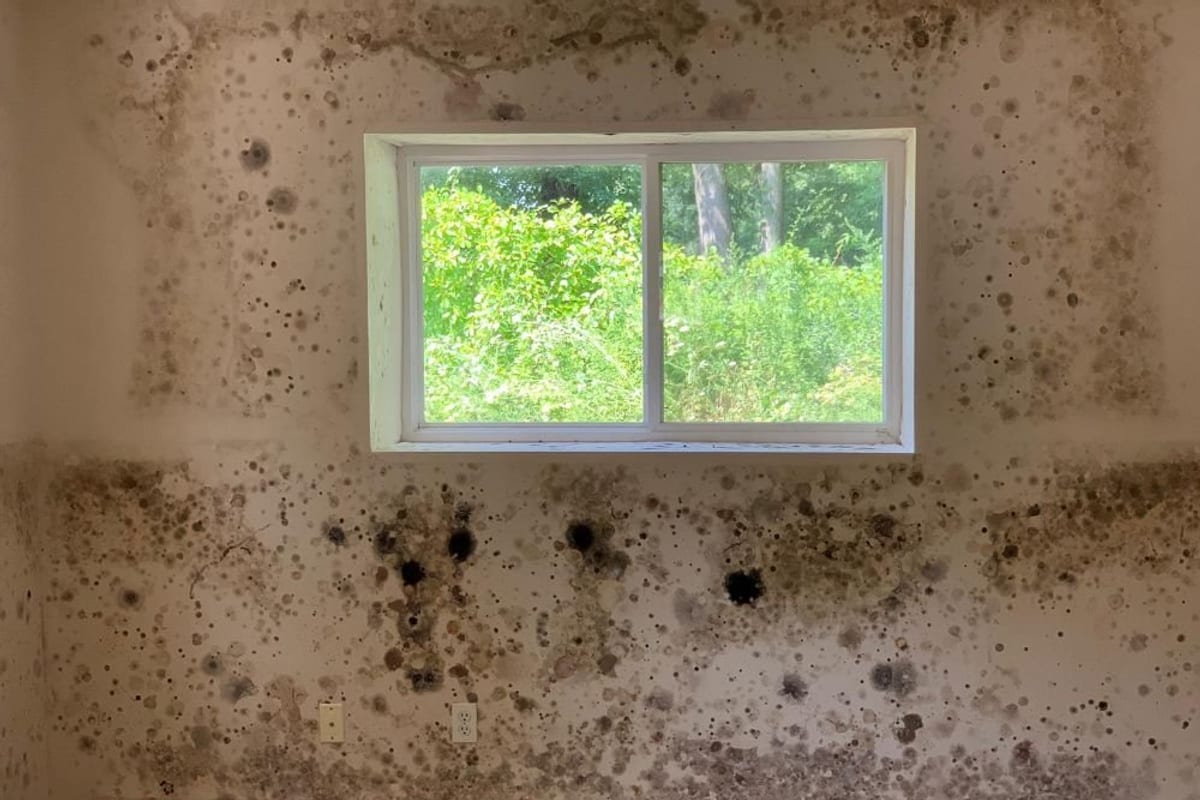
Ceiling mold has four common causes, and you can usually tell them apart by the pattern and timing: a roof leak leaves a concentrated stain that shows up after rain, bathroom condensation leaves scattered spots near the shower, attic problems show up on top-floor ceilings in cold weather, and a plumbing leak sits under a bathroom or kitchen and gets worse with use. Getting the cause right matters, because cleaning the ceiling does nothing if the source keeps feeding it.
This guide covers how to read the stain, a side-by-side comparison of the causes, what to check in the attic, how to clean a small area safely, and when a ceiling needs to come down.
Start With Three Questions
Before looking at anything else, answer these:
- Where is the room? Top floor under the attic, a floor below a bathroom, or a bathroom itself?
- When does it get worse? After rain, in the coldest weeks of winter, after showers, or all the time?
- What does it look like? One stain with a ring, a scatter of small dark dots, lines that follow the framing, or a sagging, soft area?
Those three answers narrow most cases to one cause.
The Four Common Causes
| Cause | Typical location | Typical look | When it gets worse |
|---|---|---|---|
| Roof or flashing leak | Top-floor ceiling, often near a chimney, vent pipe, skylight, valley, or exterior wall | Brown or tea-colored stain with a darker ring; mold in or around the stain | After rain or snowmelt, sometimes with a delay of hours or days |
| Bathroom condensation | Bathroom ceiling, especially above the shower and in corners | Scattered black or gray speckles, often heaviest near exterior walls | During and after showers; worse in winter |
| Attic moisture | Top-floor ceilings, especially near exterior walls and corners | Gray spotting, sometimes lines along joists or nail heads (“ghosting”), or stains near the eaves | Cold weather; after thaws; when bath fans or dryer vents dump into the attic |
| Plumbing leak above | Ceiling directly under a bathroom, kitchen, or laundry | Stain that grows; may be soft, sagging, or dripping | Right after the fixture above is used |
There is also a fifth, less common cause in summer: condensation on cold ductwork or air handlers in the attic. Ducts carrying cold air through a hot, humid attic can sweat and drip onto the ceiling below, often at or near a supply register.
How to Tell a Roof Leak
A roof leak stain usually has a defined edge, a darker ring where water stopped spreading, and shows up or grows after rain.
Signs that point to a roof leak:
- The stain is on a top-floor ceiling or at the top of an exterior wall.
- It sits near a roof penetration: chimney, plumbing vent, exhaust vent, skylight, or where two roof slopes meet in a valley.
- It gets bigger or darker after storms. Wind-driven rain from one direction may be the only thing that triggers it.
- Water can travel along rafters or the top of a ceiling joist before dripping, so the stain may be several feet away from the actual roof hole.
To confirm, go into the attic during or just after a rain with a flashlight. Look for wet sheathing, dark streaks on rafters, and wet insulation above the stain. Track the wet path uphill toward where it starts.
How to Tell Bathroom Condensation
Bathroom ceiling mold from condensation is spread out in small spots, often heaviest over the shower and in the coldest corners, with no single stain or ring.
Signs that point to condensation:
- The bathroom has no exhaust fan, the fan is too small, or it is not run long enough.
- The mirror and walls fog heavily during showers and stay wet for a long time after.
- Spots are worst on the ceiling near an exterior wall or in a corner where insulation above may be thin.
- Paint is peeling in sheets, not just stained.
A bathroom fan should be sized for the room and should exhaust all the way outdoors. A rough rule many manufacturers use is about 1 CFM (cubic foot per minute) per square foot of floor area for a typical bathroom with an 8 foot ceiling. Run it during the shower and for about 20 minutes after.
How to Tell an Attic Problem
Attic-related ceiling mold usually shows up on top-floor ceilings in winter, and the attic side will have frost, damp sheathing, or mold on the underside of the roof deck.
Common attic causes:
- Bathroom fans or dryer vents that end in the attic instead of going through the roof or a wall. Warm, wet air condenses on cold roof sheathing. Our guide on bathroom fans venting into the attic explains how to check.
- Air leaks from the house into the attic around light fixtures, the attic hatch, plumbing stacks, and top plates. Warm, humid air rises and condenses on the coldest surfaces.
- Missing or thin insulation over part of the ceiling, which creates a cold spot inside the room and lets moisture condense on the ceiling surface itself.
- Blocked soffit vents or poor ventilation, so moisture in the attic does not escape.
- Ice dams at the eaves, which back meltwater up under shingles and into the ceiling near the exterior wall.
Ghosting, the faint gray lines that follow joists or appear as dots at nail and screw heads, is a related sign. Framing and fasteners conduct cold, so those lines run colder, collect condensation and dust, and can grow mold. It points to insulation and air-sealing gaps above.
For a full walk-through of what to look for up there, see our guide to attic mold in Gettysburg homes.
How to Tell a Plumbing Leak
A plumbing leak stain sits under a bathroom, kitchen, or laundry, and it changes with use, not with weather.
Ways to check:
- Run the shower or bathtub above for 10 minutes and watch the ceiling below. Then fill and drain the tub. Then flush the toilet several times.
- Look for a soft spot, a bulge, or a brown drip at the stain. A ceiling that sags or feels soft is holding water and should not be pushed on.
- Check the toilet base and tub or shower caulking above the stain.
- If you have a water meter, turn off every fixture in the house and watch the meter’s leak indicator. Movement means water is flowing somewhere, which points to a supply-side leak.
Plumbing leaks that soak a ceiling should be shut off and dried quickly. If the drywall was wet for more than 24 to 48 hours, plan to open the ceiling to dry and inspect. Our guide to mold after water damage covers the timing.
Cleaning a Small Ceiling Patch
The U.S. Environmental Protection Agency (EPA) says a homeowner can usually handle mold on an area smaller than about 10 sq ft (0.9 m²). Its Brief Guide to Mold, Moisture and Your Home lays out the basics.
- Fix the source first. Clean a ceiling under an active leak and the mold comes back.
- Protect yourself. Wear goggles, gloves, and an N95 respirator. Ceiling work puts dust right in your face.
- Cover the floor with plastic or drop cloths.
- Scrub with detergent and water. Use a damp sponge or soft brush on painted drywall. Do not soak the ceiling.
- Dry the area with a fan and good ventilation.
- Check the result. If the paint is gone, the paper face is stained through, or the drywall is soft, cut out and replace that section.
When the area is clean, dry, and the cause has been fixed, prime with a stain-blocking primer and repaint.
Do not use bleach on drywall ceilings. It does not reach growth inside the paper and adds moisture. The EPA recommends detergent, water, and drying, and removal of material that is grown through.
When the Ceiling Needs to Come Down
Ceiling drywall should be removed, not cleaned, when:
- It sags, feels soft, or has been soaked through.
- Mold covers more than about 10 sq ft (0.9 m²) or keeps returning.
- The insulation above is wet or moldy.
- The water source was a sewage or drain line.
- Growth is visible on the back of the drywall when you look from the attic.
Removing a moldy ceiling is messier than a wall, because debris falls and dust spreads easily. A proper job contains the room, removes the material under HEPA filtration, cleans the framing above, dries everything, and confirms the area before new drywall goes up. The IICRC S520 standard describes this approach for professional remediation.
Frequently Asked Questions
How can I tell if a ceiling stain is old or active?
Use a moisture meter on the stain and on dry ceiling nearby. An active leak reads high. You can also outline the stain with a pencil and check it after the next rain or after using the fixture above. If it grows past the line, the leak is active.
Is mold on the bathroom ceiling always caused by the shower?
Not always. Scattered speckles near the shower point to condensation. A single ring-shaped stain, especially on a top-floor bathroom, can be a roof leak or a bathroom fan duct leaking condensation back through the ceiling. Check the fan duct in the attic if the stain is near the fan.
Why is my top-floor ceiling getting moldy only in winter?
Warm, moist indoor air is reaching a cold surface. Either the ceiling itself is cold because of missing insulation above, or moist air is leaking into the attic and condensing on the roof deck. Check the attic for frost, damp sheathing, and bathroom fans or vents ending in the attic.
Does homeowners insurance cover a moldy ceiling from a roof leak?
It depends on the policy and the cause. Many policies treat sudden damage differently from long-term leaks and maintenance issues. This is general information, not legal or insurance advice; read your policy and talk with your agent. Our guide on whether homeowners insurance covers mold in Pennsylvania covers the usual distinctions.
If your ceiling mold points to the attic, our attic mold remediation service covers inspection of the roof deck and framing, removal, and the ventilation and venting fixes that keep it from returning. Contact us to book an assessment.