
HEPA Vacuuming & Wire Brushing
Light to moderate growth on rafters and sheathing is HEPA vacuumed, wire brushed, and damp wiped. This hand method suits smaller attics and localized growth.
Roof sheathing, rafters, and insulation cleaned by HEPA vacuuming, wire brushing, or soda blasting. Every job includes a ventilation review, since blocked soffits are usually the reason it grew. We clean the roof sheathing and rafters, then fix the air leaks and venting that let winter condensation build up.
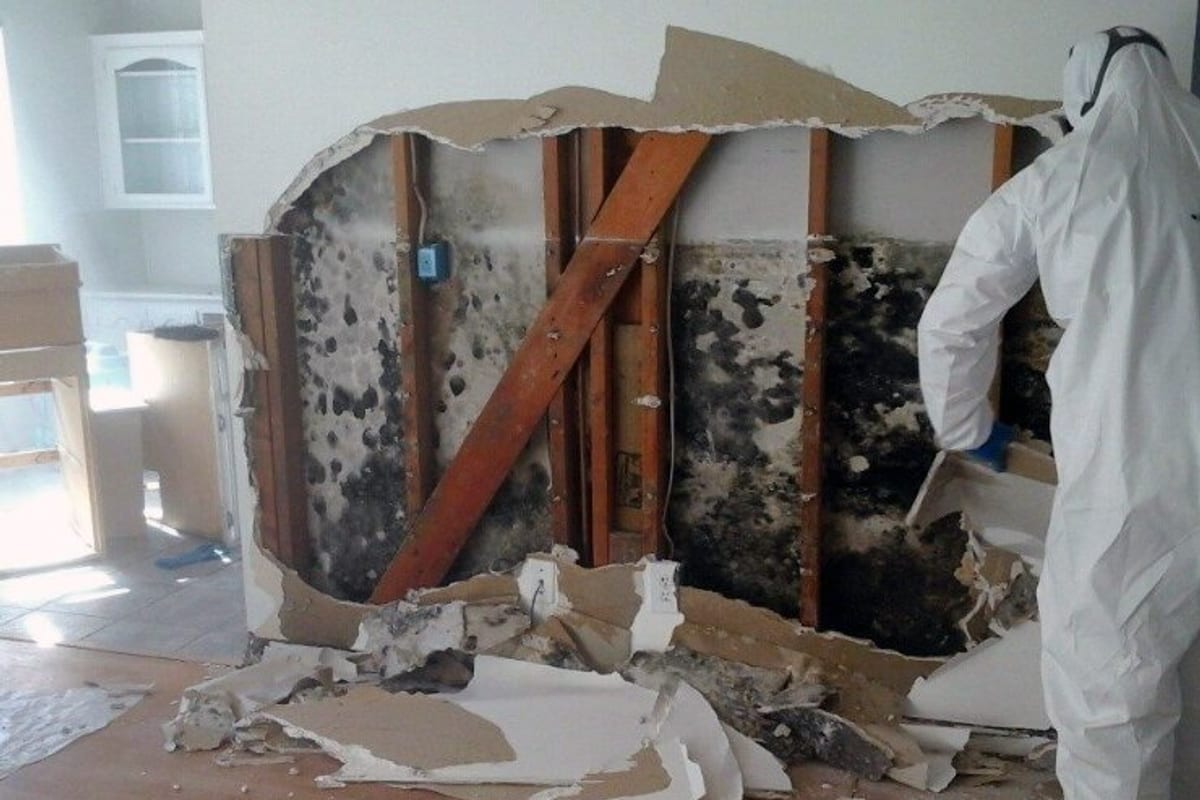
Attic mold usually comes from inside the house, not the roof: warm, moist air leaks up and condenses on cold sheathing. These signs show it happening.
Attic work splits into two parts: cleaning what has grown and stopping the condensation. Skipping the second part is why so much attic mold comes back.
Light to moderate growth on rafters and sheathing is HEPA vacuumed, wire brushed, and damp wiped. This hand method suits smaller attics and localized growth.
For widespread growth, soda blasting or dry ice blasting removes mold from sheathing and framing faster than hand work. Debris is collected with HEPA vacuums and the attic is kept under negative air pressure.
Wet or moldy fiberglass and cellulose insulation is vacuumed out and bagged. New insulation goes in only after the attic is dry and passes the clearance check.
Building codes require bathroom and kitchen exhaust to go outside, not into the attic. Fans that dump moist air into the attic are ducted to a roof or wall cap.
We check soffit, ridge, and gable vents and the baffles that keep insulation out of the soffits. Air leaks at light fixtures, the attic hatch, and plumbing openings are marked for sealing.
Flashing at chimneys, plumbing vents, skylights, and valleys is checked for leaks and past water staining. If the roof needs repair, you get a written note to give your roofer.
Seen black staining on the underside of the roof? A photo from the attic hatch is enough to start.
📞 Call (717) 256-4434Attic mold here is a winter problem, not a summer one. Warm, moist air rises out of the living space through ceiling light fixtures, the attic hatch, and gaps around plumbing stacks. When it reaches roof sheathing that is near outdoor temperature, it condenses on the underside and soaks the wood.
Two local habits make it worse. Bath and dryer fans in older homes were often vented into the attic rather than through the roof or wall, dumping warm vapour straight onto the sheathing. And blown insulation added over the years frequently buries the soffit vents, which shuts off the intake air that would otherwise carry that moisture out.
Attics get the opposite problem. In Pennsylvania winters, warm, moist air leaks up from the house and condenses on cold roof sheathing. Older homes often have little air sealing, and some bath fans still vent into the attic instead of outside. Cleaning follows EPA mold cleanup guidance and the IICRC S520 standard, and the fix follows the ventilation and air-sealing basics that stop condensation.
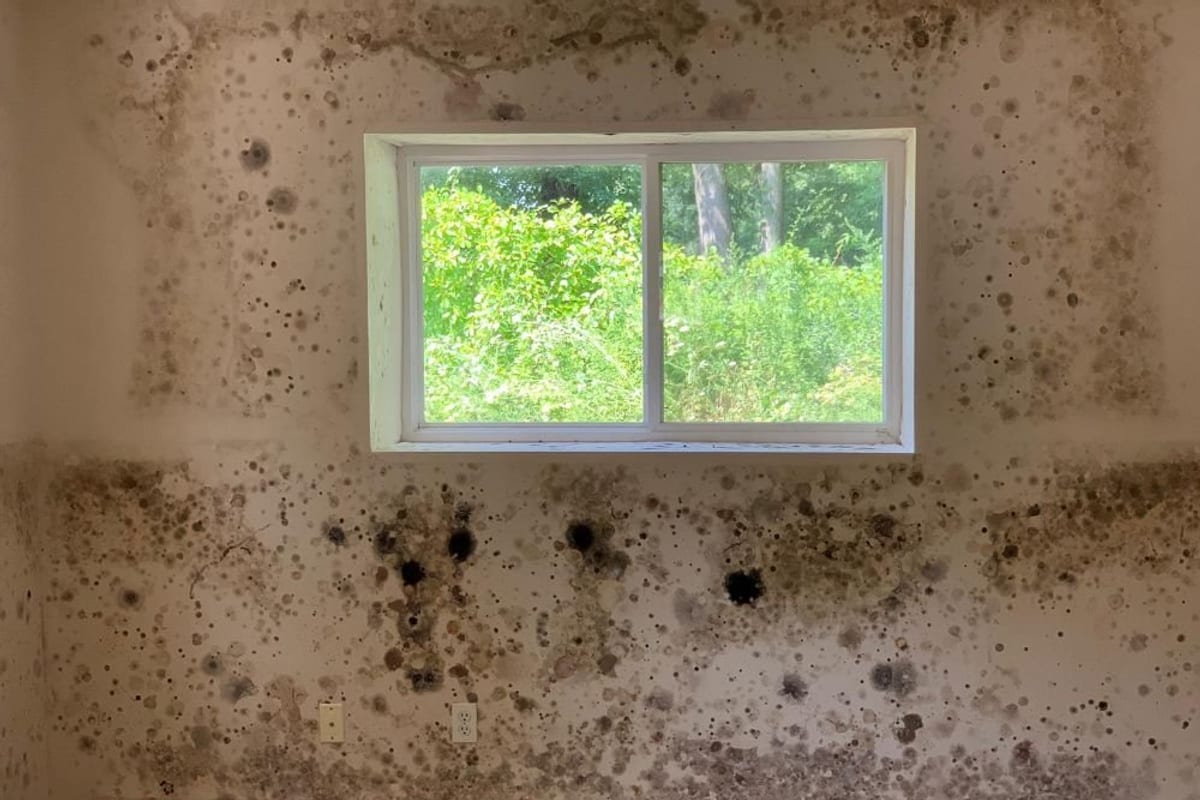
Attic jobs are about airflow. We check where house air is leaking in, whether bath fans vent outside, and whether soffit and ridge vents are working together.
Where the dark areas sit tells the story. Growth concentrated at the eaves points to blocked soffit vents, a patch over the bathroom points to a fan venting into the attic, and a line along a rafter bay points to a leak.
The attic hatch and any open penetrations are sealed and the space is kept under negative pressure, so nothing we disturb falls into the bedrooms underneath during the work.
Sheathing and rafters are HEPA vacuumed, then wire brushed, sanded, or soda blasted depending on how deep the staining runs. Insulation that got wet is bagged and removed rather than dried in place.
Soffit baffles are cleared, ventilation is reviewed against the 1:300 ratio, fans are redirected outside, and ceiling bypasses are flagged. Without that step the stains come back the following winter.
Ready for step one?
Call (717) 256-4434
An attic job is only finished when the condensation stops. the same crew that answers the phone checks bath fan ducts, attic floor air leaks, and soffit and ridge venting on every attic we clean.
Answers about black sheathing, frost in the attic, bath fans that vent into the attic, ventilation, and whether the roof deck needs replacing. Don't see yours? Call and ask.
Attic pricing depends on the affected sheathing area, access, insulation, cleaning method and moisture repairs. Our cost guide shows separate national sources and distinguishes partial-attic work from extensive remediation. It does not establish a verified Gettysburg average. Your inspection and written scope determine the actual quote.
Read the national cost sources, calculation assumptions and exclusions.
Question about your property? Call (717) 256-4434Warm, moist air from the living space condensing on cold roof sheathing in winter causes most attic mold. Bathroom fans that vent into the attic, air leaks around ceiling fixtures, and soffit vents blocked by insulation make it worse. Roof leaks and ice dams add more water.
Question about your property? Call (717) 256-4434No, not usually. Sheathing that is still solid can be cleaned by HEPA vacuuming, wire brushing, or blasting. Replacement is only needed when the wood is soft, delaminated, or rotted, which usually points to a long-term roof leak.
Question about your property? Call (717) 256-4434No, not instead of removal. EPA says the goal of mold cleanup is to remove the growth, and paint or coatings applied over mold tend to peel. A mold-resistant coating can be used as a final step after the sheathing is cleaned and dry.
Question about your property? Call (717) 256-4434Yes, it often comes up. Buyers' inspectors in Gettysburg regularly note attic staining. Pennsylvania's Real Estate Seller Disclosure Law requires sellers to disclose known material defects. A written scope, photos, and clearance results give the buyer clear answers.
Question about your property? Call (717) 256-4434Most attic mold remediation jobs take 1 to 3 days. Hand cleaning a small area can finish in 1 day. Blasting a full attic, rerouting bath fans, and replacing insulation can add 1 to 2 days.
Question about your property? Call (717) 256-4434Yes, it can. Air moves between the attic and the rooms below through gaps at light fixtures, the attic hatch, and plumbing openings. HVAC ducts or an air handler in the attic can also pull in spores. Air sealing those gaps is part of a lasting fix.
Question about your property? Call (717) 256-4434It depends on the cause. If the roof is leaking, a roofer has to fix that first. Most attic mold, though, comes from condensation, not leaks, and the roof is fine. In that case the fix is cleaning the sheathing, sealing air leaks from the house, and correcting ventilation, which is mold and moisture work rather than roofing.
Question about your property? Call (717) 256-4434Rarely, and the reason is worth understanding before you call your carrier. Most attic mold comes from condensation caused by inadequate ventilation and air leakage, which insurers classify as a maintenance defect rather than a covered peril. The exception is attic mold that followed a sudden roof failure, such as storm damage that opened the roof. Attic mold also comes up constantly in home sales here, and Pennsylvania's Seller Disclosure Law requires known material defects to be disclosed, so a written scope and clearance results are often more useful to you than a claim.
Question about your property? Call (717) 256-4434Have the attic looked at before you replace the roof or add vents. Most attic mold is solved by air sealing and venting, not new sheathing.