
Mold on Floor Joists and Subfloor: Clean It or Replace It?
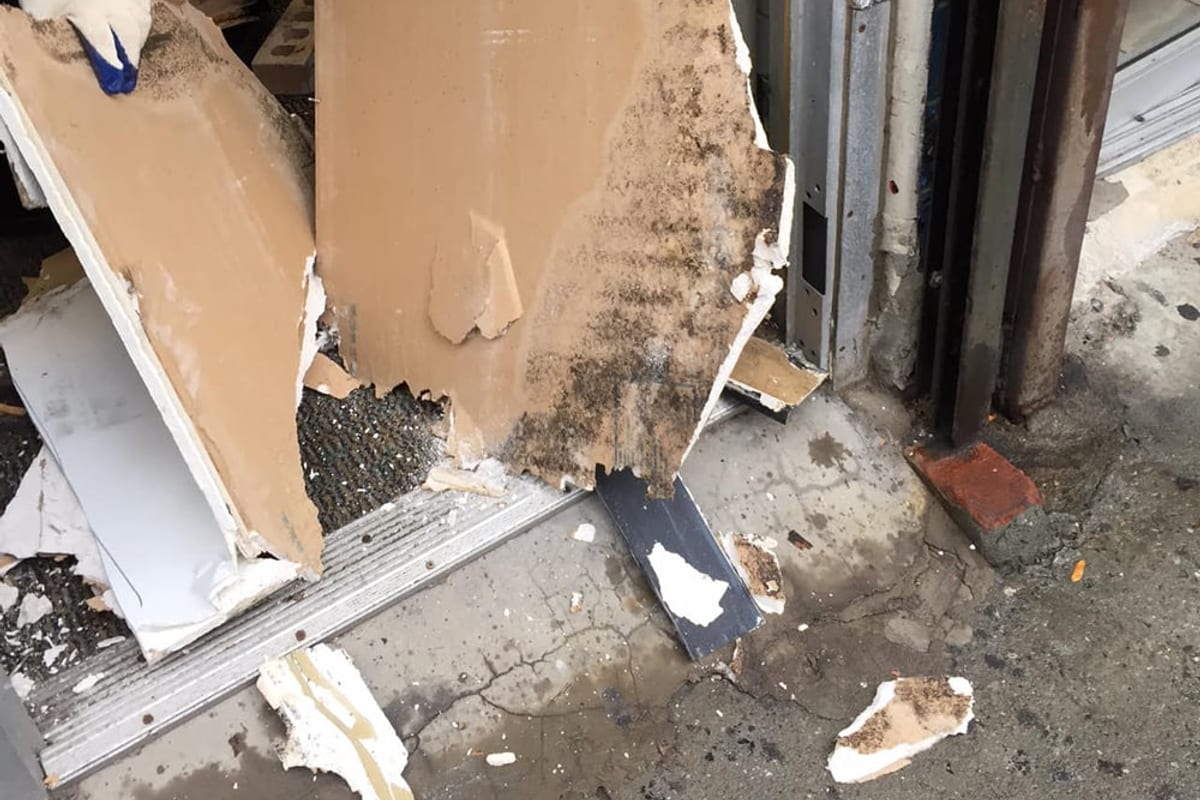
Mold on floor joists and subfloor can usually be cleaned off and the wood kept, as long as the wood is still solid and the moisture that caused the growth is fixed; replacement is needed only when the wood has rotted, softened or lost strength. Mold and rot are not the same thing, and telling them apart is the first step.
This guide covers where joist mold shows up, how to tell surface mold from rot, the wood moisture content numbers that matter, how cleaning is done, when to sister or replace, and how to keep the wood dry afterward.
Where It Shows Up
In basements and crawl spaces, mold on wood concentrates in a few predictable spots.
- The underside of the subfloor, between joists, especially under bathrooms, kitchens and exterior doors.
- The bottom edges and sides of floor joists, often worst near the outside walls.
- Sill plates, the boards that sit on top of the foundation wall and carry the floor framing.
- Rim joists (band joists), the boards that close off the ends of the joists at the outside wall. Cold air leaks and condensation make these common problem spots.
- Wood in contact with masonry, such as joist ends set into pockets in stone or brick walls.
Under older homes, much of this wood sits on or in stone foundations with no sill gasket and no pressure-treated lumber. According to U.S. Census Bureau ACS 2020-2024 5-year estimates, 47.5% of housing units in Gettysburg borough were built before 1940, and the median year built is 1942. In York Springs borough the share is 54.3%. Framing in those houses was built long before modern moisture details became standard.
Mold vs. Rot: Know the Difference
Mold grows on the surface of wood and mostly stains it. Decay fungi (rot) break down the wood itself and weaken it. Both need moisture, but rot needs the wood to stay wetter for longer.
| Surface mold | Wood rot (decay) | |
|---|---|---|
| Appearance | Fuzzy, powdery or spotty; black, green, white or gray | Dark, cracked in cubes (brown rot), or bleached and stringy (white rot) |
| Wood feel | Firm | Soft, spongy or crumbly |
| Screwdriver test | Does not sink in | Sinks in easily or pulls out splinters |
| Strength | Usually unchanged | Reduced, sometimes badly |
| Typical fix | Clean and dry | Remove, sister or replace |
The screwdriver test
Push an awl or flat screwdriver into the wood with firm hand pressure in several spots, including the worst-looking area and nearby clean-looking wood for comparison. Sound wood resists. Rotted wood lets the tip sink in or breaks away in short, brittle pieces. Probe sill plates and joist ends especially carefully, since they are where rot most often hides.
White growth that is not mold
White, crystalline deposits on the masonry next to the wood are usually efflorescence, salt left behind by water moving through the wall. White, cottony growth on the wood itself can be mold or the early stage of a decay fungus. Fine, flour-like powder piled under small round holes points to wood-boring insects, a different problem with a different fix.
Wood Moisture Content: The Numbers That Matter
Wood moisture content (MC) is the weight of water in the wood as a percentage of the wood’s dry weight. A pin-type moisture meter reads it directly. It is the single most useful number in judging joist mold.
The USDA Forest Products Laboratory Wood Handbook is the standard reference on wood and moisture. General thresholds used in the building and remediation trades:
| Moisture content | What it means |
|---|---|
| Under about 15% | Dry. Typical for framing in a dry, conditioned space |
| About 15-19% | Elevated. Watch it and find out why |
| About 20% and up | Mold growth is likely if it stays here |
| About 28-30% and up | Near fiber saturation. Decay fungi can become active |
Readings vary with wood species, temperature and the meter itself, so use these as guides, not hard lines. What matters most is the trend. Take readings in the same spots in summer and winter. Wood that drops below 15% in winter but climbs past 20% every August tells you the problem is humid air, not a leak.
Where to take readings
- The sill plate along each outside wall.
- The bottom edge of several joists near the walls and near the middle of the span.
- The subfloor under bathrooms and the kitchen.
- Any area with visible growth, plus a clean area for comparison.
Finding and Fixing the Moisture Source
Cleaning wood without fixing the moisture is wasted money, because the mold grows back. The most common sources under a floor:
- Humid air condensing on cooler wood, especially in vented crawl spaces in summer. Our guide on crawl space vapor barriers vs. encapsulation covers the options.
- Bare soil in a crawl space releasing vapor into the space.
- Plumbing leaks from supply lines, drains, toilet wax rings and tub overflows.
- Exterior water from gutters, downspouts and grading pushing water into the foundation.
- Rim joist condensation, where warm, moist air reaches the cold rim in winter.
- Flooding, from heavy rain or a failed sump pump.
For basements, keep relative humidity between 30% and 50%, as the EPA recommends in A Brief Guide to Mold, Moisture and Your Home. Our basement dehumidifier size guide explains how to pick one that keeps up.
How Joist and Subfloor Mold Is Cleaned
When the wood is sound, cleaning is the normal approach. The goal under the IICRC S520 standard is physical removal of mold growth, not just killing it, and returning the area to a normal condition. A typical process:
- Correct the moisture source and let the wood dry below about 19-20% MC, ideally lower.
- Set up containment so dust from the work does not move into the living space. Negative air pressure with HEPA filtration is standard on larger jobs.
- Remove contaminated insulation from between the joists. Fiberglass batts that got wet or moldy usually come out.
- HEPA vacuum all affected framing.
- Physically remove growth by wire brushing, sanding, scrubbing with detergent and water, or media blasting (soda or dry ice) for larger areas.
- HEPA vacuum and damp wipe again to remove the loosened material.
- Apply a sealant or encapsulant in some cases, after cleaning. A coating is not a substitute for removal.
- Verify with moisture readings and a visual check before new insulation goes back in.
What about the stains?
Cleaning removes active growth, but dark staining often remains in the wood grain. Staining alone is a cosmetic issue, not a sign that cleaning failed. Some people choose to sand further or apply a coating for appearance.
Can you do it yourself?
The EPA’s guidance is that areas smaller than about 10 sq ft can usually be handled by a homeowner. Under a floor, mold often spans many joist bays and goes well past that. Working overhead in a tight crawl space with mold dust is unpleasant and creates a lot of exposure. Read is DIY mold removal safe? before deciding. At minimum, use an N95 respirator, eye protection and gloves.
When to Repair or Replace
Replace or reinforce wood when it has lost strength, not just because it has mold. Signs that structural work is needed:
- The screwdriver sinks into the wood.
- The floor above feels soft, bouncy or sags.
- Subfloor under a bathroom or kitchen has delaminated or crumbles.
- The sill plate is crushed, rotted or missing in sections.
- Joist ends set into masonry pockets are soft.
Common repairs include:
| Problem | Typical repair |
|---|---|
| Rotted section of subfloor | Cut out and replace, often from above with flooring removed |
| Weakened joist | Sister a new joist alongside it, fastened full length |
| Badly rotted joist | Temporary support, remove and replace |
| Rotted sill plate | Shore the floor framing, then replace in sections, often with pressure-treated lumber and a sill gasket |
| Rotted joist end in a masonry pocket | Sister, add a ledger or post support |
Structural repairs often need a permit and may need an engineer’s input. In older homes, especially within the Gettysburg Historic District, check with the borough before work that changes the building. For cost ranges, our cost page lists national published benchmarks from Angi and HomeGuide, not local quotes.
Keeping the Wood Dry Afterward
- Keep crawl space and basement humidity below 60%, ideally 30-50%.
- Cover crawl space soil with a sealed ground liner.
- Insulate and air seal the rim joist area.
- Fix plumbing drips under bathrooms and kitchens promptly.
- Keep gutters clean and downspouts extended away from the foundation.
- Check moisture readings at the same spots each summer.
Frequently Asked Questions
Is mold on floor joists dangerous?
Mold on joists does not usually weaken the wood. The concern is the moisture behind it, which can lead to rot over time, and the spores and odor that can move up into the living space. People with asthma, allergies or weakened immune systems are more sensitive.
Can I just spray the joists and leave them?
Spraying alone does not remove the growth. Dead mold can still cause allergic reactions. The EPA and IICRC guidance both focus on physical removal and moisture control.
Should moldy subfloor be replaced?
Only if it is soft, delaminated or rotted. Sound subfloor with surface mold can usually be cleaned from below.
What moisture reading is safe before closing things up?
Aim for below about 15% before reinstalling insulation or covering the wood, and confirm it stays there through humid weather.
Get the Framing Checked
If you have found growth on the joists, a musty smell coming up through the floor or soft spots near the walls, have the wood probed and moisture-checked before deciding what to do. Our crawl space mold remediation service covers moisture readings, cleaning of sound framing and coordination of repairs where wood has failed. For full basements, see basement mold remediation. Contact us or call (717) 256-4434 to schedule an inspection.