
Mold Under the Kitchen Sink: Finding Slow Leaks and Fixing the Cabinet
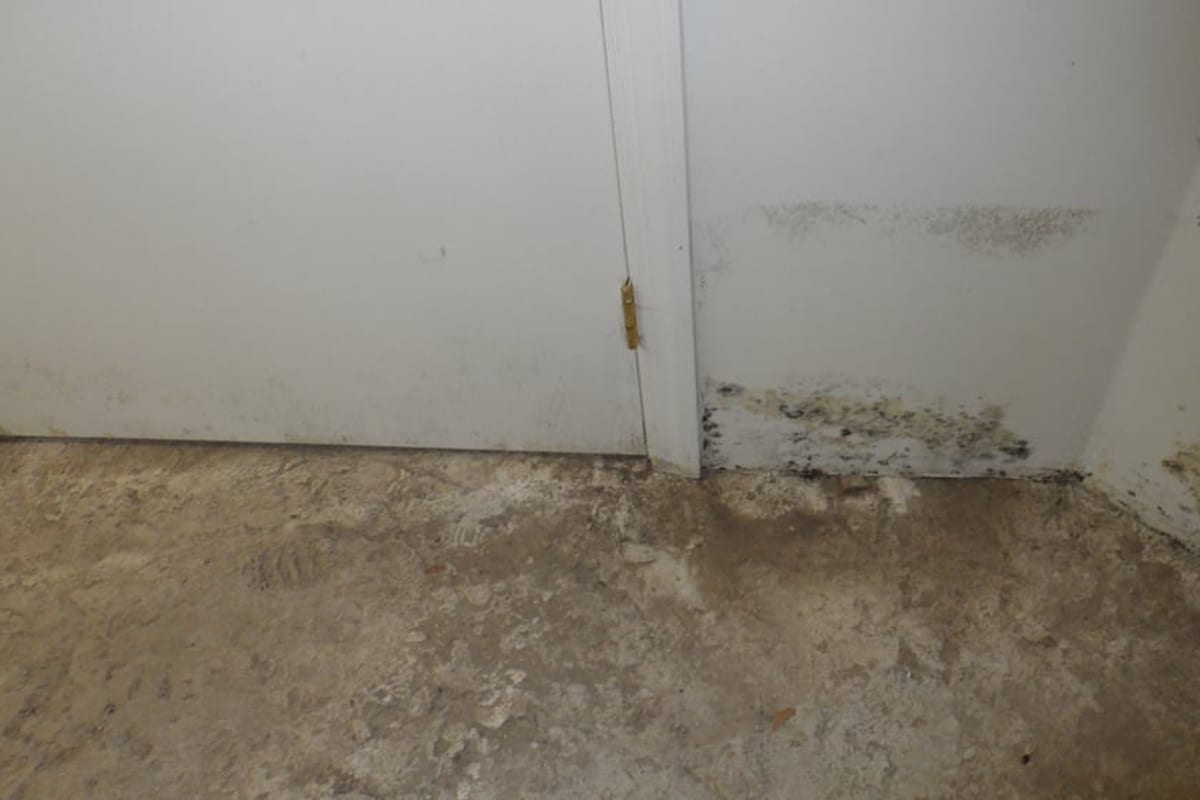
Mold under a kitchen sink almost always means a slow leak, usually from a supply line fitting, the drain trap, the faucet base, the garbage disposal, or the dishwasher connections, that has kept the cabinet floor damp for weeks or months. Find and fix the leak first. Then decide whether the cabinet floor and the wall behind it can be cleaned or have to be replaced.
This guide covers how to find a slow leak step by step, the dishwasher and disposal connections people miss, how to tell whether the cabinet is salvageable, how to clean it, and how to check the floor and wall beyond the cabinet.
Why Sink Base Cabinets Grow Mold
The sink base is a closed, dark box with water lines running through it. Most people only open it to grab a cleaning product, so a drip can go unnoticed for a long time. Two things make it worse:
- Cabinet materials soak up water. Many sink base floors are particleboard or MDF with a thin laminate or melamine face. Once water gets past the face, the core swells, crumbles, and holds moisture. That is a good surface for mold.
- Items stored on the cabinet floor hide the evidence. Bottles, sponges, paper bags, and boxes sit on top of a wet spot and keep it from drying.
The U.S. Environmental Protection Agency (EPA) says wet materials should be dried within 24 to 48 hours to prevent mold growth. A slow drip resets that clock every day.
Step 1: Empty the Cabinet and Look
Take everything out. With a flashlight, look for:
- Swelling or bubbling in the cabinet floor, especially along the front edge and around the back corners.
- Water lines or white mineral rings on the cabinet floor or on the bottoms of stored bottles.
- Dark spotting on the cabinet floor, the back panel, the side walls, or the underside of the countertop.
- Rust on the shutoff valves, the disposal, or metal brackets.
- A musty smell when you open the doors. Our guide on tracking a musty smell with no visible mold covers how to follow it if the source is not obvious.
Note where the damage is worst. Leaks usually show up directly under the source, though water can run along pipes and drip somewhere else.
Step 2: Dry Everything, Then Run the Paper Towel Test
You cannot find a slow leak on a surface that is already wet. Wipe all pipes, fittings, and the cabinet floor dry. Lay dry paper towels flat on the cabinet floor under each connection.
Then test one thing at a time, checking the paper towels and running a dry tissue around each fitting after each step:
- Supply side, nothing running. Leave the faucet off for 30 minutes. Supply lines are under pressure all the time, so a leak at a valve or supply line fitting will show up even when the sink is not in use.
- Faucet running. Run hot and cold water for a couple of minutes. Check the faucet base on top of the counter and the connections underneath.
- Sink full and draining. Close the drain, fill the sink partway, then release it. The weight of a full basin draining stresses the drain connections more than a running tap does.
- Sprayer. If the faucet has a pull-down or side sprayer, use it and check the hose and its connection.
- Disposal. Run the disposal with water.
- Dishwasher. Run a full cycle and check during the fill and drain phases.
Where slow leaks usually come from
| Component | Typical failure | What to look for |
|---|---|---|
| Shutoff valves | Packing nut weeps; old multi-turn valves seize and leak when turned | Moisture or corrosion at the valve stem |
| Supply lines | Loose compression nut; aging braided or plastic line | Drips at either end; bulging or kinked line |
| Faucet base and mounting | Worn seal or loose mounting nut lets water run down through the deck hole | Water under the countertop near the faucet |
| Sink basket strainer | Failed plumber’s putty or gasket under the drain flange | Drips from the underside of the sink drain |
| P-trap and slip nuts | Loose slip nut, worn washer, cracked trap | Drips at joints, worst while draining |
| Sink rim | Failed caulk between sink and countertop | Water wicks under the counter and down the back of the cabinet |
| Garbage disposal | Loose mounting ring, loose drain or dishwasher inlet, or leaking from the bottom | Water around the disposal; a leak from the bottom usually means internal seal failure and replacement |
| Reverse osmosis or filter system | Leaking fittings or housings | Moisture around tubing and canisters |
The Dishwasher Connections People Miss
A dishwasher has three water connections, and only one of them is easy to see.
- The drain hose runs from the dishwasher to the disposal or a fitting on the sink drain. It should have a high loop secured up under the countertop, or connect through an air gap if your local code requires one. That keeps dirty sink water from siphoning back into the dishwasher. Check the clamp at each end.
- The supply line usually tees off the hot water shutoff under the sink and runs under the cabinet floor or through the side to the front of the dishwasher. A leak at the dishwasher end happens under the dishwasher, out of sight.
- The door gasket and tub can leak onto the floor in front of or under the unit.
Signs of a hidden dishwasher leak:
- Flooring in front of the dishwasher that is cupped, lifting, soft, or stained.
- A musty smell near the dishwasher, especially after a cycle.
- Swelling in the cabinet sides next to the dishwasher.
To check under the dishwasher, turn off power at the breaker and water at the valve, remove the lower kick panel, and look with a flashlight. If the floor under the dishwasher is wet or the subfloor is soft, the unit should be pulled out so the floor can be dried and inspected. Our guide to mold on floor joists and subfloor explains what to look for if water has made it through.
Check for a Leak You Cannot See
If the cabinet stays damp and you still cannot find the source, use your water meter:
- Turn off every faucet, appliance, and fixture in the house, including the ice maker and any irrigation.
- Look at the meter’s small leak indicator, usually a small triangle or dial.
- If it moves, water is flowing somewhere. Turn off the under-sink shutoffs. If the indicator stops, the leak is in the sink area.
A leak in the wall behind the sink, such as a supply pipe or drain connection inside the wall, will show as moisture on the cabinet back panel or the wall behind it. A moisture meter on the back wall helps confirm it. Our guide to signs of mold behind drywall covers how to read the wall.
Can the Cabinet Be Saved?
Particleboard and MDF that have swollen do not go back to their original shape or strength, and swollen, moldy particleboard should be replaced. Solid wood and plywood are more forgiving.
| Condition | Usual answer |
|---|---|
| Light surface spots on an intact laminate floor, dry core | Clean, dry, and monitor |
| Laminate face peeling, core swollen or crumbly | Replace the cabinet floor panel |
| Mold on the back panel, panel thin hardboard | Remove and replace the back panel; check the wall behind |
| Plywood stained but solid, dries to normal readings | Clean, dry, seal |
| Cabinet sides swollen or delaminating | Replace the cabinet box or have the sides repaired |
| Wall drywall behind the cabinet wet or moldy | Cut out the affected section; dry and check framing |
Many cabinet floors can be replaced without removing the countertop. A cabinet installer or carpenter can cut out the old floor panel and fit a new one, often of moisture-resistant material. A drip tray or a fitted under-sink mat adds a layer of protection afterward.
How to Clean Mold Under the Sink
For a small area of surface mold on intact materials, the EPA says a homeowner can usually handle an area smaller than about 10 sq ft (0.9 m²). The EPA’s Brief Guide to Mold, Moisture and Your Home gives the basics.
- Fix the leak and confirm it is fixed with the paper towel test.
- Wear gloves, goggles, and an N95 respirator.
- HEPA vacuum loose debris if the cabinet floor is crumbling.
- Scrub hard surfaces with detergent and water. Use a damp cloth, not a soaking one.
- Dry the cabinet completely. Leave the doors open and point a fan into it for a day or two.
- Check with a moisture meter before putting anything back. The cabinet floor should read the same as a dry cabinet elsewhere in the kitchen.
- Store items in a plastic bin or tray rather than directly on the cabinet floor.
Throw out moldy sponges, paper products, and cardboard packaging that were stored in the cabinet.
Check Beyond the Cabinet
Water under a sink often goes further than the cabinet. Check:
- The floor in front of the sink. Soft spots, lifting vinyl, cupped hardwood, or dark grout lines.
- The ceiling or basement below the kitchen. Look at the subfloor and joists from underneath for stains, dark wood, or a musty smell.
- The wall behind the sink, especially if it is an exterior wall, where a cold surface can hold moisture longer.
- The cabinets on either side, which can wick water through shared panels.
If the leak ran for a long time or soaked the subfloor, the repair is more than a cabinet panel. Our guide to mold after water damage covers what has to dry, and what has to come out, after a leak.
Simple Ways to Prevent It
- Open the sink cabinet and look once a month. Put your hand on the cabinet floor and the pipes.
- Put a battery-powered water leak alarm on the cabinet floor. It costs little and catches drips early.
- Turn each shutoff valve off and on once a year so it does not seize. Replace old multi-turn valves that weep or will not close fully.
- Replace supply lines on the schedule the manufacturer recommends, and any time one looks kinked, bulged, or corroded.
- Re-caulk the sink rim when the old caulk cracks or pulls away.
- Do not overload the cabinet. Pipes bumped by bottles and bins loosen over time.
Frequently Asked Questions
Is mold under the sink dangerous?
Small areas of surface mold in a sink cabinet are common and usually a cleaning job once the leak is fixed. Larger areas, crumbling cabinet materials, or growth on the wall or floor beyond the cabinet should be handled more carefully, especially if someone in the home has asthma or allergies. The CDC’s mold pages describe common health effects.
Why is the cabinet floor under my sink swollen but dry?
Particleboard stays swollen after it dries out, so the damage may be from an older leak. Check that the leak was really fixed by running the paper towel test, and look for mold on the underside of the swollen area. If the panel is crumbly or moldy, replace it.
Can a dishwasher leak cause mold under the kitchen sink?
Yes. The drain hose and supply line both run through or near the sink base, and a loose clamp or fitting can drip there. A leak at the front of the dishwasher can also run under the cabinets. Check during a full cycle, including the drain phase.
Should I seal the cabinet floor after I clean it?
Sealing a clean, dry plywood or solid wood floor with a water-resistant finish adds protection. Sealing over swollen, moldy particleboard does not fix it; that panel should be replaced first.
When the leak has reached the wall, the floor, or the cabinets next door, our bathroom and kitchen mold removal service can contain the area, remove damaged materials, and confirm everything is dry before rebuild. Contact us to set up an assessment.