
Air Sampling vs. Surface Sampling for Mold: What Each Test Can and Cannot Show
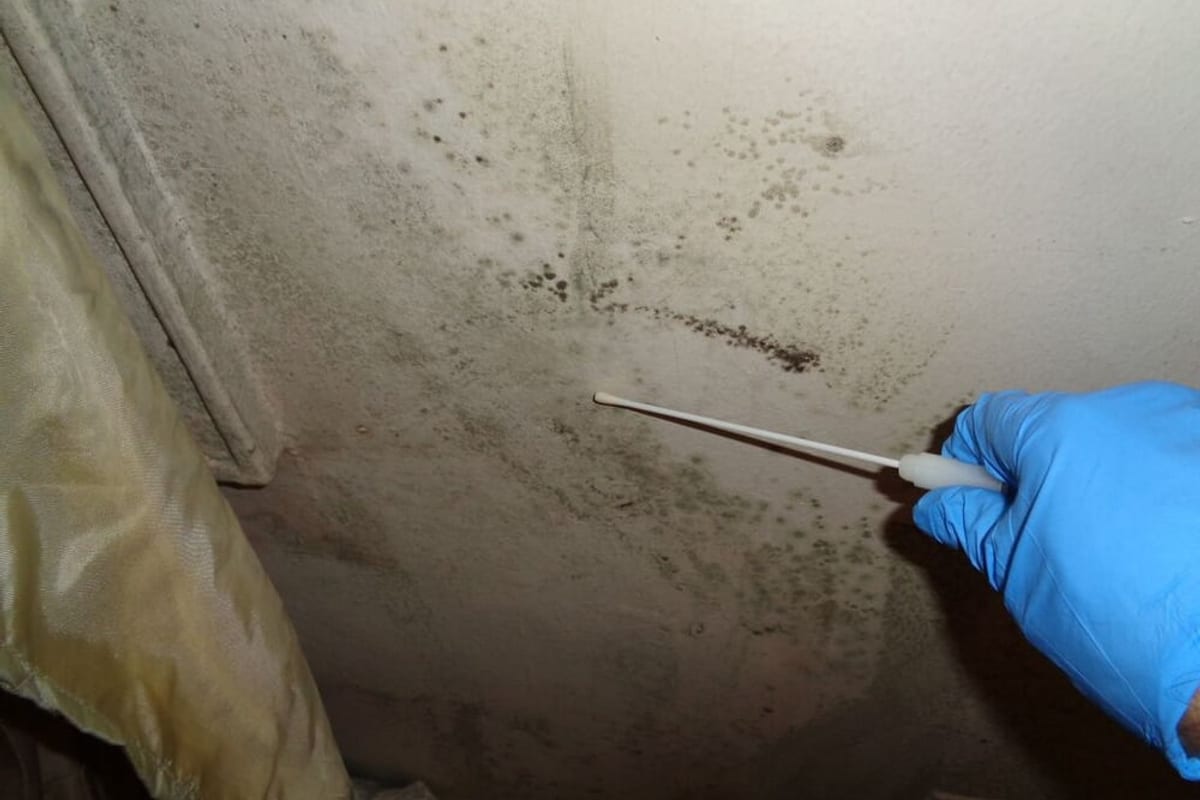
Air sampling estimates what mold spores are floating in a room at one moment, while surface sampling (tape lifts, swabs and bulk pieces) identifies what is growing or settled on one specific spot. Neither one tells you everything, and picking the wrong method can give you a lab report that looks scientific but answers the wrong question.
This guide covers how each sampling method works, what the results can and cannot prove, why the outdoor control sample matters, the mistakes that spoil results, and when the EPA says you can skip sampling altogether.
If you are still deciding whether you need an inspection or testing at all, start with our mold inspection vs. mold testing guide. This page assumes sampling is on the table and goes deeper into choosing the method.
Start With the Question, Not the Test
Every mold sample should answer a question you could not answer by looking. Good questions sound like this:
- “Is this black smudge on the joist mold, soot, or dirt?” (surface sample)
- “Is there an active source somewhere in this finished basement we cannot see?” (air sample with an outdoor control)
- “Did the remediation crew leave settled spores behind in the cleaned room?” (air and surface samples during clearance)
- “Is the growth on this wallboard limited to the paper face?” (bulk sample)
A poor question sounds like “Is there mold in my house?” Every house has some mold spores in it, because outdoor air carries them inside every time a door opens. A sample will always find something. The useful part is comparing that finding to a reference.
How Air Sampling Works
Spore trap (non-viable) samples
This is the most common air test in homes. A calibrated pump pulls a measured volume of air through a small cassette. Inside is a sticky slide that catches particles. A typical residential sample runs a few minutes at a set flow rate, and the technician records the exact time and flow so the lab can convert the count to spores per cubic meter of air.
At the lab, an analyst looks at the slide under a microscope and counts spores by type. Some types are easy to identify by shape, such as Cladosporium, Alternaria, Stachybotrys and Chaetomium. Others look alike and get reported together, most often as “Aspergillus/Penicillium-like.”
Spore traps count spores whether they are alive or dead. That is why they are called “non-viable” samples. Dead spores and fragments can still cause allergic reactions, so counting them is not a flaw.
Culturable (viable) air samples
A culturable sample impacts air onto a dish of growth medium. The lab incubates it and counts the colonies that grow. This method can identify some species more precisely, but it only counts spores that are alive and that happen to grow on that medium. It takes longer and is used less often in routine home work.
What air sampling can show
- Whether indoor spore levels are clearly elevated compared with outdoor air at the same time.
- Whether the mix of spore types indoors looks different from outdoors, which points to an indoor source.
- Whether a cleaned area is free of elevated settled spores after remediation, when used in clearance.
What air sampling cannot show
- Where the mold is. A high count in a room does not tell you which wall.
- How much growth there is. Hidden growth sealed behind vinyl wallpaper can produce a normal air sample.
- What the air is like tomorrow. Spore levels change with weather, activity and HVAC run time. One sample is a snapshot.
- Whether the air is “safe.” There are no federal health-based limits for mold spores in indoor air. The EPA’s mold pages say this directly.
How Surface Sampling Works
Surface samples come from one spot. They are cheap to collect and usually quick to analyze.
Tape lift
The technician presses clear tape against the surface, peels it off and seals it on a slide. The lab sees exactly what was on the surface: spores, hyphae (the thread-like growth structures), pollen, skin flakes, fibers or soot. If the lab sees hyphae and spore-producing structures, that is active or past growth, not just settled dust.
Tape lifts work best on smooth, dry surfaces such as painted drywall, wood framing and hard furniture.
Swab
A sterile swab is rubbed over a set area and sealed in a tube. Swabs work on rough, curved or damp surfaces where tape will not stick well, such as textured ceilings, ductwork interiors or pipe insulation jackets. Swabs can be analyzed by direct microscopy or cultured.
Bulk sample
A bulk sample is a physical piece of material: a square of drywall, a chunk of carpet pad, a strip of insulation facing. The lab can look at how deep growth runs into the material and whether it reaches the back side. Bulk samples are destructive, so they are used when the answer changes the work, such as whether a stain on finished paneling is surface growth or runs through.
What surface sampling can show
- Whether a stain is mold at all.
- Whether growth is active (hyphae and fruiting structures present) or just settled spores.
- Which types of mold are growing on that spot.
What surface sampling cannot show
- How big the affected area is. One tape lift represents a few square inches.
- Anything about the air in the room.
- Anything about the spot 2 feet over.
Side-by-Side Comparison
| Air sample (spore trap) | Tape lift / swab | Bulk sample | |
|---|---|---|---|
| What it measures | Spores per cubic meter of air | Particles on a few square inches of surface | Growth in and on a piece of material |
| Best question | Is there an indoor source we cannot see? | Is this stain mold, and is it growing? | How deep does growth go? |
| Needs an outdoor control | Yes, always | No | No |
| Finds hidden mold location | No | No | No |
| Damage to the home | None | None | Removes a small piece |
| Main weakness | Snapshot that swings with conditions | Tiny area | Destructive, tiny area |
The Outdoor Control Sample
An indoor air number means very little without an outdoor sample taken at about the same time. Outdoor air in south-central Pennsylvania carries a heavy spore load through late spring, summer and fall, especially Cladosporium and other leaf and soil molds. In midwinter, with snow cover, outdoor counts can be very low.
That is why the comparison works. If outdoors shows mostly Cladosporium and indoors shows the same types at a lower count, the indoor air looks like normal infiltration. If indoors shows a large count of Aspergillus/Penicillium-like spores that barely appear outdoors, something inside is likely producing them.
A careful technician will:
- Take the outdoor sample on the windward side of the house, away from compost piles, mulch beds, woodpiles and dryer vents.
- Avoid sampling outdoors during or right after rain, when counts can drop and then spike.
- Note the weather, wind, temperature and humidity in the report.
- Take the outdoor sample within the same hour as the indoor samples.
If your report has indoor numbers and no outdoor sample, ask why. Some inspectors compare to a “background” indoor room instead, such as a bedroom far from the problem area. That can be reasonable, but the report should say so.
Mistakes That Spoil Results
Air samples are easy to distort. These are the common problems:
- Running the vacuum, sweeping or moving boxes right before sampling. That stirs settled dust into the air and inflates counts.
- Sampling with windows open. Indoor air then looks like outdoor air.
- Sampling right next to visible growth. It confirms what you already know, and often misses the bigger picture.
- Running an air purifier for days before the test. It can lower counts temporarily without fixing anything.
- Testing only one room. One sample in a large house rarely locates a source.
- Using a settle plate from a hardware store kit. It has no measured air volume and no outdoor control, so it cannot be interpreted. The CDC’s mold pages also note that sampling is generally not needed to decide what to do.
Many inspectors ask homeowners to keep the house closed for several hours before testing, with normal HVAC operation, so the sample reflects normal living conditions.
When the EPA Says You Can Skip Sampling
The EPA’s guidance is plain: if mold is visible or you can smell it, sampling is usually not necessary, because all indoor mold growth is handled the same way. Fix the moisture, then clean or remove the affected materials. The agency’s Brief Guide to Mold, Moisture and Your Home also says the type of mold does not change the cleanup approach.
That means you can often go straight to moisture work and remediation when:
- The growth is visible and the moisture source is known, such as a leaking supply line under a sink.
- The area is small, under about 10 square feet, and on hard surfaces you can clean yourself. Our DIY mold removal safety guide covers that threshold.
- The material is coming out anyway, such as wet drywall after a burst pipe.
Sampling is more likely to earn its cost when:
- There is a musty smell with no visible source. See musty smell with no visible mold for how to narrow it down first.
- Someone in the home has health concerns and a physician has asked about exposure.
- A home sale, lease dispute or insurance claim needs third-party documentation. Testing does not replace legal advice, and policies and contracts vary.
- Remediation is finished and you want independent verification. Our clearance testing guide explains how that works.
How to Read the Surface Sample Line on a Report
Air sample reports get most of the attention, but surface results are often more decisive. Look for these terms:
| Report wording | What it usually means |
|---|---|
| ”Hyphae present” or “growth structures observed” | Mold grew on this surface |
| ”Spores only, no hyphae” | Settled spores, not necessarily growth here |
| ”Rare,” “low,” “moderate,” “heavy” | The lab’s density rating for that slide |
| ”No fungal structures detected” | Nothing found on that sample area, not proof of a clean room |
| ”Hyaline” or “dematiaceous” | Colorless or dark-pigmented spores, a description, not a hazard rating |
A heavy Stachybotrys result on a tape lift from wallboard tells you the board was wet for a long time. It does not mean the board is more dangerous to remove than any other moldy board. Our black mold myths guide explains why color and species names drive more fear than the science supports.
What Sampling Costs
Sampling is usually billed per sample plus the inspector’s time, and outdoor controls count as samples. For published national benchmarks on inspection and testing fees, see our mold remediation cost page. Those ranges come from national sources such as Angi and HomeGuide, not local quotes.
Frequently Asked Questions
Is an air sample or a tape lift better for finding hidden mold?
Neither one finds the location of hidden mold. An air sample, compared with outdoors, can suggest a hidden source exists. Moisture readings, thermal imaging and careful inspection find where it is. A wall cavity air sample, taken through a small hole, can help confirm a specific wall.
Can I compare my results to a “normal” spore count?
Not reliably. There are no federal standards for indoor mold spore levels, and outdoor levels change hour to hour. The comparison that matters is your indoor result against the outdoor control taken at the same time.
Why did my air test come back normal when I can see mold?
Growth that is dry, painted over, or behind a vapor barrier may release few spores into the room air. Spore release also varies with humidity and disturbance. A normal air sample does not cancel out visible growth. The growth still needs to be removed and the moisture fixed.
Do home mold test kits work?
Most hardware store kits are settle plates with no measured air volume and no outdoor comparison, so the results cannot be interpreted in a meaningful way. They will almost always grow something, because spores are present in all indoor air.
Get Sampling That Answers a Real Question
If you want help deciding whether sampling makes sense, and which kind, our mold inspection and testing service starts with moisture readings and a plain explanation of what each sample would tell you. Contact us to schedule a visit in Gettysburg or the surrounding Adams County area.