
Flood Insurance and Mold in Adams County, PA: What NFIP Covers
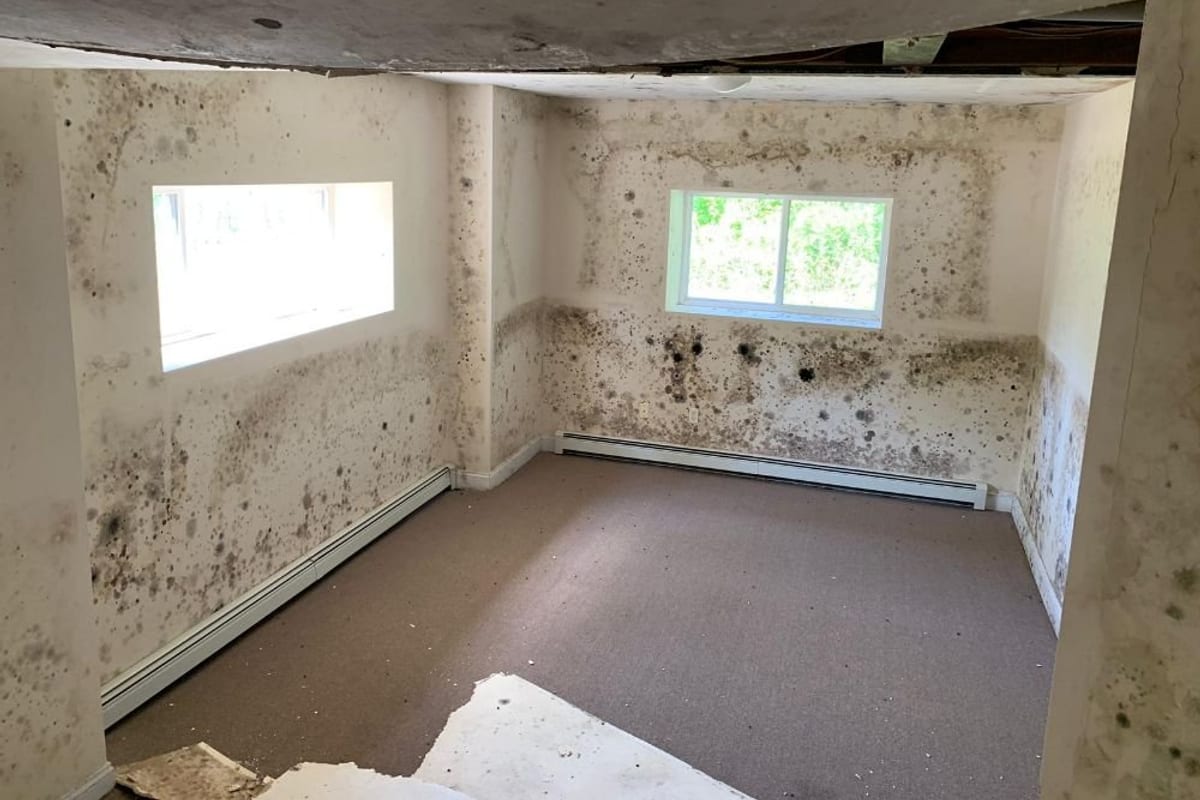
Flood insurance through the National Flood Insurance Program (NFIP) can pay for mold caused by a flood, but only if you take reasonable steps to dry and protect the home after the water recedes, and basement coverage is limited to a short list of items. Standard homeowners policies exclude flood entirely, so in Adams County the flood policy is usually the only route to coverage for floodwater and the mold that follows.
This guide covers how NFIP defines a flood, the 30-day waiting period, what is and is not covered in a basement, how mold fits in, what local claim history shows, and what to do in the first days after a flood.
General information, not legal advice. NFIP and private flood policies have specific terms and exclusions. Read your policy, and use FloodSmart.gov and your agent for current details.
Adams County Flood Claim History
Adams County is not a coastal county, but its creeks flood. According to FEMA NFIP claims data, as of Sept 8, 2026, Adams County has had 400 NFIP claims with $6.70 million paid from 1978 through 2026.
The peak year was 2011, with 133 claims, driven by Tropical Storm Lee in September 2011. Other named events with claims in the county include the January 1996 flooding from snowmelt and rain, Tropical Storm Ivan in 2004, Hurricane Sandy in 2012, and Hurricane Ida in 2021.
By ZIP code, the same FEMA data shows:
| ZIP / community | NFIP claims | Paid | Notes |
|---|---|---|---|
| 17316 East Berlin | 205 | $2.71 million | Peak in 2011, Tropical Storm Lee |
| 17350 New Oxford | 88 | $1.36 million | Peak in 2011, Tropical Storm Lee |
| 17325 Gettysburg | 84 | $2.66 million | |
| 17013 Carlisle | 84 | Cumberland County ZIP, nearby | |
| 17331 Hanover | 38 | ||
| 17320 Fairfield | 20 | ||
| Reading Township (community) | 159 | $2.63 million |
ZIP codes cross county lines, so these ZIP totals do not add up to the county figure. The takeaway is simple: flood claims cluster along creeks, and one storm can produce years’ worth of claims at once.
These numbers count insured NFIP claims only. They do not include uninsured damage or private flood policies.
How NFIP Defines a Flood
Not every wet basement is a “flood” for insurance purposes. Under NFIP, a flood generally means a general and temporary condition of partial or complete inundation of 2 or more acres of normally dry land, or of 2 or more properties, at least one of which is yours, from overflow of water, unusual runoff of surface water, or mudflow.
That means:
- A creek overtopping its banks and filling your basement: generally a flood.
- Surface water from a regional downpour flowing into several properties: generally a flood.
- A burst pipe in your house only: not a flood. That is a homeowners insurance question, covered in our guide on whether homeowners insurance covers mold.
- Groundwater seeping through your foundation on its own: usually not a flood unless it is part of a general flood condition.
- A sump pump failure in a normal rain: usually not covered by flood insurance unless caused by a flood. Our guide on sump pump failure and mold covers that scenario.
The 30-Day Waiting Period
An NFIP policy generally does not take effect until 30 days after purchase. You cannot buy it when the forecast turns bad.
There are exceptions, such as when coverage is required as part of making, increasing, or renewing a mortgage loan, and certain situations tied to flood map changes. Ask your agent which applies. Private flood policies may have different waiting periods.
The practical lesson for Adams County: buy coverage in a calm month. Tropical systems like Lee and Ida arrive in late summer and fall, and spring snowmelt floods like January 1996 can come with little warning.
What NFIP Covers in a Basement
Basement coverage is the most misunderstood part of flood insurance. NFIP treats a basement as any area with its floor below ground level on all sides. In a basement, coverage is limited to specific items, generally including:
Building coverage (examples):
- Central air conditioners, furnaces, water heaters, and heat pumps.
- Electrical panels, outlets, and wiring.
- Sump pumps, well pumps, and water tanks.
- Foundation elements, posts, and stairways attached to the building.
- Drywall for walls and ceilings, in a limited, unfinished form, plus insulation.
- Cleanup costs.
Contents coverage (examples, if you have contents coverage):
- Washers and dryers.
- Freezers and the food in them.
Generally not covered in a basement:
- Finished walls, floors, and ceilings beyond the limited items above.
- Carpet, paneling, and finished flooring.
- Furniture and most personal belongings stored there.
- Most finishing materials in a finished basement.
| Basement item | Building coverage | Contents coverage | Generally not covered |
|---|---|---|---|
| Furnace, water heater | Yes | ||
| Sump pump | Yes | ||
| Unfinished drywall, insulation | Yes, limited | ||
| Carpet, paneling, finished floor | Yes | ||
| Washer, dryer | Yes | ||
| Freezer and food | Yes | ||
| Couch, boxes, stored items | Yes |
Check the exact list in your policy. NFIP’s Standard Flood Insurance Policy spells it out, and FloodSmart.gov has plain-language summaries.
If your basement is finished with carpet and drywall, most of the finish work will not be covered. That is one reason finishing an old stone basement in a flood-prone area is risky. Our guide on basement mold in old Gettysburg homes covers the moisture side.
How Mold Fits Into a Flood Claim
NFIP’s approach to mold is about what happens after the water leaves:
- Mold caused directly by flood damage to covered property can be covered, subject to policy terms.
- Mold that grows because the owner did not take reasonable steps to inspect, dry, and maintain the property after the flood can be excluded.
- There are allowances for situations where you could not reach the property, such as when access is blocked by local authorities.
In practice, that means the clock starts the moment water recedes. EPA notes that wet materials can grow mold within 24-48 hours. Floodwater is also contaminated, so porous materials it soaked are usually removed, not cleaned. EPA’s flood cleanup resources and mold guidance explain why.
What to Do After Floodwater Recedes
- Stay safe. Do not enter a flooded basement until the power is off. Assume floodwater is contaminated and wear boots, gloves, eye protection, and an N95 respirator.
- Report the claim quickly. Contact your flood insurer or agent and get a claim number.
- Photograph and video everything before removing anything: water lines on walls, damaged items, the outside water level if safe.
- Remove standing water. Pump out the basement gradually if groundwater around the foundation is still high, since pumping too fast can damage walls.
- Remove wet porous materials. Carpet, pad, insulation, and wet drywall usually come out. Photograph and keep samples if the adjuster has not seen them. Note serial numbers on appliances.
- Dry the structure. Dehumidifiers, air movers, and heat. Measure with a moisture meter until wood and masonry return to normal levels.
- Clean and disinfect hard surfaces that contacted floodwater.
- Keep every receipt for pumps, fans, dehumidifier rental, and cleanup labor.
- Submit the proof of loss within the deadline in your policy. Under the NFIP standard policy, that is generally 60 days after the loss unless an extension is granted. Confirm the date with your adjuster.
Our guide on mold after water damage covers drying targets in more detail, and how long mold remediation takes helps with planning.
Coverage Limits and Private Options
NFIP residential building coverage tops out at $250,000, and contents coverage at $100,000. Those limits, deductibles, and premiums under FEMA’s current rating approach are explained on FloodSmart.gov and FEMA’s flood insurance pages.
Private flood insurance is also sold in Pennsylvania. Some private policies offer more basement coverage, additional living expenses, or different waiting periods. Compare the basement and mold terms line by line. The Pennsylvania Insurance Department has consumer information on flood insurance and handles complaints about insurers licensed in the state.
To check your property’s mapped flood risk, use the FEMA Flood Map Service Center. A property outside a high-risk zone can still flood, because maps show modeled risk, not a guarantee.
For cleanup cost context, our mold remediation cost page lists national published benchmarks from Angi and HomeGuide. They are not local quotes.
Frequently Asked Questions
Does homeowners insurance cover flood damage or flood mold?
Standard homeowners policies exclude flood. Mold caused by floodwater is generally a flood insurance question, not a homeowners one. Read your policy, and ask about a water backup endorsement for sewer and drain backups, which is a separate coverage.
Can I get flood insurance if I’m not in a flood zone?
Yes. NFIP coverage is available in participating communities regardless of flood zone, and premiums are often lower outside high-risk areas. Lenders only require it in certain zones, but floods do not stop at map lines.
Will NFIP pay to remove mold from my finished basement?
Only for items covered in a basement, and only if the mold resulted from the flood and you took reasonable steps to dry the property. Finished carpet, paneling, and most finishes are generally not covered, so mold removal on those materials usually is not either.
How fast do I need to start drying after a flood?
As soon as it is safe. Wet materials can start growing mold within 24-48 hours, and the policy expects reasonable steps to prevent further damage.
Getting Help After a Flood
After a flood, the first days decide how much is salvageable and how the claim goes. Our water damage and mold restoration service handles water removal, drying, removal of contaminated materials, and remediation, with photos and moisture readings for your adjuster. Contact us once it is safe to enter the home.