
Does Bleach Kill Mold? What Works on Porous vs. Non-Porous Surfaces
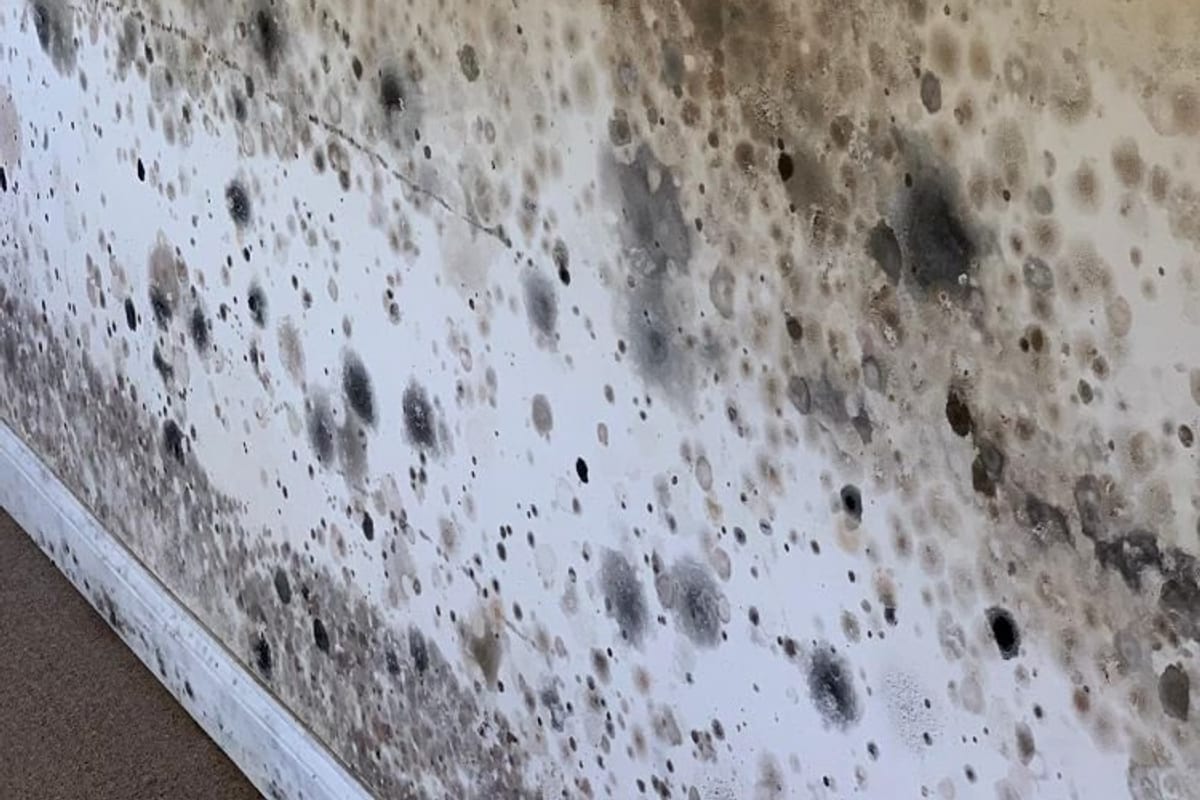
Bleach can kill mold on hard, non-porous surfaces like tile, glass and sealed countertops, but it does not reliably reach mold growing inside porous materials like drywall, wood or carpet, and killing mold is not the same as removing it. The U.S. Environmental Protection Agency (EPA) does not recommend bleach as a routine step in mold cleanup. Detergent, water, scrubbing and fast drying do most of the work.
This guide covers what bleach actually does to mold, why surface type matters so much, what EPA and the CDC say, a safer cleaning method, and the point where cleaning stops being the answer.
What Bleach Does to Mold
Household chlorine bleach is a dilute solution of sodium hypochlorite in water. On contact, it kills many microorganisms and strips color from stains. That second effect is part of why bleach feels like it works so well on mold. The dark spots fade, the wall looks clean, and the job looks finished.
Two things are happening that you cannot see:
- The color is gone, but the mold may not be. Bleach whitens the pigment in mold. On a porous surface, the root-like structures (hyphae) can remain below the surface.
- Dead mold still matters. EPA notes that dead mold can still cause allergic reactions in some people. Killing mold without physically removing it leaves the allergens behind.
So the real question is not “does bleach kill mold?” It is “does bleach get the mold off and keep it from coming back?” On most surfaces in a house, the answer to that is no.
Porous vs. Non-Porous: Why the Surface Decides
Mold on a hard surface sits on top. Mold on a porous surface grows into it. That single difference drives every cleaning decision.
| Surface | Type | Can bleach help? | What to do instead or as well |
|---|---|---|---|
| Ceramic tile, glazed porcelain | Non-porous | Yes, on the surface | Scrub with detergent, rinse, dry |
| Glass, mirrors, metal | Non-porous | Yes | Detergent wipe is usually enough |
| Sealed countertops, fiberglass tub | Non-porous | Yes | Detergent, then dry completely |
| Grout, unsealed concrete | Semi-porous | Partly | Scrub hard; replace grout or reseal if staining returns |
| Painted drywall | Porous paper face | Not reliably | Small areas can be cleaned; larger or soft areas get cut out |
| Raw wood, framing, subfloor | Porous | Not reliably | HEPA vacuum, scrub or sand, dry, address moisture |
| Carpet, pad, upholstery | Porous | No | Usually discarded if moldy |
| Ceiling tile, insulation | Porous | No | Discard |
The reason bleach falls short on porous materials is partly the water in it. Household bleach is mostly water. On drywall paper or raw wood, the chlorine reacts and breaks down near the surface, while the water soaks in. You end up adding moisture to the material you were trying to dry.
What EPA says
EPA’s homeowner guidance, A Brief Guide to Mold, Moisture and Your Home, tells homeowners to scrub mold off hard surfaces with detergent and water and dry completely. It also says absorbent or porous materials such as ceiling tiles and carpet may have to be thrown away if they become moldy, because mold can grow into the empty spaces and crevices of those materials.
For larger buildings, EPA’s Mold Remediation in Schools and Commercial Buildings guide goes further. It says the use of a biocide such as chlorine bleach is not recommended as a routine practice during mold cleanup, though there may be specific cases where professional judgment calls for it. The goal is to remove mold, not just to kill it.
What the CDC says
The CDC’s mold and health pages and its disaster cleanup guidance do allow bleach for hard surfaces, especially after flooding, with firm limits. If you use it, use no more than 1 cup of household bleach per gallon of water, open windows, wear protective gear, and never mix bleach with ammonia or other cleaners. Mixing bleach with ammonia or acids releases toxic gases.
Both agencies agree on the main point: fix the water problem, remove the growth and dry the area. Bleach is optional at best.
A Safer Way to Clean Small Areas of Mold
For a small patch on a hard surface, plain detergent and water works as well as bleach and carries fewer risks. EPA treats an area under about 10 sq ft (roughly a 3 ft by 3 ft patch) as something most homeowners can usually handle. Read our guide on whether DIY mold removal is safe before you start, because size is only one of the factors.
Here is the method:
- Find and stop the moisture source first. A dripping trap, a sweating cold water pipe, or a bathroom with no working fan will regrow the mold in weeks.
- Put on gloves, goggles and an N95 respirator. EPA recommends this basic gear even for small jobs.
- Mist the area lightly with water or detergent solution to keep spores from going airborne when you wipe.
- Scrub with a detergent solution and a stiff brush or scrub pad on hard surfaces. Use a soft cloth on painted surfaces.
- Wipe clean with a damp cloth, then wipe again with a fresh one. Bag the used rags.
- Dry the area completely within 24-48 hours. A fan and a dehumidifier help. Indoor relative humidity should stay below 60%, ideally 30-50%.
- Watch it for a month. If staining comes back in the same spot, the moisture is still there or the growth runs deeper than the surface.
What about vinegar, hydrogen peroxide and “mold killer” sprays?
White vinegar and hydrogen peroxide are popular because they are less harsh than bleach. They can help on hard surfaces, but they face the same limits on porous materials, and they do not replace scrubbing and drying. Commercial products that claim to kill mold are pesticides registered with EPA, so follow the label exactly, including dilution, contact time and ventilation. A product that says “kills 99.9% of mold” is not claiming to remove it.
Never combine products. Vinegar plus bleach releases chlorine gas, and ammonia plus bleach releases chloramine gas.
When Bleach Can Make the Problem Worse
Bleach is not just ineffective on some surfaces. In a few common cases, it causes trouble:
- On drywall. Spraying bleach solution on drywall wets the paper and gypsum. If the wall was damp from a leak, you have extended the wet period.
- On wood framing and subfloor. Bleach can weaken wood fibers over time and does not reach growth in the grain.
- In closed rooms. Bathrooms, closets and basements with little airflow concentrate fumes. People with asthma react to bleach fumes on their own, separate from the mold.
- Over hidden growth. If a wall smells musty and shows surface spots, bleaching the visible patch hides the clue that pointed to a bigger problem behind it.
- As a cover-up before a sale or inspection. Bleaching stains removes the evidence without fixing the moisture. It does not satisfy disclosure obligations, and it often fails a moisture meter test anyway.
Signs You Are Past What Bleach or Detergent Can Fix
Cleaning a surface is the right call only when the growth is small, on a hard surface, and the cause is known and fixed. Stop and get a professional assessment when you see any of these:
- Growth covering more than about 10 sq ft (0.9 m²).
- Drywall that is soft, crumbling, or stained through the paint.
- Mold that returns within weeks of cleaning.
- A musty smell that stays after cleaning, which often means growth inside a wall cavity. Our guide to black mold signs and health effects explains what to watch for.
- Mold after a flood, sewage backup, or a leak that stayed wet more than 48 hours.
- Mold in or around HVAC ducts. EPA advises not running the system if you suspect contamination.
- Anyone in the home with asthma, allergies, or a weakened immune system.
In older Gettysburg homes, the surface often decides the outcome. Growth on painted plaster over stone, or on wood lath, behaves differently from mold on a modern tiled shower. Our guide to mold on plaster walls in old homes covers those materials.
Bleach and the “Black Mold” Question
Many people reach for bleach because a stain is black and they assume it is the dangerous kind. Color does not tell you the species, and EPA and CDC both say every kind of indoor mold growth should be handled the same way. You do not need to identify the species before cleaning, and bleach is not a special treatment for any particular type. Our black mold myths guide covers what Stachybotrys is and is not.
Frequently Asked Questions
Does bleach kill mold on drywall?
Not reliably. Bleach can whiten and kill growth on the painted surface, but drywall has a paper face and a gypsum core that absorb water. Mold that has grown into the paper or the back side of the board stays there. Small, surface-only spots on sound, painted drywall can be cleaned with detergent. Stained, soft, or widespread areas are usually cut out and replaced.
Is it safe to mix bleach with other cleaners for mold?
No. Never mix bleach with ammonia, vinegar, or other household cleaners. These combinations release toxic gases. Use one product at a time, rinse between products if you switch, and keep the room ventilated.
Will mold come back after I bleach it?
It usually will if the moisture source is still there or if the growth was inside a porous material. Bleach does nothing to stop a leak, condensation, or high humidity. Keep relative humidity under 60%, fix leaks within 24-48 hours, and the same spot is far less likely to regrow.
Does bleach kill mold spores in the air?
No. Spraying or fogging bleach does not remove spores from the air and adds fumes to the room. Airborne spores are controlled by removing the source, HEPA vacuuming, and HEPA air filtration during cleanup.
What should I use instead of bleach?
For hard surfaces, use a detergent solution, a scrub brush and clean rags, then dry the area completely. For porous materials that are moldy, removal and replacement is usually the answer, not a stronger cleaner.
Getting Help With Mold Bleach Did Not Fix
If you have cleaned the same patch more than once, or the growth is on drywall, wood or carpet, the problem is moisture and material, not the cleaner. Our black mold removal service follows EPA guidance and the IICRC S520 standard: find the water, contain the area, remove affected porous materials, HEPA vacuum and clean, and dry before rebuild. For price ranges, see our mold remediation cost page, which explains national published benchmarks from sources like Angi and HomeGuide rather than local quotes. Contact us to schedule an on-site look.