
Mold Containment and Air Scrubbers Explained: Poly, Negative Air and HEPA
Mold containment is a sealed plastic work zone kept at slightly lower air pressure than the rest of the house, with HEPA-filtered machines pulling air out, so spores and dust released during removal cannot drift into clean rooms. The plastic is the wall. The negative pressure is what makes the wall work. The HEPA filter is what keeps the exhaust clean.
This guide covers each piece of a containment setup, the difference between an air scrubber and a negative air machine, how air changes per hour are figured, what a manometer reading tells you, and what to look for if you want to check a crew’s setup yourself.
If your main question is whether your family can stay in the house during the work, read can you stay home during mold remediation first. This page goes into how the equipment actually works.
Why Containment Exists
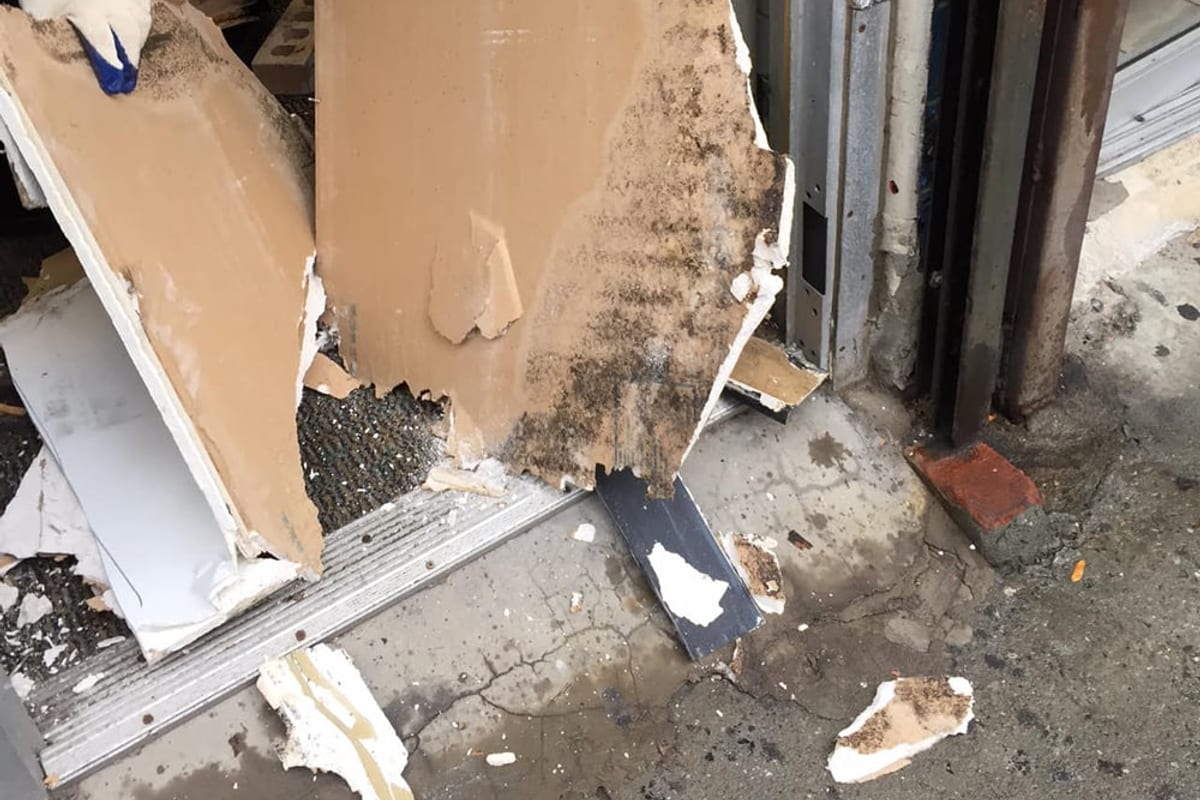
Moldy drywall, insulation and wood look quiet sitting in a wall. The moment someone cuts, pulls or bags them, they release spores and fragments. Those particles are small enough to stay airborne for a long time and ride air currents through the house, into the HVAC system and onto clean surfaces.
The EPA’s guide for schools and commercial buildings, which is the agency’s most detailed remediation document, ties containment to the size of the job. In broad terms:
| Area of growth | EPA approach (summarized) |
|---|---|
| Under about 10 sq ft | Minimal precautions, no formal containment |
| About 10 to 100 sq ft | Limited containment, single layer of poly, negative pressure |
| Over 100 sq ft | Full containment, double layer, decontamination chamber, negative pressure |
The IICRC S520 standard uses a similar risk-based approach and adds factors such as who lives in the home and how much disturbance the work involves. Our S520 conditions guide explains how assessors classify an area.
Part 1: The Physical Barrier
Polyethylene sheeting
Most containments use polyethylene sheeting, often called poly. A thickness of 6 mil is common for walls and floors in remediation work, and many crews use fire-retardant poly. It is taped to the floor, walls and ceiling to enclose the work area, or hung from spring-loaded poles that wedge between floor and ceiling.
On larger jobs the floor is also covered, so debris does not grind into flooring that is staying.
Critical barriers
Critical barriers are seals over openings that would otherwise leak air: HVAC supply and return registers, doorways, windows, recessed light fixtures, electrical outlets on containment walls, attic hatches and plumbing chases. Sealing the HVAC registers inside the work area is one of the most important steps, because the air handler would otherwise pull dusty air into the ductwork and spread it through the house.
Ideally the HVAC system is shut off during demolition, or at least the registers in and near the work area are sealed.
Zipper doors and airlocks
Workers go in and out through a zipper door, which is an adhesive-backed zipper stuck to the poly and then cut open. On full containments, there is often a second chamber at the entrance, an airlock or decontamination area, where workers remove outer suits and bag them before stepping into the clean side.
Some crews use a flap entry with overlapping sheets of poly. It works if negative pressure is strong enough to pull the flaps closed.
Part 2: Negative Pressure
Negative pressure means more air is pulled out of the containment than leaks in, so whenever air moves across the barrier, it moves inward. If a seam pulls loose or someone opens the zipper, clean house air rushes in instead of dirty air rushing out.
That is achieved by running a HEPA-filtered machine that draws air from inside the containment and exhausts it outside the containment, ideally outdoors through a window or a port in the plastic.
What you should see
- The poly walls bow slightly inward. That is the easiest check.
- A tissue held at a slightly opened zipper is pulled inward.
- The exhaust duct is running outside, not dumping into the next room of the house.
Manometer readings
A manometer measures the pressure difference between the inside of the containment and the area outside it. Digital manometers display the reading in pascals (Pa) or inches of water column (in. w.c.).
Remediation standards do not set a single required number for homes. A figure many crews aim for, borrowed from asbestos abatement practice, is about -0.02 in. w.c., which is roughly -5 Pa. A steady negative reading confirms the setup is working. Some contractors log readings at intervals and include them in the project records.
| What the manometer shows | What it means |
|---|---|
| Steady negative reading | Containment is holding negative pressure |
| Reading near zero | Not enough exhaust, or large leaks in the barrier |
| Positive reading | Air is being pushed out of the containment, a setup problem |
| Reading that swings widely | Doors opening, HVAC cycling, or wind affecting exhaust |
Part 3: The Machines
HEPA filters
HEPA stands for high-efficiency particulate air. A true HEPA filter is tested to capture at least 99.97% of particles at 0.3 microns, the size that is hardest to catch. Mold spores are typically larger than that, so a HEPA filter that is sealed properly in its housing captures them efficiently.
The seal matters as much as the filter. A HEPA filter with a gap around its frame lets air bypass it. That is one reason remediation-grade machines differ from household air purifiers.
Most machines use a staged setup: a cheap pre-filter catches large dust, a mid-grade filter catches finer material, and the HEPA filter does the final work. Pre-filters are changed often so the HEPA filter lasts longer and airflow stays high.
Air scrubber vs. negative air machine
People use these terms loosely. The difference is mostly in how the same type of machine is set up.
| Air scrubber (recirculating) | Negative air machine (NAM) | |
|---|---|---|
| What it does | Filters air and returns it to the same space | Filters air and exhausts it outside the containment |
| Creates negative pressure | No | Yes |
| Exhaust duct | Not needed | Ducted to outdoors or outside the containment |
| Typical use | Cleaning air inside the containment or a nearby room | Maintaining negative pressure during removal |
The general industry term for the box itself is an air filtration device, or AFD. The same AFD can work as a scrubber or as a NAM depending on whether it has an exhaust duct out of the space. Many jobs use one of each: a NAM to hold pressure and a recirculating unit to keep dust down inside.
Air changes per hour
Crews size machines by air changes per hour (ACH), meaning how many times the full volume of air in the containment is pulled through the filter each hour.
The formula is simple:
CFM needed = (room volume in cubic feet × target ACH) ÷ 60
For a basement room 12 ft × 15 ft with an 8 ft ceiling:
- Volume = 12 × 15 × 8 = 1,440 cubic feet.
- At a target of 4 ACH, a common minimum borrowed from asbestos practice: 1,440 × 4 ÷ 60 = 96 CFM.
- Many crews aim higher, especially during heavy demolition.
A machine’s rated CFM is for clean filters with no duct attached. Real airflow drops as filters load up and as duct length increases. That is why crews often run a machine rated well above the calculated number.
Part 4: Working Inside the Containment
The equipment only works if the process does too. During removal, a careful crew will:
- Mist or lightly wet materials before cutting, when appropriate, to reduce dust.
- Bag debris inside the containment in heavy plastic bags, then wipe or HEPA vacuum the outside of the bag before it leaves.
- HEPA vacuum surfaces after removal, working top to bottom.
- Damp wipe hard surfaces after vacuuming.
- Keep the containment running after removal so airborne particles settle or get filtered before the plastic comes down.
- Wear protective gear appropriate to the job, often respirators, disposable suits and gloves.
How long the machines keep running after removal depends on the size of the job and the clearance plan. Our guide to how long mold remediation takes covers typical timelines.
Part 5: Taking Containment Down
Containment should stay up until the area passes a visual inspection, and clearance testing if it is part of the plan. Taking the plastic down too early can undo the work. Our clearance testing guide explains what that check involves.
When it does come down, the poly is usually misted, folded inward to trap dust on its inside surface, bagged and removed. The area outside the containment should be HEPA vacuumed if any dust escaped.
What Homeowners Can Check
You do not need to understand every detail to see whether a setup looks right. Look for:
- Plastic sealed to the floor and ceiling, with no gaps at corners.
- HVAC registers in the work area taped over.
- Plastic bowing inward.
- An exhaust duct running outdoors.
- A zipper or flap entry that stays closed when no one is passing.
- Debris bagged before it leaves the work area.
If you notice dust outside the containment, a positive manometer reading, or crews walking through the house in dirty suits, raise it right away.
How Containment Affects Cost
Containment adds labor and equipment time. Larger containments, airlocks and longer machine runtime all add up. For published national price benchmarks, see our mold remediation cost page. Those ranges come from national sources such as Angi and HomeGuide, not local quotes.
Frequently Asked Questions
Is a household air purifier the same as an air scrubber?
No. Household purifiers move much less air, often are not sealed to remediation standards, and do not create negative pressure. They can help general indoor air quality, but they are not a substitute for a contained, HEPA-filtered work area during mold removal.
Can a crew skip containment for a small job?
For areas under about 10 square feet, the EPA’s guidance generally calls for limited precautions rather than full containment. Larger areas, or work on materials that will release a lot of dust, call for containment. The decision should be based on the area and the material, not convenience.
Why does the plastic need to bow inward?
Inward bowing means the air pressure inside the containment is lower than outside. That proves air is moving into the work area through any small gaps, which keeps spores and dust from escaping.
How long do air scrubbers run after mold removal?
It depends on the job size and the clearance plan. Machines typically keep running after demolition and cleaning until the area is ready for inspection or testing. Ask your contractor for the plan in writing.
Questions About a Containment Setup?
If you want an independent look at a job in progress, or help scoping work that needs containment, our mold inspection and testing service can review the setup and the moisture conditions. Contact us to schedule a visit in Gettysburg or nearby.