
Mold on Plaster Walls in Old Gettysburg Homes: Plaster, Lath and Stone
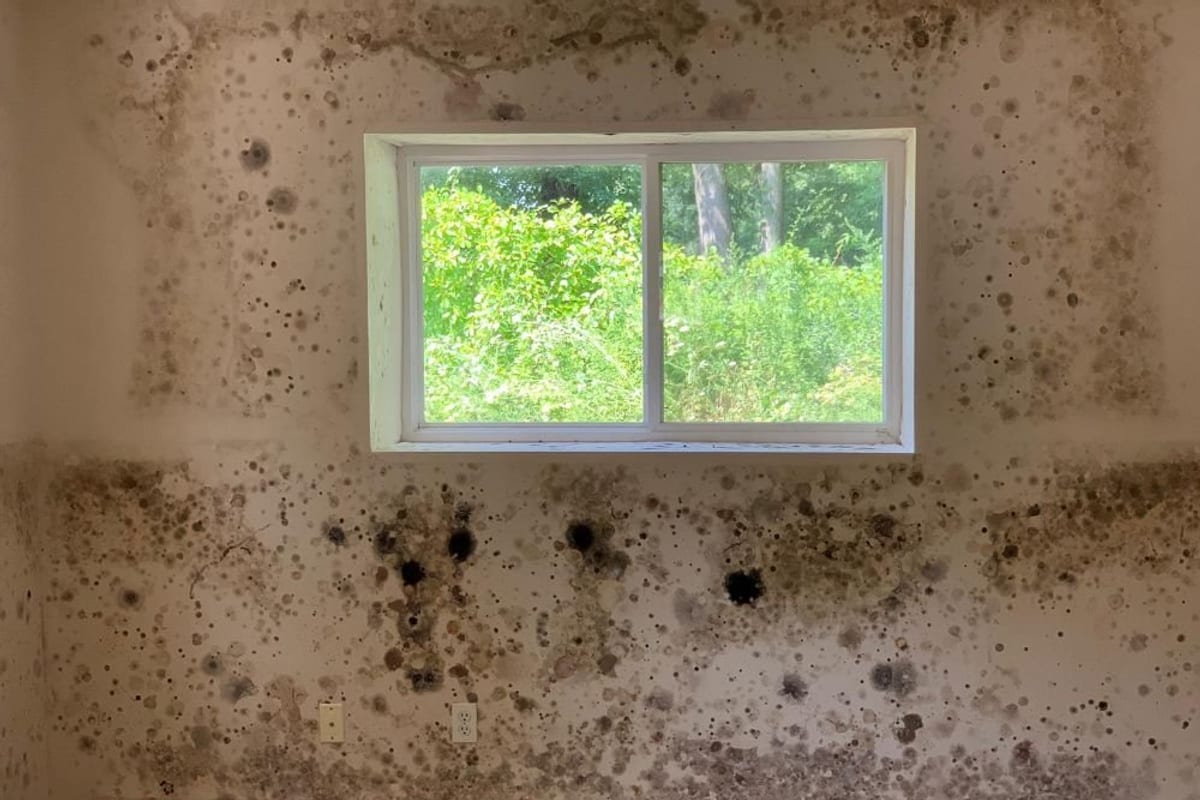
Plaster itself is a mineral and a poor food source for mold, so mold on an old plaster wall is usually growing on the paint, wallpaper, dust, or the wood lath and framing behind it, and the cause is almost always moisture moving through the masonry or condensing on a cold wall. Fix the moisture path first. Then decide whether the plaster can be cleaned or has to come off.
This guide covers how plaster walls in older Gettysburg homes are built, where mold hides in them, how lime mortar and fieldstone move moisture, the repairs that tend to make things worse, and safety checks before anyone opens a wall.
Why This Matters in Gettysburg
Gettysburg has an unusually old housing stock. According to U.S. Census Bureau ACS 2020-2024 5-year estimates, 47.5% of the borough’s 2,801 housing units were built before 1940, and the median year built is 1942. For comparison, 25.0% of homes statewide were built before 1940, and in Adams County as a whole the figure is 17.5%.
Homes from that era were usually finished with plaster rather than drywall. Many sit on fieldstone or rubble stone foundations, and some have plaster applied directly to brick or stone exterior walls. Those details change how mold starts and how it should be handled.
How Old Plaster Walls Are Built
Older interior plaster usually takes one of two forms:
- Plaster on wood lath. Narrow wood strips nailed across the studs with gaps between them. Wet plaster was pushed through the gaps to form “keys” that lock it in place. Two or three coats were common. Many early plasters were lime-based, sometimes with animal hair as a binder.
- Plaster on masonry. On exterior walls of brick or stone homes, plaster was often applied directly to the inside face of the masonry, with no wall cavity at all.
Later homes may have gypsum plaster, metal lath, or rock lath (gypsum board panels used as a plaster base). Each behaves a little differently, but the moisture rules are the same.
Where mold actually grows
| Location | What feeds the mold | How you notice it |
|---|---|---|
| Paint film on the plaster surface | Dust, soap residue, some paint binders | Gray or black speckling, often in corners and behind furniture |
| Wallpaper and its paste | Paper and starch-based paste | Dark staining, bubbling, a musty smell behind the paper |
| Wood lath behind the plaster | Cellulose in the wood | Musty smell, soft or loose plaster, stains that keep returning |
| Studs, sill plates and joist ends | Wood framing | Usually found only when a wall is opened or from the basement side |
| Bare masonry face (plaster on stone or brick) | Dust and organic debris in joints | Damp patches, efflorescence, peeling paint low on the wall |
The EPA’s mold guidance is clear that mold can grow on almost any surface that has moisture and some organic material, including dust. A clean, dry plaster wall rarely grows mold. A plaster wall coated in a few layers of paint, sitting against a damp stone wall, is a different situation.
How Moisture Gets Into Old Plaster Walls
Old masonry walls were designed to get wet and dry out again. Lime mortar and lime plaster are vapor-open, which means water vapor passes through them. Moisture that enters the wall from rain or the ground can escape through the surfaces as long as nothing blocks it.
Mold problems usually start when that balance changes. The common causes:
- Rising damp at the base of the wall. Ground moisture wicks up through fieldstone and lime mortar. You see peeling paint, efflorescence, and staining in the bottom 1-3 ft of the wall.
- Condensation on cold exterior walls. In winter, warm indoor air reaches a cold, uninsulated plaster wall on an outside corner or behind a wardrobe. If the wall surface is below the air’s dew point, water condenses on it. Furniture pushed tight to the wall makes it worse by trapping still air.
- Rain penetration. Failed gutters, missing flashing, and eroded mortar joints let liquid water into the wall.
- Plumbing leaks. Old supply lines and drains inside plaster walls leak slowly for months before staining appears.
- High indoor humidity. Bathrooms without exhaust fans and basements without dehumidification push indoor relative humidity above 60%.
Repairs That Often Make It Worse
Many mold problems in old plaster walls are caused or made worse by modern materials that trap moisture. These are the ones to watch for:
- Hard cement mortar used to repoint soft stone or brick. Portland cement mortar is harder and less vapor-open than lime mortar. Water that used to escape through the joints can be forced into the stone or brick instead, and the wall stays wetter. The National Park Service’s Preservation Briefs on repointing historic masonry discuss mortar compatibility in detail.
- Vapor-closed paints and coatings. Several coats of oil paint or modern elastomeric coating on the inside of a damp masonry wall can trap moisture behind the paint. You see blistering and peeling, and mold grows on the back side.
- Drywall glued or furred directly over damp plaster or stone. This hides the moisture and gives mold a fresh paper surface in a dark cavity.
- Spray foam or plastic vapor barriers on the inside of old masonry. Depending on how they are detailed, they can trap moisture against the masonry. Get advice from someone familiar with historic buildings before insulating these walls.
- Bleach and repainting. Bleaching the stains and painting over them removes the evidence but leaves the moisture. Our guide on whether bleach kills mold explains why.
Safety Checks Before Opening an Old Wall
Do not sand, scrape, or demolish plaster in an older home until you know what is in the paint and the plaster.
- Lead paint. Homes built before 1978 may have lead-based paint. EPA’s Renovation, Repair and Painting (RRP) rule requires contractors who disturb more than 6 sq ft of painted surface inside a pre-1978 home to be RRP-certified firms and follow lead-safe work practices.
- Asbestos. Some older plaster, skim coats, textured finishes, and joint compounds may contain asbestos. Testing a sample before demolition is the safe approach.
- Structural concerns. Plaster that has lost its keys can come down in large pieces. Bulging or cracked ceilings should be supported before anyone works below them.
Clean, Repair or Remove?
Sound plaster with surface growth can usually be cleaned. Plaster that is soft, crumbling or detached, or that has mold behind it on the lath, usually has to come off in that area.
| What you find | Typical approach |
|---|---|
| Light spotting on painted plaster, wall is dry and solid | HEPA vacuum, detergent wipe, dry, fix the moisture source, monitor |
| Mold on wallpaper | Remove the paper, clean the plaster beneath, let the wall dry |
| Peeling paint and efflorescence at the base of a masonry wall | Address drainage and rising damp; remove loose paint; consider a vapor-open finish |
| Soft, crumbling, or delaminated plaster | Remove the affected section under containment |
| Mold on lath or framing behind the plaster | Remove plaster and lath in that area, clean or replace framing, dry, rebuild |
| Recurring condensation mold on an outside wall | Pull furniture away, improve air circulation, lower humidity, consider insulation strategies suited to old masonry |
Plaster removal is dusty work, and the dust in an old house may contain lead, asbestos and mold spores at the same time. Containment, HEPA filtration, and proper PPE matter more here than with a modern drywall job. Our guide on whether DIY mold removal is safe covers the limits of a homeowner job.
Historic district considerations
If your home sits in the Gettysburg Historic District, exterior changes visible from a public way generally go through the borough’s Historic Architectural Review Board. Interior plaster work usually does not, but exterior masonry repointing, window work, and drainage changes may. Check with the borough before starting exterior repairs. Our basement mold guide for old Gettysburg homes links the borough’s HARB and permit pages.
Keeping Old Plaster Walls Dry
- Keep gutters and downspouts working, with downspouts discharging at least 4-6 ft from the foundation.
- Grade soil away from the walls so water does not pool at the base.
- Repoint with a mortar compatible with the original, usually a lime-based mix chosen by a mason experienced with historic masonry.
- Keep indoor relative humidity between 30% and 50%, and under 60% at all times, as EPA recommends.
- Pull furniture 3-4 inches off exterior walls, especially in corners and closets.
- Run bathroom exhaust fans during showers and for about 20 minutes after.
Frequently Asked Questions
Can mold grow inside plaster?
Mold does not feed on the mineral content of plaster itself, but it can grow on dust, paint, wallpaper paste, and the wood lath behind it. Damp plaster can also carry growth on its surface. If plaster is soft or crumbling from long-term moisture, the affected section is usually removed.
Is horsehair plaster a mold risk?
The hair is a small amount of organic material, but the bigger concern in those walls is the wood lath and framing behind the plaster. If the wall stays wet, those are where mold grows. Dry horsehair plaster on sound lath is not a mold problem.
Should I cover damp plaster walls with drywall?
Not until the moisture is fixed. Covering a damp plaster or stone wall with drywall hides the problem and gives mold a new paper surface inside a dark cavity. Fix drainage, rising damp, and humidity first.
Why does my plaster wall get moldy only in winter?
That pattern usually means condensation. A cold exterior wall drops below the dew point of the warm indoor air, and moisture condenses on it, often behind furniture or in closet corners. Lower indoor humidity and improve air circulation along the wall.
Getting Help With an Old Plaster Wall
Older Gettysburg homes need a careful approach: find the moisture path, test for lead and asbestos where needed, and remove only what has to go. Our black mold removal service follows EPA guidance and the IICRC S520 standard with containment and HEPA filtration. For general price ranges, see our mold remediation cost page, which explains national published benchmarks from Angi and HomeGuide rather than local quotes. Contact us to schedule an on-site look.