
Winter Condensation Mold on Walls: Cold Corners, Thermal Bridges and Furniture
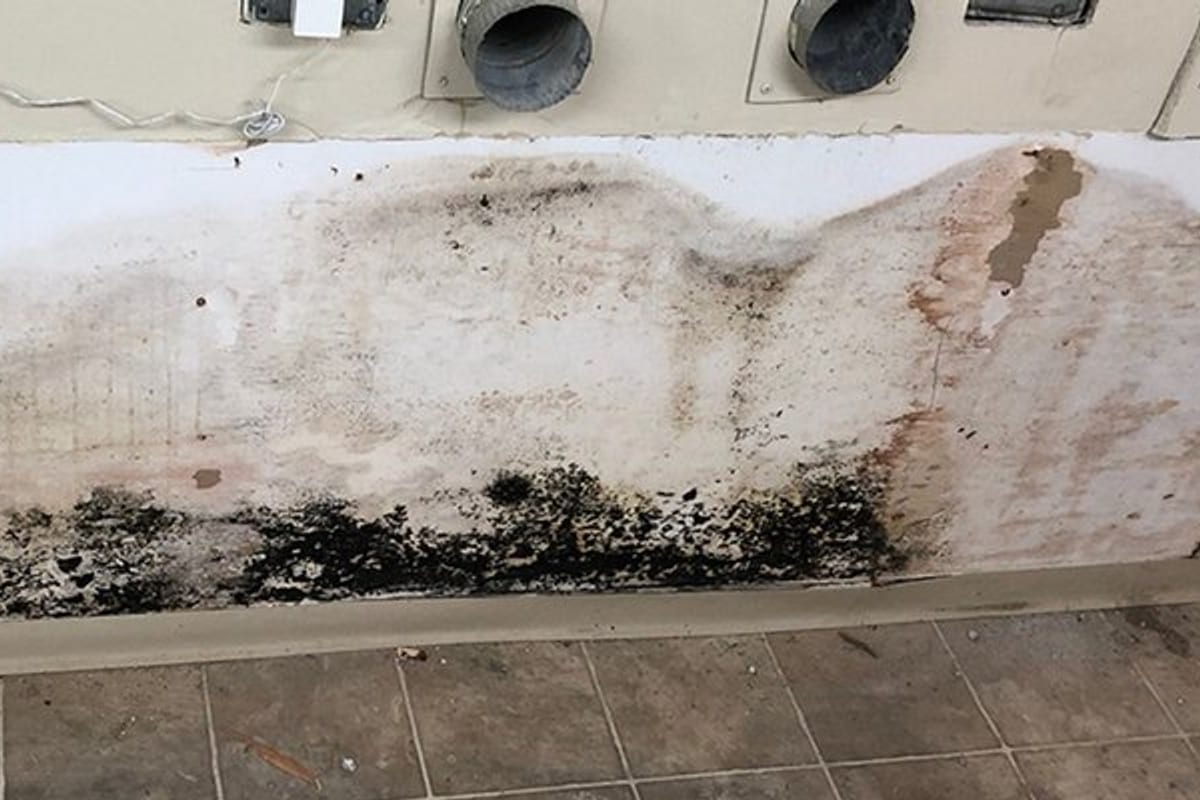
Mold that appears on the inside of exterior walls in winter, especially in upper corners, low along the floor and behind furniture, is usually caused by condensation on wall surfaces that are colder than the rest of the room, not by a leak. The fix is to warm those surfaces with insulation and air movement and to lower indoor humidity, so the wall never drops below the dew point of the room air.
This guide covers why some spots on a wall run colder than others, the common patterns and what each points to, how to measure a cold wall with an inexpensive infrared thermometer, and the fixes that work. Window condensation is covered separately in our guide on mold on window sills, so this guide is about walls and ceilings.
Why Part of a Wall Gets Cold Enough to Sweat
A heated room’s air might be 68-70°F (20-21°C). Most of an insulated wall’s inside surface stays within a few degrees of that. But some parts of an exterior wall are much colder:
- Corners where two exterior walls meet. More framing, less insulation, and more outside surface area per foot of inside wall. Corners also get less air movement from the room.
- The bottom of the wall, where cold air pools near the floor and the rim joist or sill is often poorly insulated or leaky.
- The top of the wall, where the ceiling meets the wall, especially under an attic where insulation is thin at the eaves.
- Behind furniture, where room heat cannot reach the wall.
- Over studs and other framing, because wood insulates far less than the insulation in the cavity beside it. This is called thermal bridging.
- Over gaps where insulation has settled, was never installed, or is missing around outlets and pipes.
When any of those surfaces drops below the dew point of the room air, moisture condenses on it. It may be too little to see as water droplets, but it raises the surface moisture enough for mold to grow on paint, dust and drywall paper. The EPA lists condensation on cold surfaces as one of the common moisture sources for indoor mold.
Our window sill guide includes a dew point table. The short version: at 70°F, room air at 40% relative humidity starts to condense on surfaces around 45°F; at 50% humidity, around 50°F. A cold corner on a January night can get there.
Reading the Pattern
The shape of the mold tells you a lot.
| Pattern | Most likely cause | Where it usually shows up |
|---|---|---|
| Dark triangle or band in the upper corner of an outside wall | Thin insulation at the top plate and eaves, plus a cold corner | Top-floor bedrooms, rooms under a low-slope roof |
| Dark band low along an outside wall, just above the baseboard | Cold, leaky rim joist or sill; cold air pooling at the floor | First floor over a basement or crawl space |
| Shape of a dresser, bed or bookcase on the wall | Furniture blocking room heat and air | Bedrooms, closets |
| Faint vertical stripes about 16 inches apart | Thermal bridging at studs; dust and moisture collect on the colder stripes | Older or under-insulated walls |
| Faint horizontal stripes on the ceiling | Thermal bridging at ceiling joists, or missing insulation between them | Top-floor ceilings |
| Single blotch in the middle of a wall | Missing or settled insulation in that cavity, or a leak | Any exterior wall |
| Growth around an outlet or switch on an outside wall | Air leaking in through the box | Any exterior wall |
| Growth inside a closet on an outside wall | Cold, still air and stored items against the wall | Closets; see mold in closets |
Stripes are not always mold
Dark lines over studs or joists, often called “ghosting,” can be dust and soot that collects on the colder strips of wall, even without mold. Candles, fireplaces and furnace issues add soot. Try the bleach dot test described in our mold vs. mildew guide, and look closely. Either way, it shows you where the wall is cold.
Condensation or a Leak?
Before you treat it as condensation, rule out a leak.
Signs it is condensation:
- It shows up or gets worse during long cold spells.
- It appears in several rooms on outside walls.
- It forms in corners and behind furniture, not below windows or roof joints.
- Indoor humidity is above about 40-45% when it is cold outside.
- The wall feels cold but not wet to the touch.
Signs it is a leak:
- It gets worse after rain or snowmelt, not cold.
- It sits below a window corner, roof intersection or plumbing.
- The baseboard is swollen or the drywall is soft.
- A moisture meter shows high readings into the wall, not just at the surface.
Leaks behind siding are covered in our guide on mold under vinyl siding and house wrap. A wall can have both problems.
How to Test a Cold Wall Yourself
An inexpensive infrared thermometer and a digital hygrometer can confirm a condensation problem in an evening.
- Wait for a cold night, ideally below freezing outside.
- Measure room air temperature and relative humidity with the hygrometer, near the wall in question.
- Look up the dew point for those readings. Many hygrometers show it directly. If not, use the table in our window sill guide.
- Scan the wall with the infrared thermometer. Check the middle of the wall, the corners, the bottom near the baseboard, the top near the ceiling, and behind furniture.
- Compare. Any surface within a few degrees of the dew point is at risk. Any surface at or below it is condensing.
A common rule of thumb is to keep wall surfaces at least several degrees above the room’s dew point. If your corner reads 48°F and your dew point is 47°F, that corner will grow mold over a winter.
A thermal camera, used in a professional mold inspection, shows the same thing across the whole wall at once and is the fastest way to find insulation gaps.
Fixes That Work
Work on both sides of the problem: make the wall warmer, and make the air drier.
Lower indoor humidity
- Keep winter relative humidity at the low end of the EPA’s 30-50% range, often 30-40% in very cold weather.
- Run bath fans during showers and for about 20 minutes after.
- Use a range hood that vents outside while cooking.
- Vent the clothes dryer outdoors and do not dry laundry on racks indoors.
- Turn down whole-house or room humidifiers.
- In a tight or newer house, make sure the mechanical ventilation system is on. See mold in new construction homes.
Get warm air to the wall
- Pull furniture away from exterior walls, at least 2-4 inches (5-10 cm), and more for large pieces.
- Do not block heat registers or radiators with furniture or curtains.
- Leave closet doors open on cold nights, or add louvered doors.
- Run ceiling fans on low in winter to mix room air.
- Keep rooms heated. Closing off and not heating a room with outside walls makes those walls colder.
Fix the insulation and air leaks
- Air seal and insulate the rim joist in the basement or crawl space if growth is low along walls.
- Add attic insulation at the eaves, with baffles to keep soffit vents open, if growth is in upper corners.
- Have walls checked for missing or settled insulation. Older walls can sometimes have insulation blown into empty cavities.
- Add foam gaskets behind outlet and switch covers on exterior walls.
A Note on Older Homes
Older homes often have more cold spots: uninsulated walls, balloon framing with open cavities, and plaster on masonry. According to U.S. Census Bureau ACS 2020-2024 5-year estimates, 47.5% of Gettysburg borough’s housing units were built before 1940, compared with 25.0% statewide. Many of those homes have exterior walls that were never insulated. Before adding insulation to a solid masonry or old plaster wall, get advice, because some approaches can trap moisture in the masonry. Our guide on mold on plaster walls in old homes covers plaster and stone walls.
Cleaning the Spots
Small areas on painted drywall or plaster can usually be cleaned by a homeowner. The EPA suggests an area under about 10 sq ft (0.9 m²) is generally a homeowner job. Use detergent and water, dry the surface, and wear gloves, eye protection and an N95 respirator. If the drywall paper is stained deeply or the growth comes back within weeks after you fix the humidity, the drywall may need to be replaced. Mold-resistant paint helps only after the cold surface and humidity are fixed.
Frequently Asked Questions
Why does mold only appear on my outside walls in winter?
Outside walls are the coldest surfaces in the room in winter. Indoor moisture condenses on the coldest spots first, especially corners and areas behind furniture. In summer those walls are warmer and the problem fades.
Will a dehumidifier stop winter wall mold?
It can help if indoor humidity is high, but in winter most homes are better served by exhaust fans and ventilation, which remove moisture at the source. Measure first. If humidity is already near 30-35% and mold still forms, the wall is too cold and needs insulation or air movement.
Is winter condensation mold dangerous?
It is the same mold you would find anywhere else, and the CDC notes it can trigger allergy and asthma symptoms in sensitive people. Small areas are usually cleaned easily once the humidity and cold spot are addressed.
Can I just paint over it?
Not until it is cleaned and the cause is fixed. Paint over active growth peels and the mold comes through. Mold-resistant paint is a finishing step, not a fix.
Getting Cold-Wall Mold Handled
If the growth keeps returning, covers a large area, or has worked into drywall or plaster, our black mold removal service includes finding the cold spots and moisture sources behind it. Contact us to schedule an assessment.