
Indoor Humidity, Dew Point and Mold: Why the Surface Matters More Than the Room
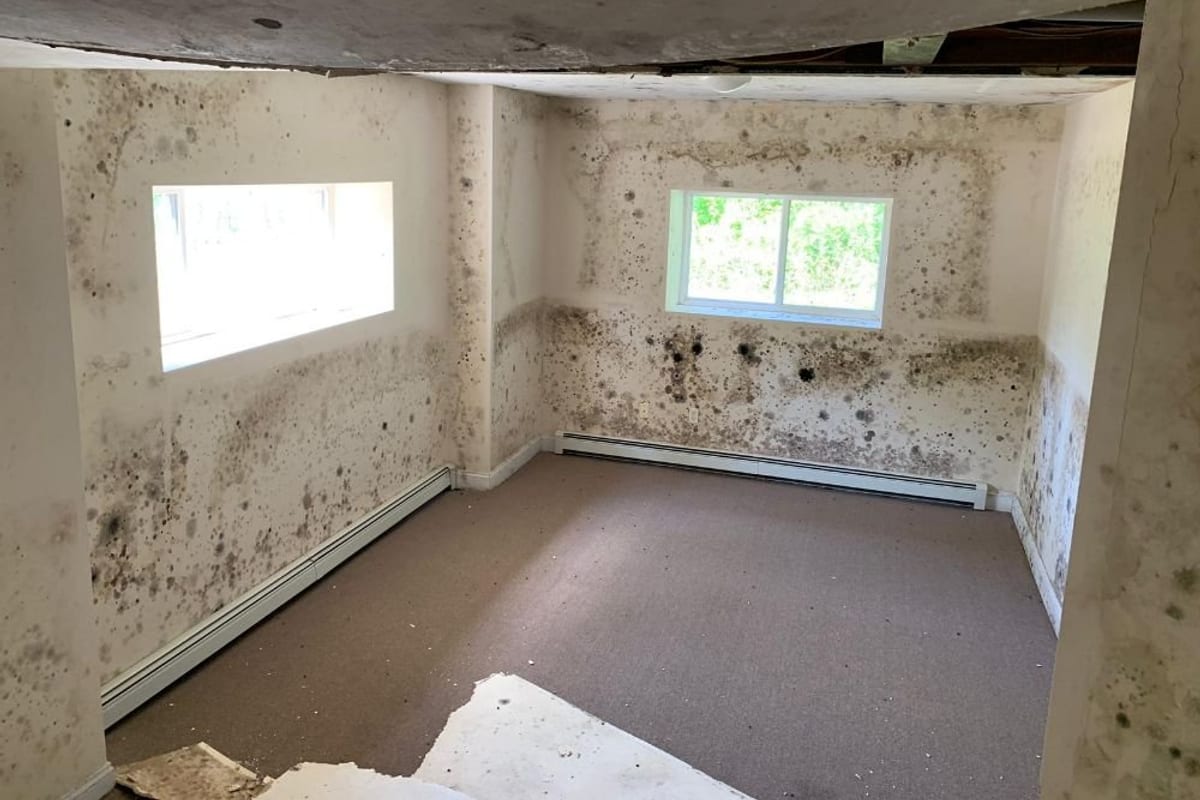
Mold responds to the humidity right at a surface, not the humidity in the middle of the room, and a cool surface has a much higher humidity than the air around it. That is why a basement can read 55% on a hygrometer and still grow mold on the walls. Relative humidity tells you how close the room air is to saturation at its own temperature. Dew point tells you how much water is actually in the air, and therefore which surfaces are cold enough to get damp.
This guide covers the difference between relative humidity and dew point, how surface temperature changes everything, how to check whether your hygrometer is accurate, and practical humidity targets for each season in south-central Pennsylvania.
Relative Humidity vs. Dew Point
Relative humidity (RH)
Relative humidity is the amount of water vapor in the air compared with the most the air could hold at that temperature, as a percentage. Warm air can hold more water than cool air. So the same amount of moisture gives a lower RH in a warm room and a higher RH in a cool room.
That makes RH a moving target. If you cool a room without adding or removing any water, the RH goes up.
Dew point
Dew point is the temperature at which the air would be fully saturated, 100% RH, with its current moisture content. It stays the same when the air warms or cools, as long as no water is added or removed. Dew point is the better number for comparing air in different places, such as outdoors versus the basement, because it does not change with temperature.
Any surface at or below the dew point gets wet with condensation. Any surface a few degrees above the dew point does not visibly sweat, but its surface RH can still be high enough for mold.
Why Surface Temperature Matters
When air touches a cool surface, a thin layer of that air cools to the surface temperature. Its RH rises. That thin layer is where mold lives.
Here is how the numbers work in a typical basement, using standard psychrometric calculations, rounded:
| Room air | Wall surface temperature | Approximate RH at the wall |
|---|---|---|
| 68°F, 45% RH | 58°F | 64% |
| 68°F, 50% RH | 60°F | 66% |
| 68°F, 50% RH | 58°F | 71% |
| 68°F, 60% RH | 60°F | 79% |
| 68°F, 60% RH | 58°F | 85% |
| 65°F, 60% RH | 55°F | 86% |
Building scientists commonly treat surface RH that stays above about 80% for weeks at a time as a mold risk. ASHRAE Standard 160, a design standard for moisture in buildings, uses a 30-day average surface RH of 80% as one of its criteria.
The table shows the practical point. A room reading of 60% can mean 80% or more at a cool foundation wall. Lowering the room to 50% or below gives the wall a margin.
Where cool surfaces hide
- Stone, block and concrete foundation walls, especially below grade.
- Concrete slabs, especially under carpet or rugs.
- The back of furniture and stored boxes pushed against exterior walls.
- Closets on exterior walls, where little warm air circulates. See mold in closets.
- Cold water pipes and uninsulated air conditioning ducts in summer.
- Window glass and frames in winter. Our window sill condensation guide has a dew point table for windows.
The Summer Basement Problem
Opening basement windows on a humid summer day usually adds moisture, not removes it.
In July and August in south-central Pennsylvania, outdoor dew points often run in the 60s and sometimes approach 70°F. Basement walls and slabs set in the ground stay much cooler. When that outdoor air enters the basement and touches a wall below its dew point, water condenses right onto the masonry.
Here is a sample comparison, using rounded psychrometric values:
| Outdoor air | Outdoor dew point | Basement wall at 60°F |
|---|---|---|
| 85°F, 60% RH | About 70°F | Wall is below dew point, condensation forms |
| 80°F, 65% RH | About 67°F | Wall is below dew point, condensation forms |
| 75°F, 50% RH | About 55°F | Wall is above dew point, no condensation |
That is why a dehumidifier with windows closed beats ventilation in a summer basement. Our basement dehumidifier size guide covers choosing one. The same logic applies to vented crawl spaces. See crawl space vapor barrier vs. encapsulation.
The Winter Problem
In winter, the problem flips. Indoor air is warm and the coldest surfaces are on the outside of the house: windows, exterior wall corners, closets and attic sheathing. Showers, cooking, laundry, people breathing, and humidifiers add moisture to indoor air.
If indoor RH is 50% at 70°F, the dew point is about 50°F. Any surface colder than that, such as single-pane glass or an uninsulated corner, will get wet on a cold night. Our winter condensation guide goes into wall and corner condensation.
Seasonal Targets for South-Central Pennsylvania
The EPA’s mold guidance recommends keeping indoor humidity below 60%, ideally between 30% and 50%. Within that range, the right target changes with the season and the space.
| Season / space | Practical target | Why |
|---|---|---|
| Summer, living areas | 40-50% RH | Comfortable, and air conditioning helps remove moisture |
| Summer, basement | Below 50% RH, set dehumidifier near 45-50% | Cool walls raise surface RH |
| Spring and fall, all areas | 40-50% RH | Swing seasons; watch after wet weeks |
| Winter, living areas, mild weather | 35-45% RH | Keeps windows and corners dry |
| Winter, during cold snaps | 30-35% RH | Colder surfaces need lower humidity |
| Crawl space, any season | Below 60%, ideally under 50% | Similar to basements |
These are practical starting points, not code requirements. If you see condensation on windows or walls, lower the humidity. If air feels very dry and causes discomfort, raise it carefully while watching cold surfaces.
Penn State Extension publishes homeowner resources on moisture and indoor air in Pennsylvania homes.
How to Measure Humidity Properly
Buy a decent digital hygrometer
An inexpensive digital hygrometer that also shows temperature is enough. Some show dew point directly, which is helpful. Buy two or three so you can compare rooms.
Place it correctly
- Put it at about chest height, away from exterior walls, vents, and appliances.
- In a basement, place one near the center and one near the dampest wall.
- Give it 30 minutes to settle after moving it.
- Do not set it on a concrete floor or directly on a cold wall.
Check its accuracy with the salt test
Cheap hygrometers can be off by several points. A simple check:
- Put a few tablespoons of table salt in a bottle cap or small dish.
- Add a few drops of water to make a damp slurry, not a liquid.
- Put the dish and the hygrometer in a sealed zip-top bag.
- Leave it at a steady room temperature for 8 to 12 hours.
- A saturated salt solution holds the air in the bag at about 75% RH. If your hygrometer reads 70%, add about 5 points to its readings.
Measure a surface
An infrared thermometer, aimed at a wall, tells you the surface temperature. Compare it to the room dew point on your hygrometer. If the wall is within a few degrees of the dew point, it is at high risk.
Ways to Lower Indoor Humidity
- Fix liquid water first. Gutters, grading, leaks and plumbing. See how to find a hidden leak.
- Run bathroom fans during showers and for 20 minutes after, venting outdoors.
- Use a kitchen range hood that vents outdoors while cooking.
- Vent the clothes dryer outdoors and keep the duct clean and connected.
- Run a dehumidifier in the basement with continuous drainage.
- Keep air conditioning sized correctly. An oversized system cools quickly but runs too briefly to remove much moisture.
- Turn down or off whole-house humidifiers during cold weather.
- Move stored items away from exterior walls and off the floor, so air can reach the walls.
When Humidity Has Already Caused Mold
Small areas of surface mold on hard surfaces, under about 10 square feet, can usually be cleaned with detergent and water. The EPA’s Brief Guide to Mold, Moisture and Your Home covers basic cleanup. Larger areas, growth on drywall or insulation, or growth that keeps returning, need a closer look. See why old Gettysburg basements grow mold for how humidity and masonry interact in older homes.
Frequently Asked Questions
What humidity level causes mold?
There is no single number, because mold depends on the moisture at the surface, not the room. As a rule, keep indoor RH below 60%, and in basements and other cool spaces aim for 50% or less. Surfaces that stay above about 80% RH for weeks are at risk.
Is dew point or relative humidity more useful?
Both are useful. RH tells you how damp the air feels at room temperature and is what dehumidifiers control. Dew point tells you which surfaces will get wet. Comparing the dew point to a wall’s surface temperature is the best way to see condensation risk.
Why does my basement smell musty even at 55% humidity?
The walls, floor and stored items are cooler than the air, so their surface humidity is higher than 55%. Organic material against those surfaces can grow mold. Lowering the room to 45 to 50% and moving items off walls usually helps. See musty smell with no visible mold.
Should I open windows to dry out the house?
Only when the outdoor dew point is lower than the indoor dew point. On cool, dry days, that works well. On humid summer days, outdoor air often has a higher dew point and will add moisture, especially to a basement.
Mold From Humidity in Your Basement?
If humidity has already caused mold on basement walls, framing or stored items, our basement mold remediation service removes affected materials and helps set up long-term moisture control. Contact us to schedule a visit in Gettysburg or nearby.