
Mold in New Construction Homes: Wet Lumber, Tight Houses and the First Year
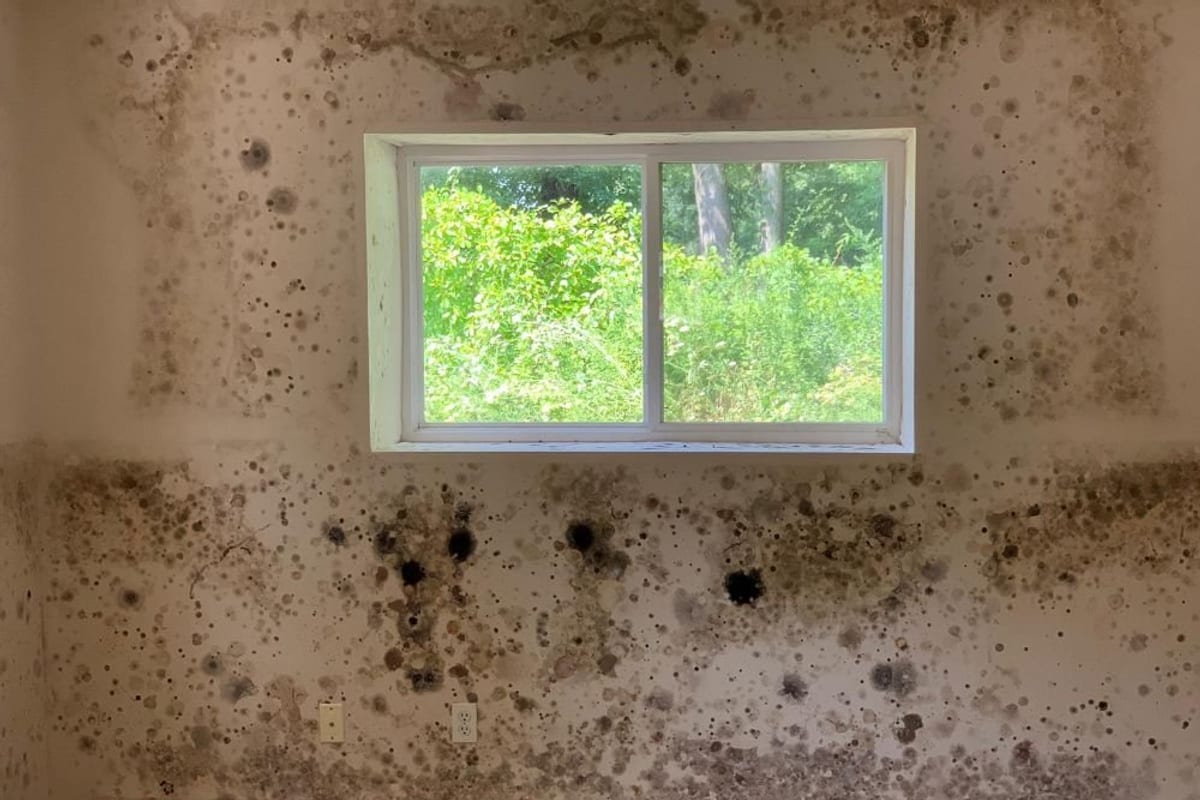
New homes can grow mold because they start out full of construction moisture (wet lumber, curing concrete, drywall mud and paint) and are built tight enough that the moisture has nowhere to go unless the ventilation system is working and the humidity is managed. Most first-year mold problems come from one of those causes, or from a building defect such as missing flashing, and most can be traced and fixed.
This guide covers where moisture in a new house comes from, the places mold shows up first, the humidity targets for the first year, how to check your ventilation, and how to document a problem for a builder warranty claim.
Why a New House Starts Out Wet
A finished house looks dry, but it was built from materials that held a lot of water when they went in.
- Framing lumber. Kiln-dried framing is typically dried to about 19% moisture content or less at the mill. Lumber that sat uncovered on site, or framing that got rained on before the roof went on, can be wetter. It then dries out inside the finished walls over the first months.
- Concrete. A new basement slab and poured foundation walls give off moisture as they cure, and that process continues well after the house is occupied.
- Drywall mud, paint, tile mortar and grout. All water-based, all drying into the indoor air during the first weeks.
- Weather during construction. Framing, subfloor and sheathing that were rained on repeatedly before dry-in can start the job already wet, and sometimes already stained.
None of this is unusual. The problem comes when that moisture is trapped by a tight building with too little ventilation, or when wet materials are closed in before they dry.
Why Tight Houses Need Ventilation
Older homes leaked air through gaps in walls, windows and attics. That wasted energy, but it also let moisture out. New homes are built much tighter under current energy codes. Pennsylvania’s Uniform Construction Code is based on the International Code Council’s model codes, and those codes call for mechanical ventilation in houses built tight enough that natural air leakage is no longer enough.
Common ventilation setups in new homes:
| System | How it works | What to check |
|---|---|---|
| Exhaust-only | Bath fans or a central exhaust fan run continuously or on a timer | Fan actually runs on the schedule; ducts vent outdoors |
| Supply-only | Outside air is ducted into the return of the furnace | Damper opens; control is set and powered |
| HRV or ERV | A dedicated unit swaps stale indoor air for filtered outdoor air and recovers heat | Unit is on, filters are clean, settings are not on “off” or “recirculate” |
A common first-year issue is a ventilation system that is installed but never turned on, or was switched off because it was noisy or nobody explained it. Find the control. It may be a wall switch labeled “fresh air”, a setting on the thermostat, or a timer near a bathroom fan. Read the manual that came with the house.
Where Mold Shows Up First in a New House
The pattern of mold tells you what is driving it.
Basement and slab areas
Curing concrete, a new sump pit and summer humidity make the basement the most common first-year problem area. Look for musty smells, growth on stored cardboard, and white or green fuzz on the bottom of wood stairs, framing or drywall in a finished basement. Our guide on basement mold in older homes covers basement humidity control, and the same 30-50% target applies to new basements.
Attic sheathing
Mold on the underside of the roof deck in a one- or two-year-old house usually points to one of three things: a bath fan duct that ends in the attic, missing air sealing at the ceiling, or blocked soffit vents. Our article on bathroom fans venting into the attic covers the first one.
Framing and sheathing that were wet before the drywall
Sometimes growth is visible on studs or sheathing in photos taken during construction, or in an unfinished basement or garage wall. If wood was closed in while wet, mold can be growing inside walls you cannot see. A mold inspection with moisture readings can tell whether the framing is still wet.
Window and door openings
Missing or reversed flashing at windows lets rain into the wall. Signs from inside include stains below a window corner, peeling paint on the sill, or a swollen baseboard under the window. Our guide on mold under vinyl siding and house wrap explains how flashing is supposed to work.
Closets and exterior corners
Cold spots on outside walls can collect condensation in the first winter if the house is still drying out and humidity runs high. See our guide on winter condensation mold on walls.
Humidity Targets for the First Year
Keep indoor relative humidity between 30% and 50%, the range the EPA recommends, and keep it at the lower end in cold weather. Put two or three inexpensive digital hygrometers around the house: one in the basement, one on the main floor and one upstairs.
What to do in the first year:
- Run the ventilation system as designed. If you are not sure how it works, ask the builder or the HVAC installer to walk you through it.
- Run a dehumidifier in the basement from late spring through early fall. New concrete plus Pennsylvania summer humidity can push a basement past 60% quickly.
- Use bath fans during and after showers, for about 20 minutes.
- Use the range hood when cooking and confirm it vents outside rather than recirculating.
- Avoid humidifiers in the first winter until you have seen what the house does on its own.
- Watch the windows. Heavy condensation on new double-pane windows in winter is a sign indoor humidity is too high.
Expect humidity to settle down after the first year or two as construction moisture finishes drying out.
What Is Normal and What Is Not
| Observation | Usually normal | Worth investigating |
|---|---|---|
| Slight musty “new house” smell that fades | Yes | If it gets stronger or concentrates in one room |
| Some window condensation on the coldest nights | Yes | Water pooling on sills or running down the glass most mornings |
| Basement RH 55% in summer | Manageable with a dehumidifier | Above 60% with the dehumidifier running |
| Small nail pops and drywall cracks | Yes, from lumber drying and settling | Cracks with stains or soft drywall |
| Gray or dark staining on framing seen during construction | Often surface staining from weather | Fuzzy growth, or wood above about 19% moisture content when walls are closed |
| Water stain on a ceiling or below a window | No | Yes, always |
Builder Warranties and Documentation
Most new homes come with a written builder warranty, often structured with a shorter term for workmanship, a longer term for systems such as plumbing and HVAC, and the longest term for major structural defects. Read yours carefully. Many builder warranties limit or exclude mold itself while still covering the water intrusion or defect that caused it. Some require you to report problems in writing within a set time.
In general terms, Pennsylvania courts have also recognized an implied warranty that a new home built and sold by a builder will be reasonably fit to live in, and the Home Improvement Consumer Protection Act generally does not apply to the construction of a new home. How those rules apply to a particular house depends on the contract and the facts. This is general information, not legal advice. Talk to a Pennsylvania attorney about a specific dispute.
What to document
- Photos of the mold, stains, windows and any water, with dates.
- Hygrometer readings over at least a week or two.
- Ventilation settings and whether the system was running.
- A written notice to the builder, sent the way the warranty requires, describing what you found and when.
- An independent inspection report if the builder disputes the cause. A report that identifies the moisture source is more useful than lab results alone. Our guide on mold inspection vs. mold testing explains the difference.
Do not tear out drywall or have major work done before the builder has had a chance to see the problem, unless there is an active leak or a health concern that cannot wait. If you must act fast, photograph everything first and keep removed materials or samples if you can.
Local Context
New construction is a smaller share of the housing stock in older parts of Adams County. U.S. Census Bureau ACS 2020-2024 5-year estimates put the median year built at 1980 for Adams County overall, and at 1993 in Carroll Valley borough and 1988 in Lake Heritage, two of the area’s newer communities. Even a house that is a few decades old can have the same issues described here after a major renovation, an addition, or new windows and air sealing that made it tighter than it used to be.
Frequently Asked Questions
Is it normal to find mold on framing during construction?
Gray or dark weather staining on lumber is common and usually cosmetic. Active, fuzzy growth or wood that reads wet on a moisture meter is not something to close inside a wall. Ask the builder to dry and clean it before insulation and drywall go in, and photograph it.
Why does my new house have more condensation than my old one?
The new house is tighter and still giving off construction moisture. Indoor humidity builds up faster unless the ventilation system runs. Check the ventilation controls and measure humidity before assuming the windows are defective.
Does a builder warranty cover mold?
It depends on the written warranty. Many limit or exclude mold itself but cover the defect that let water in, such as a flashing or plumbing problem. Read the warranty and report problems in writing within the deadlines it sets. This is general information, not legal advice.
Should I get mold testing in a new home?
Usually an inspection that finds the moisture source is more useful. Testing can help if you need documentation for a builder dispute or want to confirm a cleanup worked. The EPA’s guide to mold, moisture and your home explains why moisture control comes first.
Getting a New Home Checked
If you are seeing mold, stains or persistent musty smells in a newer home, a mold inspection with moisture mapping can identify the source and give you documentation to share with your builder. Contact us to schedule one.