
Musty Smell in the House but No Visible Mold? How to Find the Source
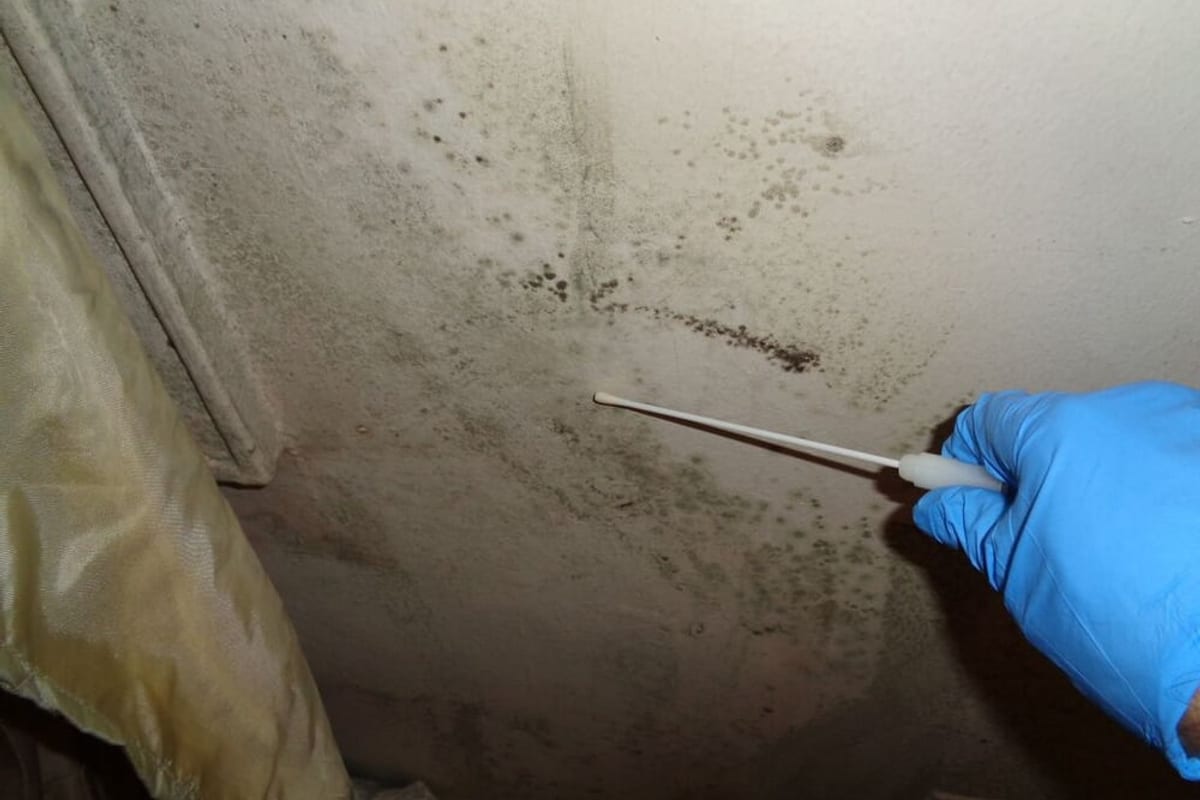
A musty smell with no visible mold usually means something is growing where you cannot see it, most often behind a finished surface, under flooring, or in a basement, crawl space, or HVAC component. The smell itself is a clue. Follow it, check moisture at each stop, and you can usually narrow it to one room or one wall before anyone opens anything up.
This guide covers what actually causes a musty odor, what else smells similar, a room-by-room search order, the tools that help, and when the search should move to a professional inspection.
What You Are Smelling
Actively growing mold gives off gases called microbial volatile organic compounds, or MVOCs. They are byproducts of mold digesting wood, paper, dust, and other organic material. One common example is 1-octen-3-ol, which has a mushroom-like smell. Others smell earthy, stale, or like a damp cellar.
Three things about MVOCs make them useful for tracking hidden mold:
- They travel. Gases move through gaps in drywall, outlet boxes, baseboards, and floor penetrations, so you can smell growth that is sealed inside a wall cavity.
- They get stronger with moisture and warmth. A smell that comes and goes with humid weather, rain, or the heat turning on is pointing at a moisture-driven source.
- They are strongest near the source. The smell fades with distance and dilution, so you can follow the gradient.
The U.S. Environmental Protection Agency (EPA) treats a moldy smell as a sign of possible mold even when nothing is visible. Its mold resources note that if you can smell mold, sampling is often unnecessary, and the job is to find and fix the moisture.
Musty Smells That Are Not Hidden Mold
Before tearing into walls, rule out the common lookalikes. Some of these are mold or bacteria, just in an obvious place.
| Smell source | What it smells like | Quick check |
|---|---|---|
| Front-load washer door gasket | Sour, mildewy | Pull back the rubber seal and look for black residue and standing water |
| Dishwasher filter and drain | Stale, sour | Remove and rinse the filter at the bottom of the tub |
| Wet towels, laundry, gym bags | Mildew | Smell goes away when they are washed and dried |
| AC drain pan or condensate line | Musty, worse when cooling runs | Look at the pan under the indoor coil for standing water or slime |
| Dry floor drain or unused sink trap | Sewer gas, rotten egg | Pour a quart of water in the drain; the smell should clear within a day |
| Old books, papers, stored fabric | Stale, dusty | Smell concentrated at one box or shelf |
| Rodent nest or dead animal | Sharp, sweet, or ammonia | Droppings, smell localized and often stronger in warm weather |
Sewer gas and a dead animal are worth separating out early, because they are often described as musty but need a plumber or a pest professional, not a mold search.
How to Track the Smell Room by Room
Work from the bottom of the house up, and do it after the house has been closed for several hours. First thing in the morning, or after you come home from a day away, is when your nose is most sensitive to the difference between rooms.
1. Basement and crawl space
This is where most whole-house musty odors start. Warm air rises through a house and pulls basement and crawl space air up through gaps around pipes, ducts, and floor framing. That is called the stack effect, and it means a musty first floor can be a basement problem.
Look and sniff at:
- The rim joist and sill plate where the floor framing sits on the foundation.
- The underside of the subfloor, especially under bathrooms and the kitchen.
- Finished walls, carpet, and paneling against foundation walls.
- Cardboard boxes stored on the floor or against stone or block walls.
- The sump pit and any floor drain.
If the house sits over a crawl space, the access hatch is a good place to test. A stronger smell when you open it is a strong lead. Our guide to basement mold in old Gettysburg homes explains how to tell efflorescence on stone walls from actual growth.
2. Kitchen
Check the sink base cabinet, behind and under the dishwasher, under the refrigerator (including the drain pan and any ice maker line), and the floor in front of the sink. A slow drip from a supply line or drain can soak a cabinet floor for months without showing on the outside. See our mold under the kitchen sink guide for what to look for there.
3. Bathrooms
Smell around the toilet base, the tub or shower access panel if there is one, and the vanity cabinet. A wax ring that has failed can wet the subfloor under the toilet without a visible puddle. Press on the floor next to the toilet. A soft or spongy feel means the subfloor has been wet for a while.
4. Bedrooms and closets
Closets on exterior walls are a frequent source, because the wall is cold, the door stays shut, and stored items block air from reaching it. Pull a few items away from the back wall and check the lower corners. Our guide to mold in closets goes into this in detail.
Also check behind beds, dressers, and bookcases that sit tight against an outside wall.
5. HVAC system
Turn the system fan on with heating and cooling off and stand near a supply register. If the smell gets stronger when air is moving, look at the air handler, the drain pan, the filter, and any ductwork that runs through the basement, crawl space, or attic. A separate guide on mold in air ducts covers the signs that point to the system itself.
6. Attic and top-floor ceilings
A musty smell upstairs, especially in winter, can come from frost and condensation on the roof sheathing. Look at the underside of the roof deck near the eaves and around bathroom fan ducts.
Narrowing It to One Wall
Once you have a room, these checks help pin down the wall or floor area:
- Outlet and switch plates. With the power off at the breaker, remove a cover plate and smell at the gap. Air inside the wall cavity comes out there.
- Baseboards. Smell along the joint between baseboard and floor. Look for swelling, staining, or gaps in the caulk.
- Behind the furniture. Pull large pieces away from the wall and check the wall and the back of the furniture.
- Under area rugs and at carpet edges. Lift a corner in a closet or along the wall and check the pad and tack strip.
Note what is on the other side of that wall. A wall that backs onto a bathroom, a laundry room, or an outside hose bib is a stronger suspect than one between two bedrooms.
Tools That Help
| Tool | What it tells you | Approximate role |
|---|---|---|
| Digital hygrometer | Room relative humidity (RH) | Confirms whether the air is damp enough to grow mold |
| Pinless moisture meter | Damp spots behind a wall surface | Scans a wall without making holes |
| Pin moisture meter | Moisture content of wood and trim | Confirms a reading at one spot |
| Flashlight and mirror | Under cabinets, behind appliances | Gets a look into tight spaces |
| Thermal camera | Surface temperature patterns | Points to cool, possibly wet areas; does not see mold |
Keep indoor relative humidity between 30% and 50%. That is the range the EPA recommends in A Brief Guide to Mold, Moisture and Your Home. If a basement or bedroom sits above 60% for days at a time, that alone can grow mold on cool surfaces with no leak involved.
Why the Smell Comes and Goes
Homeowners often say the smell is bad one week and gone the next. That pattern is information.
- Worse after rain: points to a foundation, window, roof, or flashing leak.
- Worse in humid summer weather: points to basement or crawl space humidity, or AC condensate.
- Worse when the heat first comes on: points to dust and growth in ductwork or the air handler, or to a damp basement where the furnace pulls air.
- Worse after showers or laundry: points to a bathroom, laundry vent, or plumbing leak.
- Always there, strongest in one spot: points to an active leak or long-term wet material at that spot.
What Not to Do
- Do not cover the smell. Air fresheners, candles, and plug-in scent products hide the clue you need and do nothing about the moisture.
- Do not cut holes at random. Opening a wall without knowing where the moisture is creates repair work and can spread spores if there is growth inside.
- Do not spray bleach into wall cavities. Bleach does not reach mold growing into drywall paper or wood, and it adds water. The EPA recommends physically removing growth and drying the material instead.
- Do not rely on a store-bought test dish. A settle plate grows something in almost every home and cannot tell you where the source is.
When to Call for an Inspection
A professional inspection is the right next step when:
- The smell has lasted more than a couple of weeks and you have ruled out the lookalikes.
- You know about a past leak, flood, or roof problem in the area.
- Moisture meter readings are high on a finished wall, but nothing is visible.
- Someone in the home has asthma, allergies, or symptoms that ease when they leave the house. The CDC’s mold and health pages describe the common reactions.
- You are buying or selling the house and need documentation.
A good inspector will spend most of the visit on moisture: readings, thermal imaging where it helps, and a look at the basement, attic, and plumbing. If the source is still unclear, a wall cavity air sample, taken through a hole about the size of a pencil, can confirm hidden growth before any wall is opened. Our guide to mold inspection vs. mold testing explains when lab work is worth paying for.
A Note on Older Gettysburg Homes
According to U.S. Census Bureau ACS 2020-2024 5-year estimates, 47.5% of housing units in Gettysburg borough were built before 1940, and the median year built is 1942. Many of those homes have stone or early block foundations, plaster walls, and decades of plumbing changes. Those features do not mean a house has mold. They do mean there are more places for moisture to hide, so a methodical search matters more than a quick look.
Frequently Asked Questions
Can you smell mold that is inside a wall?
Yes. Growing mold releases gases that pass through outlet boxes, gaps at baseboards, and small cracks. The smell is usually strongest near the affected wall and gets stronger in humid weather or after the area gets wet again.
Is a musty smell dangerous by itself?
The smell is a sign of mold or bacterial growth, not a measurement of exposure. Some people react to damp, moldy indoor air with stuffy noses, coughing, or wheezing, and people with asthma can be more sensitive. The practical step is to find and fix the source rather than live with it.
Why does my house smell musty only in summer?
Summer air in south-central Pennsylvania carries a lot of moisture. When that air reaches a cool basement, crawl space, or air-conditioned room, relative humidity rises, and dust and materials there can support growth. A hygrometer reading above 60% points to humidity rather than a leak.
Will a dehumidifier get rid of a musty smell?
It can, if the cause is high humidity and the growth is light and on surfaces. If the smell comes from a leak, wet framing, or growth inside a wall, a dehumidifier slows things down but does not remove the source. The wet material still has to be found, dried or replaced, and cleaned.
If the smell is persistent and you cannot pin it down, our mold inspection and testing service starts with moisture readings and a room-by-room walk-through, and tells you what we find in writing. Contact us to schedule a visit in Gettysburg or nearby Adams County.