
Attic Mold in Gettysburg Homes: Causes, Warning Signs, and Fixes
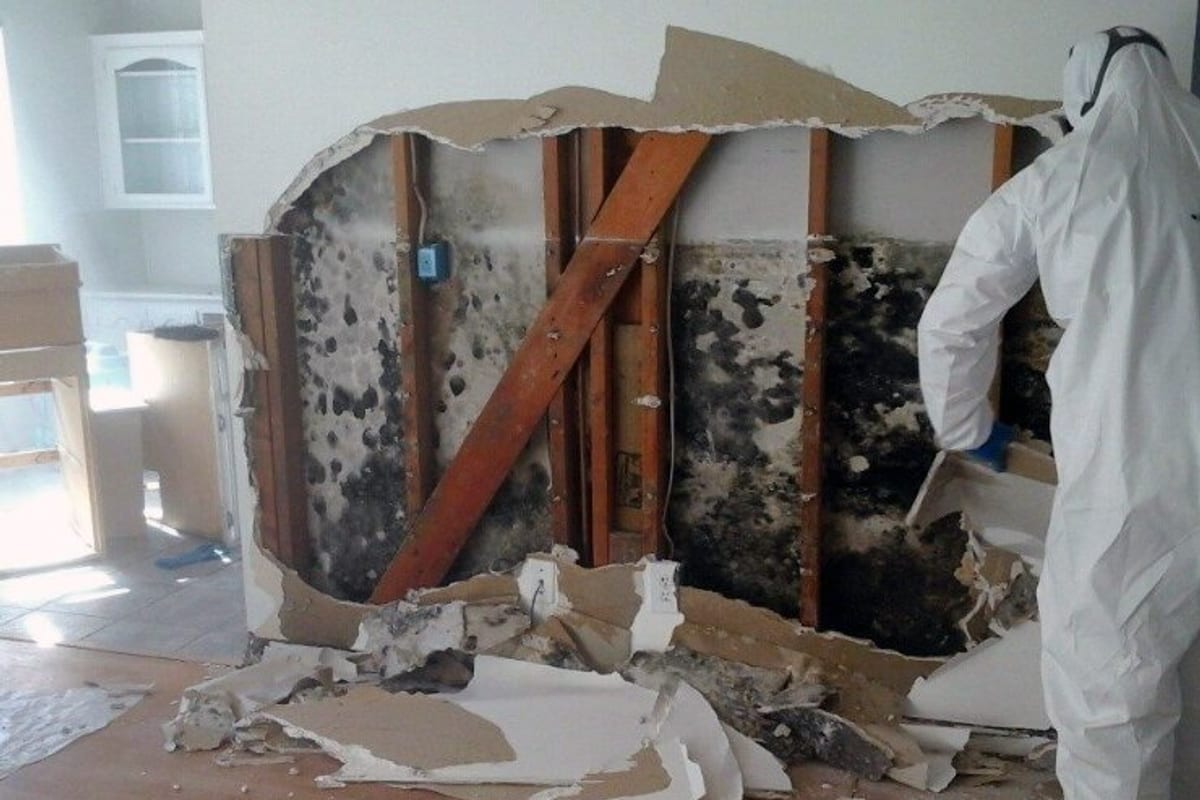
Attic mold in Gettysburg homes usually starts in winter, when warm, humid air from the living space leaks into a cold attic and condenses on the underside of the roof sheathing. The wood stays damp for weeks at a time, and mold grows on it. A roof leak can cause the same thing, but in most attics we inspect the roof is fine. The water came from inside the house.
That changes the fix. New shingles will not stop condensation mold, and neither will spraying the sheathing. This guide explains how attic mold forms, the 7 warning signs, how to tell old staining from active growth, and the fixes that keep it from coming back.
How Attic Mold Forms
Mold needs 3 things: moisture, something to feed on, and time. Roof sheathing (plywood or oriented strand board, called OSB), rafters, and insulation facing are all food, and few people check the attic more than once every few years. Moisture is the one factor you can control.
Condensation: the most common cause
Warm air holds more water vapor than cold air. When it touches a surface colder than its dew point, the vapor turns back into liquid water. In a Gettysburg winter, the roof sheathing can be well below freezing on a clear night. The air in the house, meanwhile, carries moisture from cooking, showers, laundry, houseplants, and breathing. When that air leaks upward into the attic, it hits the cold sheathing and condenses. On very cold nights it freezes as frost. When the sun warms the roof, the frost melts and soaks into the wood.
A few weeks of that cycle is enough for mold to start. The north side of the roof is usually worst, because it gets the least sun and stays cold and damp the longest.
Where the moist air comes from
Warm air rises, so a house naturally pushes air up toward the attic. This is called the stack effect. The air finds its way through every gap in the ceiling below:
- Recessed ceiling lights, especially older ones that are not rated as airtight.
- The attic hatch or pull-down stairs, which are often just a loose panel with no weatherstripping.
- Gaps around plumbing vent stacks, electrical wires, and flues where they pass through the top plate.
- Ceiling fans, light fixture boxes, and bathroom exhaust fan housings.
- Open chases around chimneys and duct runs in older homes.
In older Gettysburg homes, additions and several rounds of renovation often leave gaps nobody sealed. Each is small; together they move a lot of moist air.
Bathroom and kitchen fans that vent into the attic
A bathroom fan that blows into the attic instead of outdoors is one of the fastest ways to grow attic mold. Every shower sends warm, saturated air straight onto the sheathing. We often find fans with no duct, ducts that stop short of the roof, ducts that have come loose, or ducts aimed at a soffit vent where the air gets pulled right back in. Building codes require bath, kitchen, and dryer exhaust to discharge outdoors, not into an attic.
Poor ventilation
Attic ventilation lets outside air flow in low, at the soffits or eaves, and out high, at a ridge vent or roof vents. That airflow carries away moisture that does get into the attic. Common problems in Gettysburg homes include:
- Blocked soffit vents. Insulation blown into the attic often gets pushed against the eaves and closes off the intake. Many older homes had no soffit vents to begin with.
- Unbalanced ventilation. A ridge vent with no matching intake cannot pull air through the attic properly.
- Mixed vent types. A powered attic fan or gable vents combined with a ridge vent can short-circuit the airflow.
Ventilation helps, but if a lot of moist air leaks up from the house, even a well-vented attic stays damp. Air sealing comes first.
Roof leaks and ice dams
Roof leaks cause attic mold too, usually in one spot around a chimney, plumbing boot, skylight, or valley. Ice dams form when heat escaping into the attic melts snow that refreezes at the cold eaves and backs water under the shingles. They come from the same heat and air leaks that cause condensation mold.
7 Warning Signs of Attic Mold
You do not need to crawl across the joists to spot most of these. Look from the hatch with a strong flashlight, and do not step anywhere except on framing members.
- Dark gray, black, or green staining on the roof sheathing, often heavier on the north side and between the rafters.
- Frost on the underside of the sheathing or on nail tips on a cold winter morning. Protruding nails that frost over are sometimes called “sweating nails,” because they drip when they thaw.
- Rusty nails, rust streaks, or rust stains on the sheathing or on the insulation below the nails.
- Damp, matted, or stained insulation, especially under the nails or near the eaves.
- A musty smell in the attic, or on the top floor of the house when the heat or air conditioning runs.
- Water stains on top-floor ceilings, particularly near exterior walls.
- Ice dams or long icicles along the eaves in winter, which point to heat and air escaping into the attic.
Two or three of these together almost always mean an attic moisture problem.
Old Stains or Active Mold?
Black staining on roof sheathing is not always active mold. Some of it is old growth that went dormant years ago after a leak was fixed or a fan was re-ducted. Some is just discoloration in the wood. The question that matters is whether the wood is still getting wet.
An inspector checks this with a moisture meter. Dry framing lumber in a heated house usually reads somewhere around 8% to 15% moisture content. Wood that stays above about 19% to 20% for long periods supports mold growth and eventually decay. Readings taken in winter, when condensation is happening, are the most telling. A reading taken on a warm, dry afternoon in September can make a wet attic look fine.
Active growth often looks fuzzy or raised, staining thickest at the nails or above a bath fan points to an ongoing source, and a musty smell means something is still growing. A mold inspection puts these clues together.
For a deeper look at when sampling helps and when it does not, read our guide on mold inspection vs. mold testing.
Is Attic Mold Dangerous?
It can be. Air moves between the attic and the house through leaky ceilings and attic ductwork, so spores and odors can reach the rooms below. Mold can cause stuffy noses, coughing, and itchy eyes in sensitive people and can trigger asthma attacks. Our guide on black mold signs and health effects covers what the CDC says. Wood that stays wet also softens and rots, and weakened sheathing may need replacing.
How to Fix Attic Mold for Good
The order matters: stop the moisture, remove the mold, then keep the attic dry. Cleaning first and fixing the cause later just means cleaning twice.
Step 1: Find and stop every moisture source
- Re-duct exhaust fans. Every bath and kitchen fan should connect to an insulated duct that runs to a dedicated roof or wall cap with a damper. Seal the joints with foil tape or mastic, not cloth duct tape.
- Air seal the ceiling. Seal gaps around wires, pipes, and flues with caulk or spray foam. Use fire-rated sealant and metal flashing around chimneys and hot flues. Weatherstrip and insulate the attic hatch or install an insulated cover over pull-down stairs. Replace old recessed lights with airtight-rated fixtures or cover them with approved boxes.
- Repair roof leaks around chimneys, boots, skylights, and valleys.
The U.S. Department of Energy’s air sealing guidance walks through the common leak points in more detail.
Step 2: Remove the mold
Remediation follows the Institute of Inspection, Cleaning and Restoration Certification (IICRC) S520 standard and U.S. Environmental Protection Agency (EPA) guidance. The principle is simple: physically remove mold growth; do not just cover it up.
For attic sheathing and framing, that usually means:
- Containing the attic so dust and spores do not drift into the living space, often with negative air pressure and a high-efficiency particulate air (HEPA) air scrubber.
- Removing wet or heavily contaminated insulation and bagging it inside the attic.
- Cleaning the wood by HEPA vacuuming and then removing growth mechanically: wire brushing, sanding, or media blasting with dry ice or baking soda for larger areas.
- Replacing any sheathing that is soft, delaminated, or rotted.
- HEPA vacuuming all surfaces again once removal is done.
Spraying a sealant or “encapsulant” over active growth is not a substitute for removal. Coatings belong on wood that has already been cleaned and dried. If a quote only mentions spraying, ask what happens to the growth already there. Our mold removal cost guide explains why quotes for the same attic can vary so widely.
Step 3: Fix the ventilation and insulation
Once the attic is clean and the air leaks are sealed:
- Open up the intake. Install baffles (rafter vents) at each rafter bay along the eaves so insulation cannot block the soffit vents.
- Balance intake and exhaust. A common target is equal or slightly more intake than exhaust. Building codes set minimum net free vent areas, and a roofer or remediation contractor can size them for your roof.
- Add insulation last. Adding insulation after air sealing keeps the attic floor warm and the attic cold, which is what you want. Adding insulation without sealing first can make condensation on the sheathing worse, because the attic gets colder while moist air keeps leaking in.
Step 4: Manage indoor humidity
EPA recommends keeping indoor relative humidity below 60%, ideally between 30% and 50%, and in winter the lower end is easier on a cold attic. Run bath fans during showers and for about 20 minutes after, use the range hood, and turn a humidifier down if windows fog on cold mornings.
Can You Clean Attic Mold Yourself?
EPA says a homeowner can usually clean a mold area smaller than about 10 sq ft (0.9 m²). Attics are harder than a bathroom wall: growth is usually larger than it looks, overhead work on rough wood spreads dust, you can step through the ceiling, and old vermiculite insulation may contain asbestos. For a small spot, wear an N95 respirator, goggles, and gloves, HEPA vacuum instead of dry-brushing, and skip bleach, which does not reach mold in the wood grain. For anything larger, call for professional attic mold remediation.
Attic Mold, Insurance, and Selling a Home
Homeowners insurance usually does not cover attic mold from condensation or poor ventilation, because insurers treat it as gradual damage. Mold after a sudden, covered event such as storm damage may be treated differently, often up to a limit. Our guide on mold after water damage covers what to document.
Home inspectors check attics, so staining often surfaces during a sale. Pennsylvania’s Seller Disclosure Law requires sellers to disclose known material defects. Sellers should fix the cause and keep the paperwork; buyers should ask whether the moisture source was fixed, not only whether the mold was treated.
When to Call a Professional
Call for a professional assessment when:
- Staining or growth covers more than a few rafter bays.
- Frost, dripping nails, or wet insulation show up in winter.
- The sheathing feels soft or the roof deck sags between rafters.
- Bath or dryer fans vent into the attic, or you cannot tell where they vent.
- Anyone in the home has asthma, allergies, or a weakened immune system.
- You are buying or selling and need documentation.
Our crews handle attic mold across Gettysburg and the surrounding service areas, from Historic Gettysburg’s older roofs to newer homes in Cumberland and Straban Townships. We find the moisture source, contain the attic, remove the growth, and put the cause in writing. That is the same process our Gettysburg Mold Remediation Pros team uses on every job. Contact us to schedule an on-site estimate.
Frequently Asked Questions
Why is attic mold usually worse on the north side of the roof?
The north side gets the least sun, so it stays coldest and dries out slowest. Condensation and frost form there first and last the longest. On the south side, the sun warms the sheathing and dries it out more often, which gives mold less time to grow.
Does a new roof get rid of attic mold?
No. A new roof replaces the shingles and sometimes the sheathing, but if moist air keeps leaking up from the house, the new sheathing can start growing mold within a few winters. Air sealing, correctly vented exhaust fans, and balanced ventilation are what prevent it.
Can attic mold spread into the rest of the house?
It can affect indoor air. Air moves between the attic and the living space through ceiling gaps, light fixtures, and attic ductwork, so spores and odors can reach the top floor. That is one reason containment matters during removal, and why air sealing helps even after the mold is gone.
How long does attic mold remediation take?
Most attic jobs take 1 to 3 days, depending on the size of the attic, how much insulation has to come out, and whether any sheathing needs replacing. Air sealing, re-ducting fans, and reinstalling insulation can add time. Clearance checks happen before the attic is closed up.