
Why Old Gettysburg Basements Grow Mold (and How to Stop It)
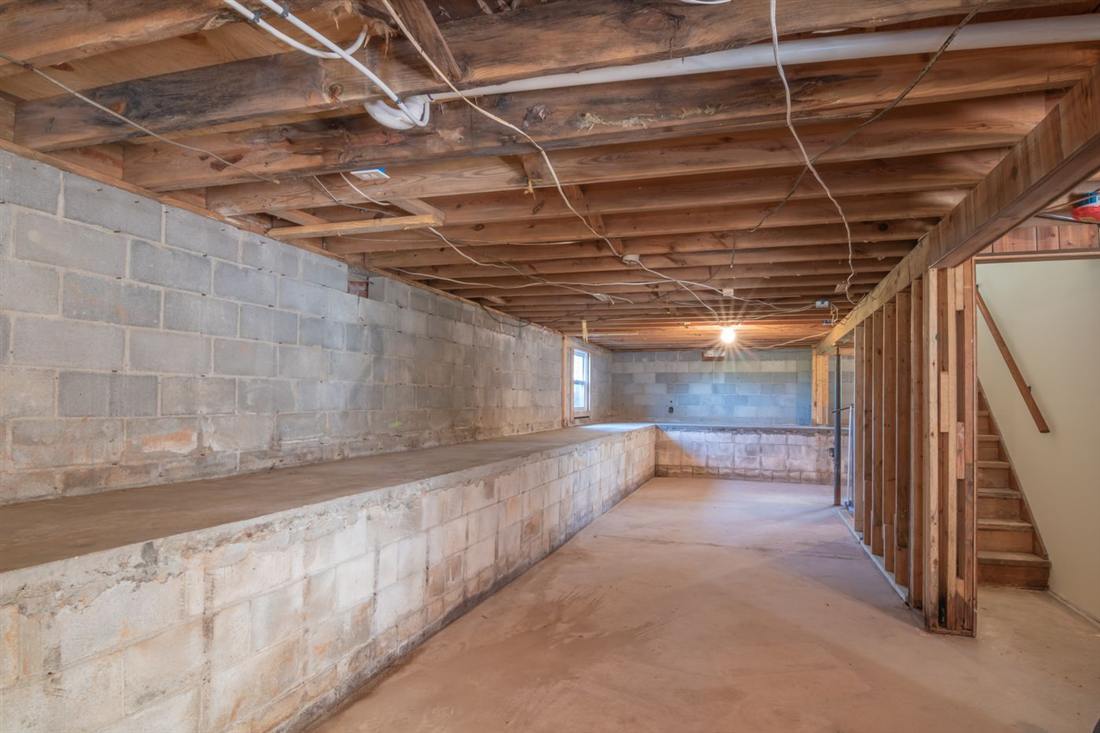
Old Gettysburg basements grow mold because their stone and block foundation walls let ground moisture through, and humid summer air condenses on those cool walls. Many homes in Gettysburg and across Adams County were built before 1940 on fieldstone, rubble stone, or early concrete block foundations. Those walls were never designed to stay dry. Add about 43 inches (≈1,090 mm) of precipitation per year and humid summers, and a basement can hold enough moisture for mold to grow on wood, stored boxes, and finished walls.
This guide covers why it happens, the humidity number to aim for, the 6 exterior and interior fixes that matter most, and when basement mold needs professional mold remediation Gettysburg homeowners can schedule.
Why Pre-1940 Foundations Hold Moisture
Stone and early block walls have no waterproofing membrane, no footing drain, and many open joints. Builders in the 1800s and early 1900s laid fieldstone or rubble stone with lime mortar. Lime mortar is soft and porous by design. Over a century, it erodes and leaves gaps where water and water vapor pass through.
Early concrete block has a similar problem. The hollow cores fill with water after heavy rain and release moisture into the basement for days. Neither type of wall has the exterior damp-proofing and perimeter drains that modern building codes require.
The 3 ways water gets in
Water reaches an old basement in 3 ways:
- Liquid water from rain and snowmelt that pools against the foundation and seeps through joints.
- Capillary moisture, where water wicks up through stone, block, and a slab poured with no vapor barrier.
- Condensation, where warm, humid outdoor air enters the basement and hits walls and pipes that are cooler than the air’s dew point.
The third source surprises many homeowners. Opening basement windows on a humid July day often adds moisture instead of removing it.
What Basement Mold Looks Like
Basement mold shows up in 5 common places:
- On floor joists, sill plates, and the underside of the subfloor.
- On the paper facing of drywall in finished basements, often low on the wall.
- On cardboard boxes, books, and fabric stored against a wall or on the floor.
- Behind paneling and carpet padding.
- On the back of furniture pushed tight to a foundation wall.
White, fluffy growth on a stone or block wall is often efflorescence, not mold. Efflorescence is mineral salt left behind as water evaporates. It feels crystalline and dissolves in water. Mold is fuzzy or slimy, grows on organic material, and smells musty. Efflorescence still tells you water is moving through the wall.
A musty smell with no visible growth usually means mold is hidden behind a finished wall, under carpet, or inside a wall cavity. A mold inspection with moisture readings can find it without opening walls at random.
The Humidity Target for a Gettysburg Basement
Keep basement relative humidity between 30% and 50%, and never let it sit above 60%. That is the Environmental Protection Agency (EPA) recommendation for indoor air, and it applies to basements too. Mold needs moisture to grow, and sustained humidity above 60% gives it that moisture on cool basement surfaces.
Buy an inexpensive digital hygrometer and place it near the center of the basement. Check it in the morning and evening for a week in July or August, when Gettysburg humidity is usually at its highest.
Choosing a basement dehumidifier
A basement dehumidifier works best when it:
- Is sized for the basement’s square footage and dampness.
- Drains continuously to a floor drain, sump pit, or condensate pump, so it never stops when a bucket fills.
- Has a built-in humidistat set to about 45–50%.
- Sits away from walls, with the filter cleaned on the manufacturer’s schedule.
Keep basement windows and doors closed on humid days while the dehumidifier runs.
6 Fixes That Keep Water Out
Fix the moisture source first, because mold returns on any surface that stays damp. These 6 fixes run roughly from least expensive to most expensive.
1. Clean and repair gutters
Clogged or leaking gutters dump roof water right at the foundation. Clean them each fall after the leaves drop and each spring. Tighten sagging sections and seal leaking seams.
2. Extend downspouts
Downspouts should discharge at least 4–6 ft (1.2–1.8 m) from the foundation. Inexpensive extensions or splash blocks are often enough. Make sure the discharge flows away from the house and not toward a neighbor’s.
3. Correct the grading
Soil next to the house should slope away from the foundation. A common building code target is a fall of 6 inches (15 cm) over the first 10 ft (3 m). Many older Gettysburg lots have settled over the decades, so flower beds and walkways now tilt toward the wall.
4. Seal window wells and exterior openings
Add clear covers to window wells, clear debris from the well floor, and seal gaps where pipes, wires, and the oil or gas line pass through the foundation.
5. Maintain or add a sump pump
If the basement already has a sump pump, test it by pouring a bucket of water into the pit. Check that the discharge line runs well away from the house. A battery backup keeps the pump working during a power outage in a summer storm. A basement that takes on water after heavy rain may need an interior drain and sump system installed by a waterproofing contractor.
6. Repoint stone foundation walls
Eroded lime mortar can be repointed. Use a mortar compatible with historic stone. Hard modern cement mortar can trap moisture and damage old stone. Homes in the Gettysburg Historic District may need extra care with exterior work, so check local requirements before starting.
Should You Finish an Old Stone Basement?
Not until the basement stays dry through a full year of seasons. Drywall, carpet, and wood framing against a damp stone wall give mold organic material to grow on, and they hide the problem until it is large. If you do finish the space, leave a gap between the stone and the framing, use moisture-tolerant materials near the floor, and keep a dehumidifier running.
When to Call a Professional
Small areas of mold on hard surfaces can be cleaned by a homeowner. The EPA says you can usually handle an area smaller than about 10 sq ft (0.9 m²) yourself, using detergent and water on hard surfaces, gloves, eye protection, and an N95 respirator.
Call for professional basement mold remediation when:
- Growth covers more than about 10 sq ft (0.9 m²).
- Mold is on finished drywall, insulation, or carpet that has to come out.
- Joists, sill plates, or subfloor show growth or soft, damaged wood.
- The basement flooded or took on sewage or groundwater.
- Anyone in the home has asthma, allergies, or a weakened immune system.
If your home has a crawl space instead of, or in addition to, a basement, read about crawl space mold remediation. Crawl spaces in older Adams County homes share the same moisture sources.
Our mold remediation Gettysburg PA process follows the Institute of Inspection, Cleaning and Restoration Certification (IICRC) S520 standard and EPA guidance: find the moisture source, contain the area, remove affected porous materials, clean framing with high-efficiency particulate air (HEPA) vacuums, and dry the space before rebuild. Contact us for a free phone consultation.
For more background, the EPA’s mold resources cover moisture control and cleanup in plain language.
Frequently Asked Questions
Is some moisture normal in an old stone basement?
Yes. A fieldstone or rubble stone basement will rarely be as dry as a modern poured-concrete basement with exterior waterproofing. The goal is to keep relative humidity below 60%, keep liquid water out, and keep organic materials off the walls and floor.
Will painting the basement walls stop mold?
No. Waterproof paint or sealer does not stop water pressure from outside, and on stone walls it can trap moisture and cause the paint to peel. Fix gutters, grading, and drainage first. Paint does not remove existing mold.
Should I use bleach on basement mold?
The EPA recommends detergent and water for mold on hard surfaces, followed by complete drying. Bleach does not reach mold inside porous materials such as wood and drywall. Never mix bleach with ammonia or other cleaners, because the combination releases toxic fumes.
How do I know if basement mold is under the carpet?
A musty smell, a damp or cool feel underfoot, and staining at the carpet edge are the common signs. Pull back a corner in a closet or along a wall to check the pad and tack strip. Wet carpet pad usually needs to be thrown out.