
Mold on a Finished Basement Ceiling: Bathrooms Above, Sweating Ducts and Hidden Pipes
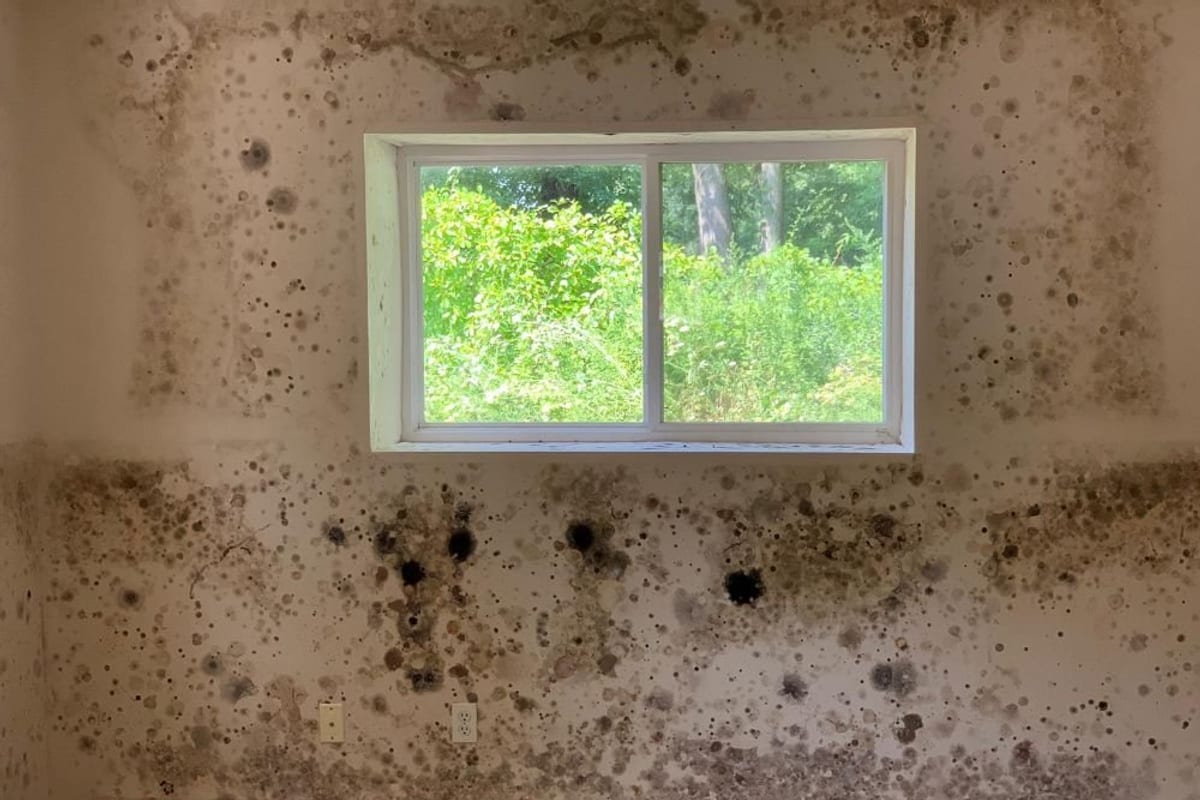
Mold on a finished basement ceiling almost always comes from above or from inside the ceiling cavity: a leak from a bathroom, kitchen or laundry on the floor above, or condensation on cold water pipes and air conditioning ducts running between the joists. Unlike an upstairs ceiling, a basement ceiling has no roof or attic over it, so roof leaks are rarely the cause. The cavity above a basement ceiling is usually packed with plumbing, ductwork and wiring, which is exactly why it gets wet.
This guide covers the common causes of basement ceiling mold, how to tell them apart by pattern and season, how to inspect drywall and drop ceilings, what can be cleaned and what must be replaced, and how to design the ceiling so the next problem is easier to catch.
For mold on ceilings elsewhere in the house, where roof leaks and attic condensation are common, see our guide to mold on the ceiling.
What Is Above a Basement Ceiling
When a basement is finished, the ceiling closes off the space between the floor joists. That space often holds:
- Supply and drain lines for the kitchen, bathrooms and laundry above.
- The main water line and branch lines.
- Heating and air conditioning supply and return ducts.
- Refrigerator ice maker lines.
- Electrical wiring and junction boxes.
- In many homes, the subfloor and the underside of finished floors above.
Every one of those can leak or sweat. Once the ceiling is closed, you cannot see them.
The 5 Common Causes
1. Leaks from a bathroom above
A stain directly below a bathroom is the most common basement ceiling mold pattern. Common sources:
- Toilet wax ring. A failing seal leaks a little water every flush. Stains below the toilet, often in a circle around the flange.
- Tub and shower drains. Leaks only when the drain is used.
- Shower pan or tile. Water seeps through failed grout, caulk or the pan and soaks the subfloor. Stains grow slowly.
- Supply lines to the toilet, sink or shower valve.
- Overflow from tubs and toilets, or splash onto the floor that seeps through gaps around the tub.
2. Kitchen and laundry leaks
- Dishwasher supply and drain lines.
- Refrigerator ice maker lines, often a thin tube that can crack or loosen.
- Sink drains and supply lines. See mold under the kitchen sink for that cabinet.
- Washing machine hoses and the drain standpipe.
3. Sweating air conditioning ducts
In summer, air conditioning supply ducts carry air in the 50s°F. If the ducts are not insulated, and the basement air has a higher dew point than the duct surface, water condenses on the outside of the duct. It drips onto the ceiling below, often in lines that follow the duct path.
This is common in finished basements with ducts running through the ceiling, especially when the basement is humid. Our guide to indoor humidity and dew point explains why cool surfaces get wet. If you think mold is inside the ducts, see mold in air ducts.
4. Sweating cold water pipes
Cold water lines, especially the main line entering the house, can sweat in humid weather. The water drips off the pipe onto the ceiling. These stains are often in a line along the pipe route and appear in summer.
5. Water coming through the floor above
Spills, pet accidents, overflowing plants, or mopping near the edge of a floor can soak through gaps in the subfloor. These stains are usually smaller and match a specific location in the room above.
Reading the Pattern
The shape, location and timing of the stain point to the cause.
| Pattern | Likely cause |
|---|---|
| Round stain directly below toilet | Toilet wax ring or flange |
| Stain below tub or shower, grows after use | Drain, shower pan or tile leak |
| Long, narrow lines following a duct | Sweating AC duct in summer |
| Spots or line along a pipe route, worse in summer | Sweating cold water pipe |
| Stain below kitchen sink, dishwasher or fridge | Supply or drain line leak |
| Stain near the exterior wall at the rim joist | Rim joist condensation or exterior water |
| Stain appears after a specific event upstairs | Overflow or spill |
Timing checks
- Run the fixture above. Fill and drain the tub. Run the shower for 10 minutes. Flush the toilet a few times. Check the ceiling stain with a moisture meter before and after.
- Watch the season. A stain that grows in July and dries in January is more likely condensation than a leak.
- Check the water meter. A meter test, with all water off, tells you if a supply line is leaking. See how to find a hidden leak.
Inspecting a Drywall Ceiling
A drywall ceiling hides everything above it. Start with the least destructive steps.
- Look closely at the stain with a flashlight held flat against the ceiling. Bulging, sagging or peeling paper means the drywall is wet or damaged.
- Press gently with a gloved hand. Soft drywall is wet or deteriorated.
- Use a pinless moisture meter to scan the area, and compare with a dry part of the ceiling. Our moisture meter guide covers how to read the numbers.
- Check from above. Look at the floor around the toilet or tub for soft spots, cracked tile or failed caulk.
- Open a small inspection hole if you suspect a leak or hidden mold. Cut a small square with a drywall saw, wearing an N95 respirator and eye protection. Look and smell before cutting more.
If you find a leak, fix it before replacing drywall.
Inspecting a Drop Ceiling
A drop ceiling is the easiest basement ceiling to inspect. Lift the tiles near the stain and look above.
- Wear gloves, an N95 respirator and eye protection.
- Lift tiles carefully. Wet tiles can crumble or drip.
- Use a flashlight to check pipes, ducts, joists and the subfloor.
- Look for active drips, rust, staining and visible mold on wood and duct surfaces.
- Check the top surface of tiles, where dust collects and mold often grows first.
What to do with stained ceiling tiles
| Tile condition | Action |
|---|---|
| Dry stain, no mold, from an old repaired leak | Can stay, or replace for appearance |
| Wet tile | Replace after fixing the leak |
| Visible mold on either side | Replace; tiles are porous and do not clean well |
| Sagging tile | Replace |
The EPA’s Brief Guide to Mold, Moisture and Your Home notes that ceiling tiles with mold may need to be replaced because mold grows into porous materials. Bag moldy tiles before carrying them through the house.
What to Clean and What to Replace
- Drywall ceiling with surface mold under about 10 square feet, dry and firm: may be cleaned and painted with a stain-blocking primer once the source is fixed.
- Drywall that was wet through, sagging or has growth across more than about 10 square feet: usually removed and replaced.
- Ceiling tiles with mold: replaced.
- Fiberglass insulation in the joist bays that got wet: removed and replaced.
- Joists and subfloor with surface mold: usually cleaned and dried. See mold on floor joists and subfloor.
- Ductwork with surface mold: cleaned and insulated if condensation was the cause.
The EPA generally considers an area under about 10 square feet manageable for a homeowner. Overhead work is harder, because debris falls toward your face. Use eye protection and a respirator even for small areas. Our DIY mold removal safety guide covers gear and limits.
Fixes That Address the Cause
- Repair the bathroom or kitchen leak. Replace the wax ring, reseal the tub, fix the shower pan, tighten or replace supply lines.
- Insulate AC supply ducts in the ceiling cavity with duct insulation that includes a vapor barrier facing.
- Insulate cold water pipes with foam pipe sleeves.
- Lower basement humidity with a dehumidifier set to about 45-50%. See basement dehumidifier size guide.
- Seal gaps around the rim joist where humid outdoor air enters.
Designing a Ceiling That Is Easier to Check
If you are replacing a drywall ceiling after mold, consider:
- Access panels below toilets, tubs, showers and the main shutoff.
- A drop ceiling in areas with lots of plumbing, so you can lift a tile and look.
- Moisture-resistant drywall in areas near bathrooms. It resists mold better than standard paper-faced board, but it still grows mold if it stays wet.
- Leak detectors placed above the ceiling near the toilet or laundry, if accessible.
Frequently Asked Questions
Why is there mold on my basement ceiling but not the walls?
Ceiling mold usually comes from above: a bathroom or kitchen leak, sweating ducts or pipes. Wall mold usually comes from the foundation: ground moisture, condensation on cool masonry or exterior water. The location of the stain is a strong clue to the source.
Can I paint over a mold stain on a basement ceiling?
Only after the moisture source is fixed and any mold growth is cleaned or the damaged drywall is replaced. Paint over active mold does not stop it, and the stain will often come back through the paint if the area stays damp.
Are drop ceilings better for basements with mold problems?
Drop ceilings make it much easier to inspect plumbing and ducts and replace damaged tiles. They are a practical choice in basements with lots of mechanicals above. Tiles still grow mold if they get wet, but replacing a tile is easier than replacing drywall.
How do I know if the leak is from the toilet or the shower?
Use each fixture separately, then check the ceiling with a moisture meter. A toilet leak usually appears below the toilet flange after flushing. A shower leak usually appears after a long shower. A plumber can also test drains and supply lines directly.
Basement Ceiling Mold?
If your finished basement ceiling has mold, sagging drywall or recurring stains, our basement mold remediation service can open the ceiling safely, remove affected materials and help track the moisture source. Contact us to schedule an assessment in Gettysburg or nearby communities.